Harvard reports detail discrimination on both sides of Israeli-Palestinian conflict

Add Axios as your preferred source to
see more of our stories on Google.
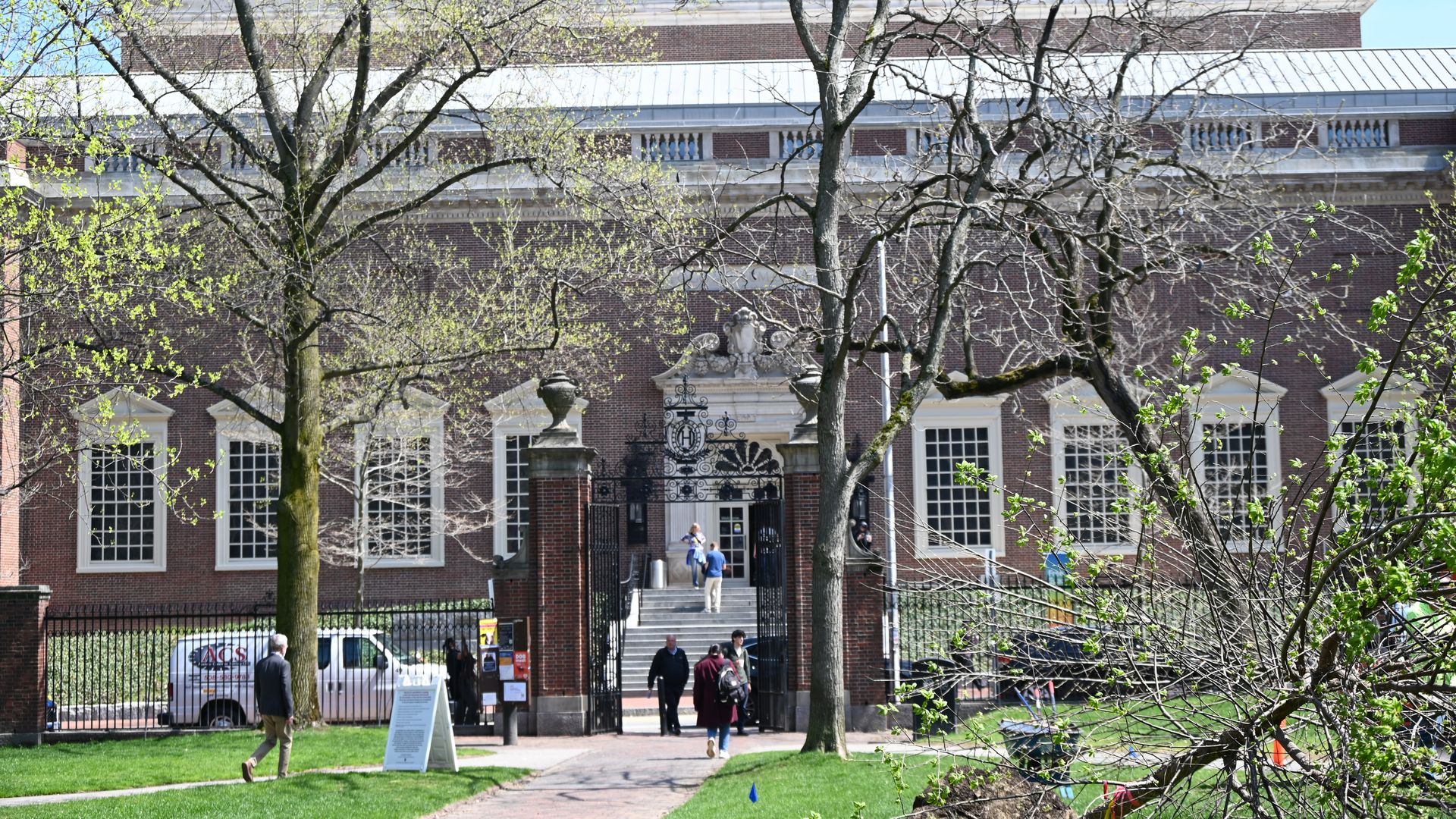
Harvard University. Photo: Kyle Mazza/Anadolu via Getty Images
Harvard's two long-anticipated reports on antisemitism and Islamaphobia on campus offer a glimpse into the wide scope of discrimination pro-Palestinian and pro-Israeli people have experienced at the university.
Why it matters: People with varying views on the Israeli-Palestinian conflict agree Harvard has a problem.
- It's Harvard's response to various forms of discrimination and the question of how to address them that has divided students, faculty and staff.
The latest: "I am sorry for the moments when we failed to meet the high expectations we rightfully set for our community," Harvard president Alan Garber wrote in a letter Tuesday alongside the reports.
Catch up quick: The reports came from the task force on combating antisemitism and anti-Israeli bias and the task force on combating anti-Muslim, anti-Arab and anti-Palestinian bias, both convened by Garber in the aftermath of the Oct. 7, 2023, attack by Hamas.
- The U.S. Department of Health and Human Services' Office for Civil Rights demanded that Harvard publish the reports by Friday, following delays.
By the numbers: 59% of Harvard students, staff and faculty involved in a survey of 2,300 said they feared academic penalties for voicing their political or personal views.
- 92% of Muslim respondents and 61% of Jewish respondents surveyed expressed those fears.
What they're saying: Jewish and Israeli students said they felt alienated from student life, losing friends and invitations to events for supporting the Israeli government's response to the Hamas attack that has killed thousands of Palestinians — or simply for being Israeli.
- Arab and Christian Israelis said they, too, were shunned when people found out they were from Israel.
- Others said they encountered one-sided courses and discussions about the Israeli-Palestinian conflict in class.
Muslim, Arab and Palestinian students reported verbal and physical abuse for expressing support for the Palestinian cause and for their religious and ethnic backgrounds.
- The incidents range from a Palestinian wearing a keffiyeh (a scarf worn to signal Palestinian solidarity) being called a "towelhead" or "antisemite," to students being doxxed and losing their jobs for being in Muslim faith groups.
Faculty and staff on both sides of the issue expressed similar experiences, per the reports.
Between the lines: Each task force had its own set of recommendations, but both urged Harvard to address the prevalence of antisemitism and anti-Israeli bias as well as anti-Muslim, anti-Arab and anti-Palestinian bias.
- The task force on anti-Muslim, anti-Arab and anti-Palestinian bias also suggested further research into community members and their well-being on campus, particularly those who don't feel safe expressing themselves.
What's next: Harvard will direct school deans to strengthen their academic reviews for courses and curricula.
- Harvard will also review admissions policy at each school to consider how well candidates engage with diverse perspectives.
- The university is also "actively exploring" creating a new center for pluralism, per the Harvard Crimson.