What a Boston Holocaust museum's rail car teaches us about genocide

Add Axios as your preferred source to
see more of our stories on Google.
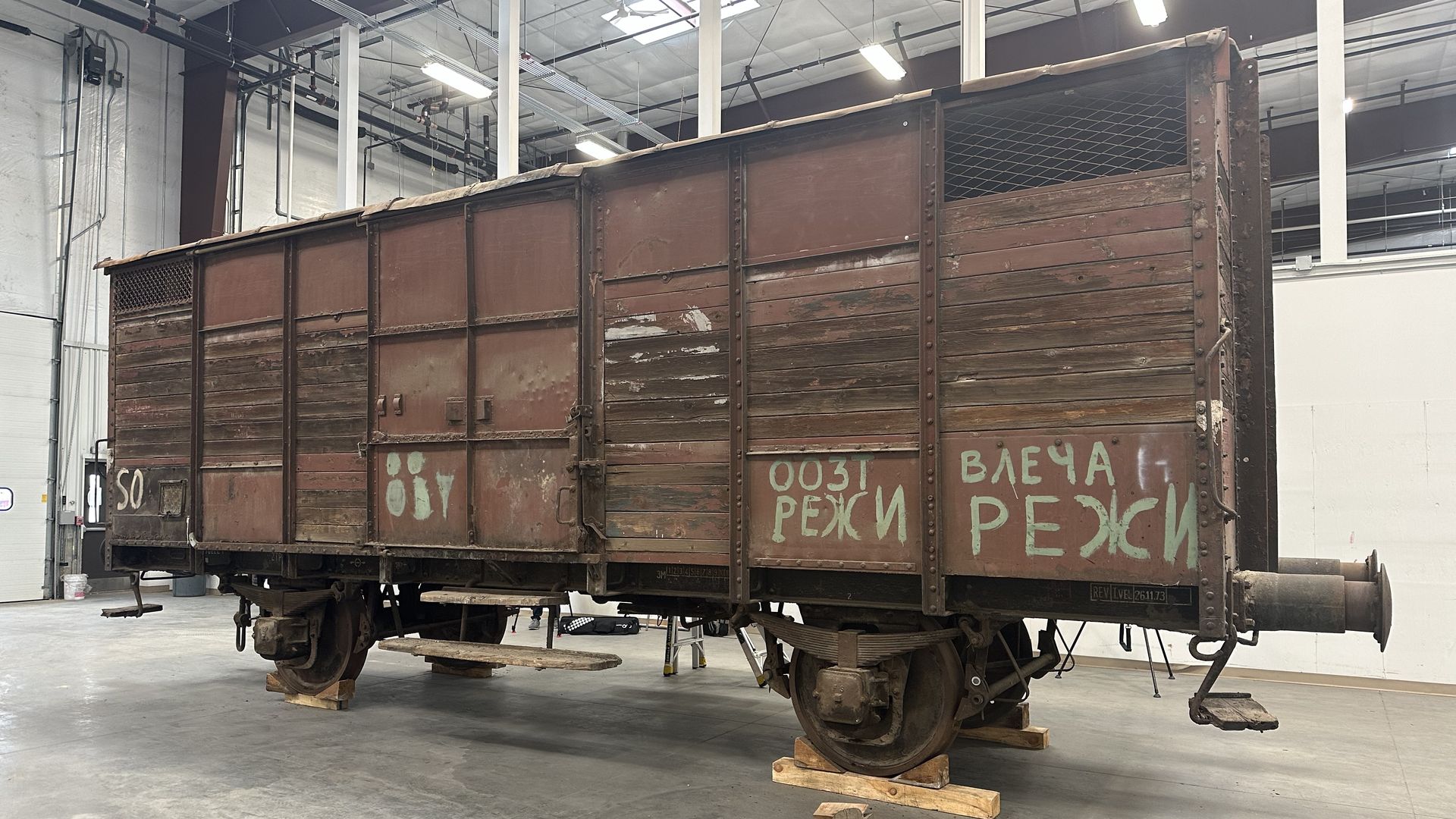
Photo: Steph Solis/Axios
The organizers behind an upcoming Holocaust museum in Boston unveiled a 30-foot rail car they'll install in their museum.
Why it matters: Trains are known to connect people with the world around them, but rail cars like these were used during the Holocaust to carry Jewish, gay and Romani people to their deaths in concentration camps.
Catch up quick: The Holocaust museum that's under construction near the Boston Common will include a rail car resembling those used on the European Railway Network during the genocide.
- Jody Kipnis, co-founder of the Holocaust Legacy Foundation, says the rail car aims to visualize the conditions targets of the Nazi regime faced as they were rounded up and deported from their communities.

State of play: The rail car, donated by the Brewslow Foundation in Arizona, was taken to a Boston-area facility last month.
- Joshua Craine, head of conservation at Daedalus Art Company, said he will be researching materials and parts to restore the rail car before it's installed in the museum building in November.
- This rail car was believed to be in use in Europe during the Holocaust but organizers can't confirm whether it was specifically used by the Nazi regime.
Flashback: Civilian railway workers, not SS officers, drove the deportation trains. The train system charged a fare per deportee, similar to how they would charge for livestock or coal transports, per Kipnis.
What they're saying: "Many continued to run the trains long after it was clear what fate awaited those being deported," a fact sheet from the legacy foundation states.
- "The ease with which a modern industrialized society enabled mass murder is a profound warning about the dangers of apathy and compliance."
What's next: The Holocaust museum is set to open in 2026, barring any delays.