Downtown office vacancies gave Boston nonprofit a chance to expand

Add Axios as your preferred source to
see more of our stories on Google.
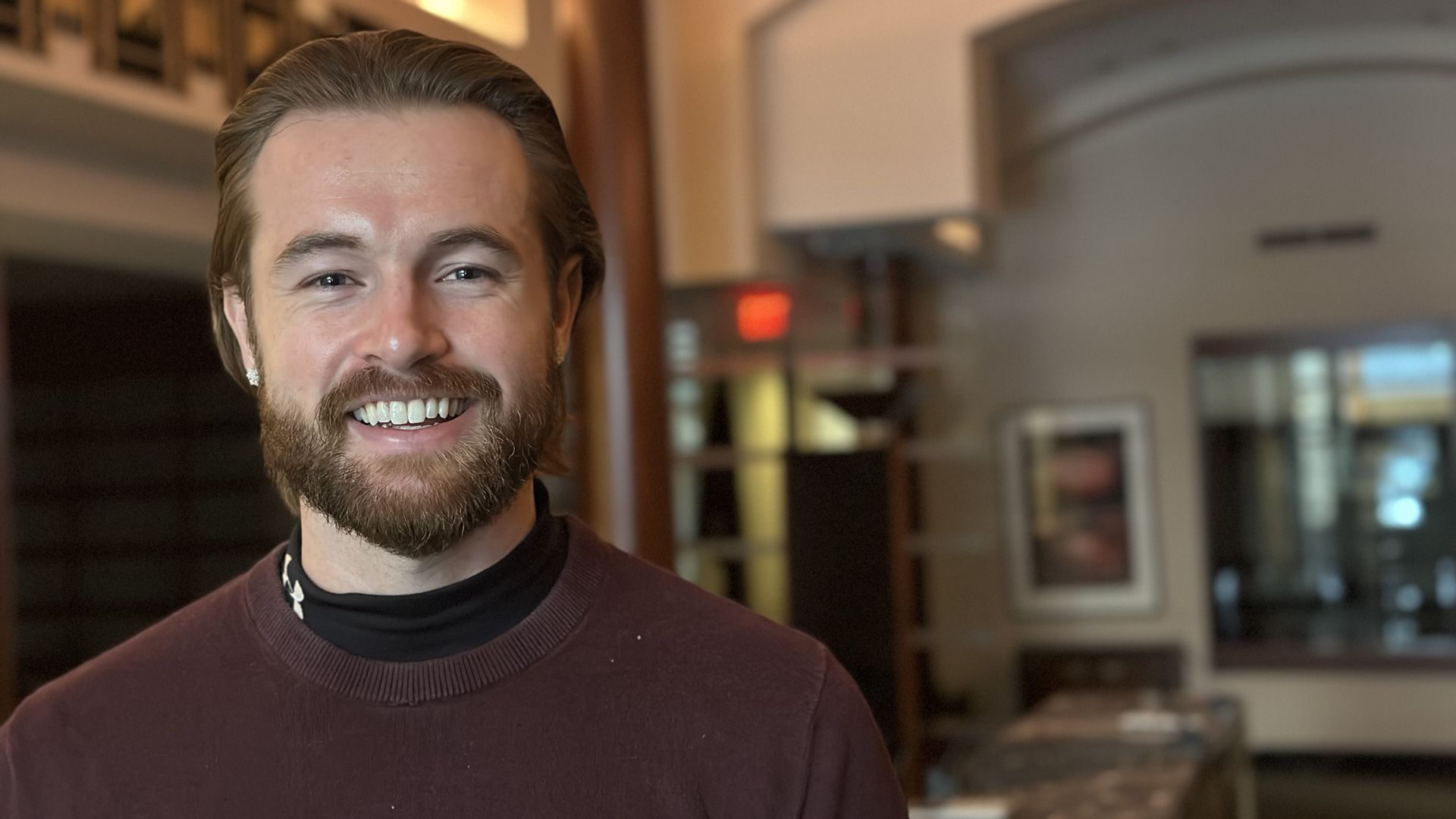
Connor Schoen of Breaktime in the first floor of the nonprofit's new building, which once housed an Eastern Bank branch. Photo: Steph Solis/Axios
Breaktime is turning a former bank and office building in downtown Boston into a one-stop shop for young adults experiencing homelessness.
Why it matters: The organization is bringing all the resources they need most to one place downtown — a move nonprofits can rarely afford.
- It's the first example — but perhaps won't be the last — of a nonprofit capitalizing on downtown's declining commercial real estate prices.
The big picture: A few nonprofits across the country are jumping on vacant office buildings, buying or leasing spaces for less than they went for pre-pandemic.
- Urban Sprouts, a childhood education provider in St. Louis, bought vacant sites next to its property to expand, per the nonprofit real estate lender IFF.
- Another nonprofit, Life Remodeled in Detroit, is repurposing shuttered schools into community centers.
Catch up quick: Breaktime bought the Franklin Street building in December for $6.3 million, less than one-fourth of its 2015 price. The space once housed an Eastern Bank branch.
- The purchase prompted other nonprofit leaders to ask Breaktime how its team made the move and whether it could be replicated.
State of play: Downtown Boston's office vacancies have surged higher than what the neighborhood experienced during the 2008 financial crisis and after 9/11, per a report by the Massachusetts Taxpayers Foundation.
- Between the rise of remote work and the companies downsizing office space, the neighborhood is seeing between 80,000 and 125,000 fewer workers, per MTF. Many work in finance, insurance, social services and government.
- The city has offered perks for building owners who apply for office-to-housing conversions, but many office spaces remain available.
Zoom in: Breaktime's building has six floors, with three dedicated to the nonprofit's work, says co-founder and executive director Connor Schoen.
- The other floors will include a clinic by Boston Health Care for the Homeless and potentially a business that will employ young adults experiencing housing insecurity.
What they're saying: "You could literally take a shower, do your laundry, get job training, meet with your case manager, get therapy and do your physical across three floors," Schoen tells Axios.
What's next: Breaktime might soon be joined by arts nonprofits and creatives seeking to repurpose vacant office space.
- Meanwhile, Mayor Wu and downtown leaders are seeking pitches from artists, commercial landlords and developers on new uses, including recording studios, performance venues and galleries.
- The proposals "will play a pivotal role in the evolution of the neighborhood," said Mike Nichols, president of the Downtown Boston Alliance, in a news release.
Go deeper: Inside Breaktime