Massachusetts' real ride-hailing unionization fight comes in 2025

Add Axios as your preferred source to
see more of our stories on Google.
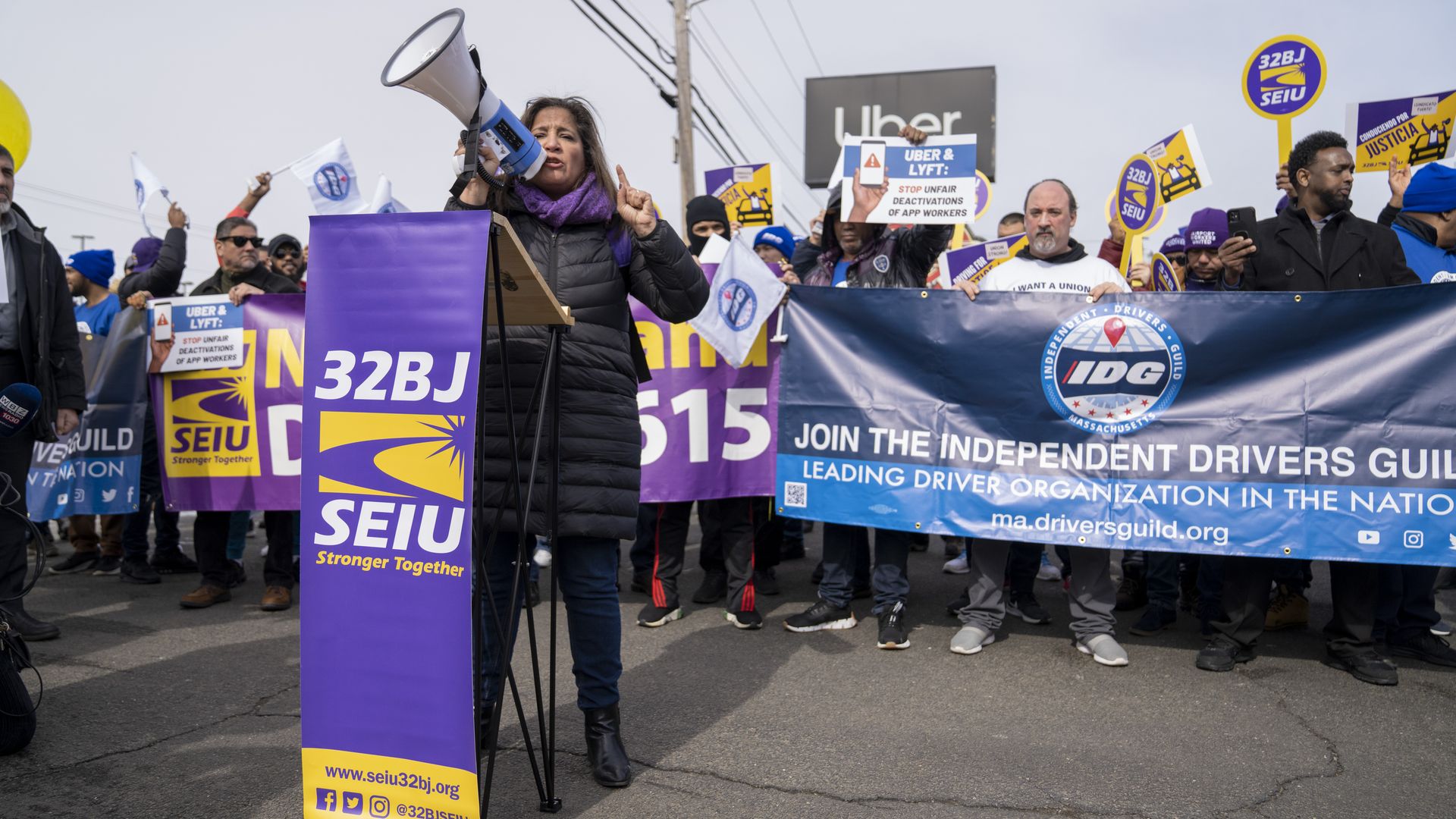
SEIU 32BJ Union leader Roxana Rivera and rideshare drivers rallied for months for Question 3. Photo: M. Scott Brauer/Bloomberg via Getty Images
The real fight over ride-hailing drivers unionizing in Massachusetts is just beginning.
Why it matters: The unionization ballot question's passage in the fall won't deter ride-hailing companies, who kept quiet during the campaign, from pushing Beacon Hill leaders to change the law.
The big picture: If it survives, the ballot measure stands to test a first-in-the-nation collective bargaining system for ride-booking drivers overseen by a state agency.
- If it doesn't, the experiment could die before it begins — and contracted drivers' ability to legally unionize along with it.
State of play: Uber and Lyft told CommonWealth Beacon they want to see lawmakers change the law as written.
- Uber spokesperson Freddie Goldstein raised questions about the threshold of "active drivers" needed to support the creation of a bargaining unit, saying it's below the national standard threshold of 30%.
- Lyft told CWB: "There are several technical issues we have with the ballot language."
- While the law has taken effect, that doesn't stop lawmakers from revising it as they have after other successful ballot measures (e.g. cannabis legalization).
Between the lines: What makes the bargaining process approved by voters so unusual is it allows for independent contractors to unionize — a rarity in the United States.
- The ballot question never addressed whether the drivers should be classified as employees, as previous ride-hailing-related ballot measures had.
Flashback: A $175 million settlement between ride-hailing companies and Attorney General Andrea Campbell this summer ended a years-long legal fight over driver classification.
- The settlement requires ride-booking drivers to be paid at least $32 an hour.
The latest: Thousands of drivers have signed in favor of organizing the App Drivers Union in the last two months, per a statement by labor leaders Roxana Rivera and Mike Vartabedian.
- The group needs 5% of all drivers to agree to unionize, and 25% of "active drivers" need to support the creation of a bargaining unit.
- Labor organizers declined through spokespeople to say how many signatures they have collected.
What we're watching: What will come first, action from lawmakers or lawsuits from ride-hailing companies — and whether the new law can live on into 2026.