Elections 2024: Voting in Massachusetts


Add Axios as your preferred source to
see more of our stories on Google.
/2024/09/19/1726775002568.gif?w=3840)
Illustration: Brendan Lynch/Axios
Election Day is Nov. 5. Here's all you need to know about voting and what's on the ballot in Massachusetts.
Why it matters: Bay State voters will decide several crucial ballot questions this year, including the fate of the MCAS exam, whether rideshare drivers can unionize, and if tipped workers should earn the standard minimum wage.
Voting in Massachusetts
- You can register to vote or update your address online through Oct. 26. After that, you're out of luck.
- Polling places will be open from 7am to 8pm Tuesday, Nov. 5 for those who want to fill out a ballot the old-fashioned way.
- If you want a mail-in ballot, apply by Oct. 29.
- You can drop it off at your local election office or drop box by Election Day.
- If you mail it, make sure it's postmarked by then. The latest that properly postmarked ballots will be accepted is 5pm Nov. 8.
U.S. Senate: John Deaton (R) vs. Sen. Elizabeth Warren (D)
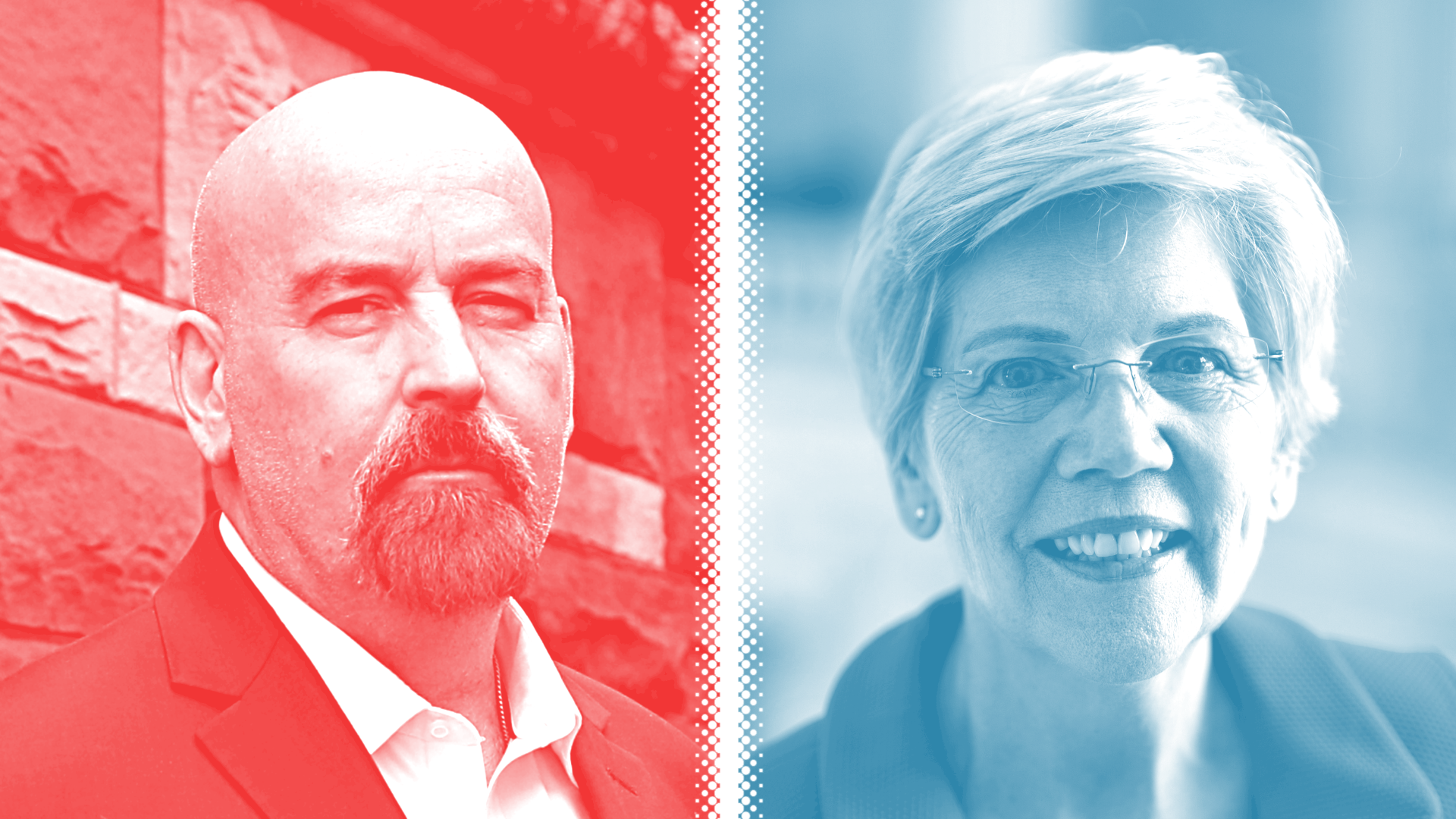
Cryptocurrency activist and attorney John Deaton is trying to unseat liberal U.S. Sen. Elizabeth Warren.
Deaton claims Warren is out of touch with Massachusetts residents and he's tried to capture moderate voters by making his dislike of Donald Trump very well-known.
Warren has been concentrating on her day job. Her campaign ads focus on her national policy victories and efforts to reform the financial system.
- She's also been campaigning for Vice President Kamala Harris.
Deaton beat back Trump-aligned Republican Robert Antonellis with around 65% of the vote to Antonellis's 26% in the Republican U.S. Senate primary.
- There hasn't been much polling on the race, but a September University of New Hampshire poll showed Warren with a 58% to 32% lead over Deaton.
Go deeper: It's Warren v. Deaton after Mass. primaries
Question 1: Should the auditor oversee the legislature?
State Auditor Diana DiZoglio wants to look into the private financial books of the state Legislature, something lawmakers vehemently deny she has the authority to do.
So Dizoglio is asking voters to give her that power via Question 1, which would let her office investigate the House and Senate and oversee some of their spending.
- If voters choose Yes on Question 1, DiZoglio and subsequent state auditors could evaluate if the Legislature complies with employee training rules, cybersecurity standards, and purchasing practices, according to the Tufts Center for State Policy Analysis.
House and Senate leaders say an executive branch officer like the auditor shouldn't interfere with the legislative branch.
- Lawmakers could resist a "yes" victory by taking DiZoglio to court, stripping her office of funds, or altering the law in their favor.
Go deeper: Auditing the legislature
Question 2: Eliminating the MCAS graduation requirement

Students in Massachusetts would no longer be required to pass MCAS exams to earn a high school diploma if voters side with teachers' unions on this ballot question.
- Teachers say making a student's degree depend on high-stakes tests in the 10th grade narrows the curriculum and puts too much pressure on kids.
The other side: A group of parents, educators, and others with stakes in primary education want to stick with the math, science and English exams.
- The "no" campaign says ditching the Massachusetts Comprehensive Assessment System requirement would lower standards for all students.
Go deeper: The battle over MCAS
Question 3: A union for rideshare drivers

The current law doesn't let independent contractors such as rideshare drivers unionize or undergo collective bargaining.
- A yes vote would create an exception in Massachusetts, letting the state form a system managing relations between drivers and their employers, per a Tufts Center for State Policy Analysis report.
- The most active drivers would be able to form a union and decide who runs it. A larger pool of drivers would be able to vote on a contract.
Yes, but: Opponents say a "yes" vote would likely lead to higher fares.
- Even if successful, the ballot measure would likely be challenged in court like similar efforts have in other parts of the country.
Go deeper: Unionizing rideshare drivers
Question 4: Legalizing psychedelic drugs

The question would legalize the use of five natural psychedelic substances, including psilocybin, over two years for people ages 21 and up.
- It would let people grow and use the substances, but they wouldn't be able to buy them through a retailer. Instead, they would be administered at a treatment center.
- The state would create a commission to oversee the industry with an advisory board.
Yes, but: Opponents say the ballot measure goes too far by letting people grow psychedelics at home.
Go deeper: Massachusetts' psychedelics ballot question
Question 5: The minimum wage for tipped workers

The question would increase the minimum wage for tipped workers to the standard minimum wage — potentially lessening workers' reliance on tips.
- Instead, it would be up to employers to pay the workers the standard minimum wage of $15 an hour.
- Restaurants and other companies could charge customers a service fee, which could cost the same as an 18% to 20% tip, to pay their workers. Unlike tips, service fees are subject to sales tax.
Between the lines: If successful, the ballot measure would lead to a slight increase in the average tipped workers' wages in Massachusetts, per a CSPA report.
- But top earners — those who earn far more than minimum wage off tips — could see their wages fall under the measure.
- Business owners could also face lower revenues as a result.
Go deeper: The tipped workers ballot question