MBTA bets on the future of Boston-area ferry service

Add Axios as your preferred source to
see more of our stories on Google.
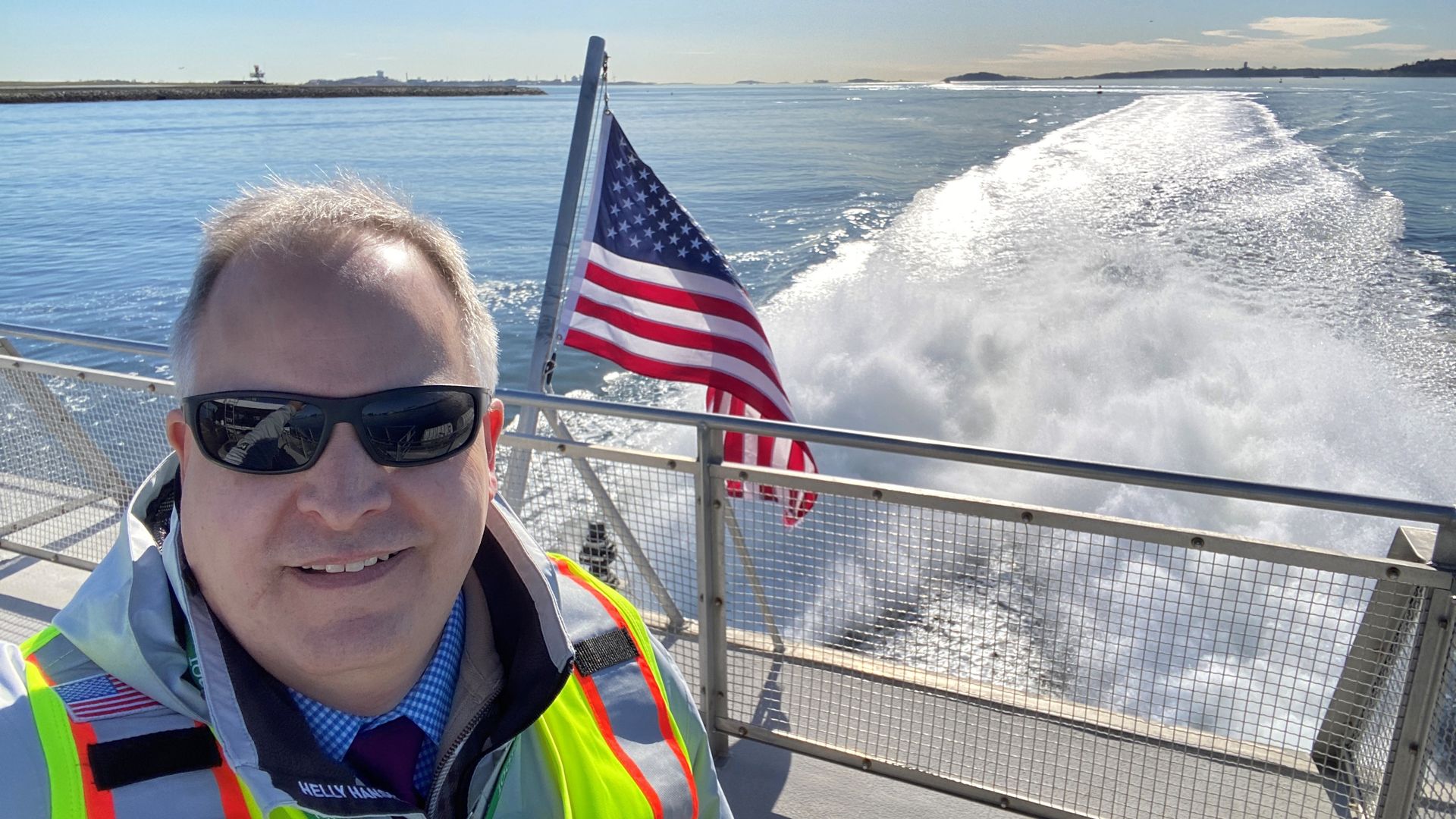
David Perry, the new commuter ferry services director, studied at Massachusetts Maritime Academy. Courtesy of David Perry
David Perry learned as a boy to steer boats through New England waters and trained as a man to navigate the meandering channels of government.
- That's what led to his latest role: The MBTA's inaugural commuter ferry services director.
Why it matters: The Boston Harbor's 180 miles of shoreline have huge potential for commuters, tourists and others seeking an alternative to driving or navigating public transit across coastal cities.
- That's where Perry comes in.
State of play: Perry tells Axios he wants to incrementally expand the ferry system to offer more frequent rides, possibly longer hours and more stops along the coastline.
- But first, he says, his priority is keeping the boats running.
There's demand for water transit. The T-run ferries made an estimated 1.6 million trips in 2019 before the pandemic.
- By 2023, the total was back up to 1.2 million, close to pre-pandemic levels, Perry said, though that also includes ferry services that launched after 2020.
Zoom in: Perry's already envisioning the possibilities of expanded services on various rides in the years to come.
- The Winthrop/Quincy service could use more vessels. Only one serves this route.
- He'd like to one day see later hours and more frequent rides for the East Boston and Charlestown ferries.
- Then there are the places that don't have ferry service yet, but could benefit from it, if feasible.
What they're saying: "There's opportunity here. This is the kind of thing where it appears that if we build it, they will come."
Yes, but: The MBTA will have to navigate a series of constraints as it expands.
- They range from the number of boats available to the workforce to dock space (which is already limited in downtown Boston) to the various stakeholders running the waterways.
The Boston-area boating landscape is a dizzying bureaucratic maze. There's:
- The T's decades-old Hingham and Charlestown ferries, plus its newer seasonal Eastie and Quincy/Winthrop services.
- Salem's own ferry service
- An array of private boats and water taxis
- Marinas full of independent boaters
- The "navigable channels," or areas of the Outer Harbor and neighboring cities blocked off by the Coast Guard, which are designated for water traffic.
Plus: For all the land the MBTA owns, almost none of it is along the coast.
For now, Perry's started meeting with various stakeholders and riding the ferries.
1 bright spot: Between the newer ferry services and the T closures for repairs, Perry doesn't see ridership dipping anytime soon.
- "It's very popular," he says. "Ridership is very loyal, and everybody's excited to use it.