This Boston startup's making the next generation of camera phone lenses

Add Axios as your preferred source to
see more of our stories on Google.
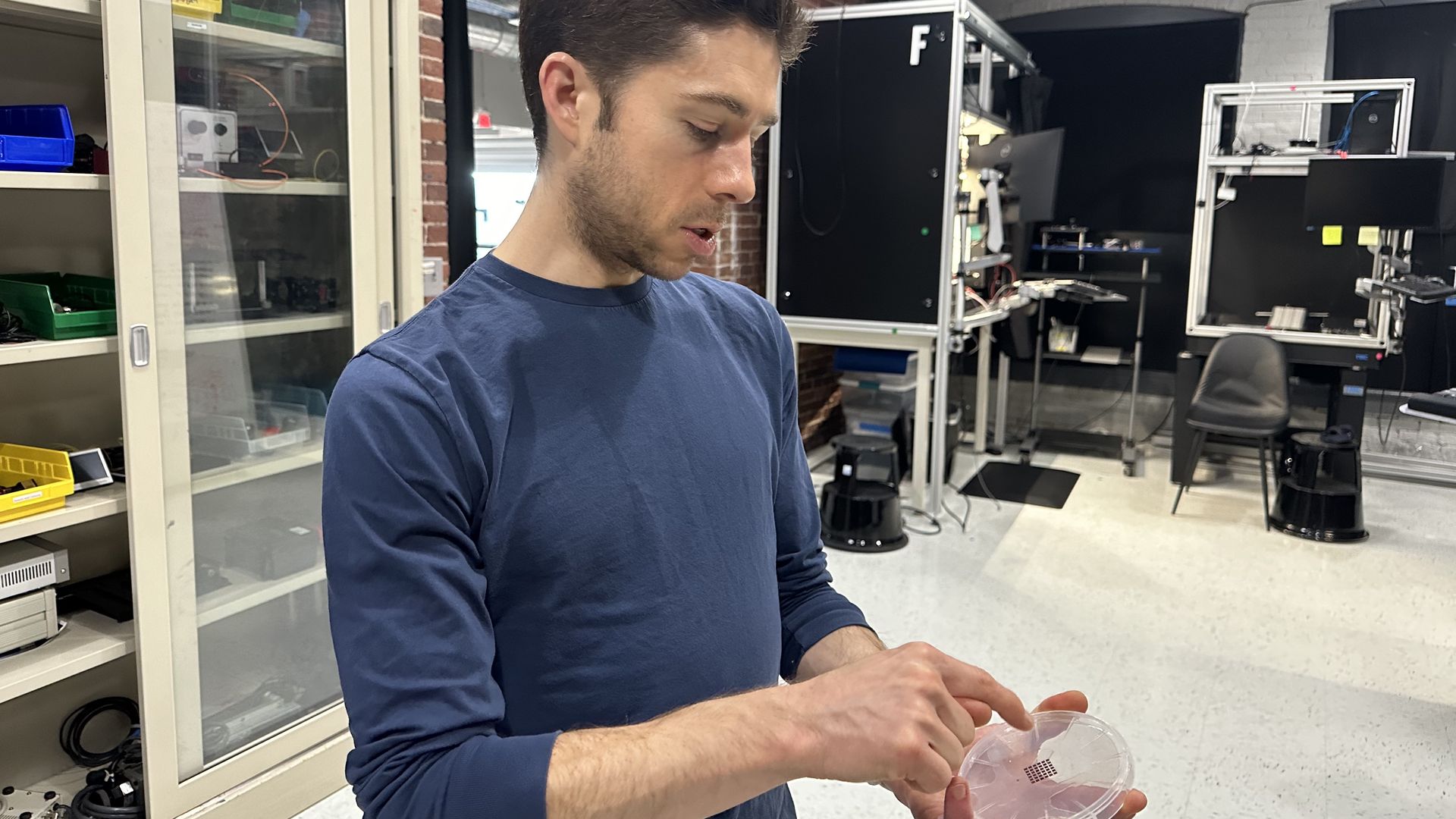
Metalenz's biometrics are in the chip the size of a fingernail. Photo: Steph Solis/Axios
The startup behind the next generation of smartphone lenses is testing the technology at a lab a few hundred feet away from TD Garden.
Why it matters: Metalenz's technology not only verifies users' identity, but eventually will detect signs of poor air quality and dehydration through facial recognition, said co-founder and CEO Rob Devlin.
Catch up quick: Metalenz inked a deal with Samsung earlier this year to use Samsung's image sensors in Metalenz's biometric security product, "Polar ID."
- Metalenz is focusing on getting Polar ID out to market in the next year.
Flashback: The startup, born out of Harvard University, began mass producing its "metasurfaces" in 2022 and has landed in 45 million phones.
- It's a smaller, flatter lens that can do the same as four or five traditional lenses, Devlin said.
- Unlike other smartphone cameras, Metalenz's tech sorts information in light to capture and verify each user's unique "polarization signature."
- Devlin declined to specify which phones, but WIRED reports Metalenz's optics are in the Google Pixel 8 and the Samsung Galaxy S 23.
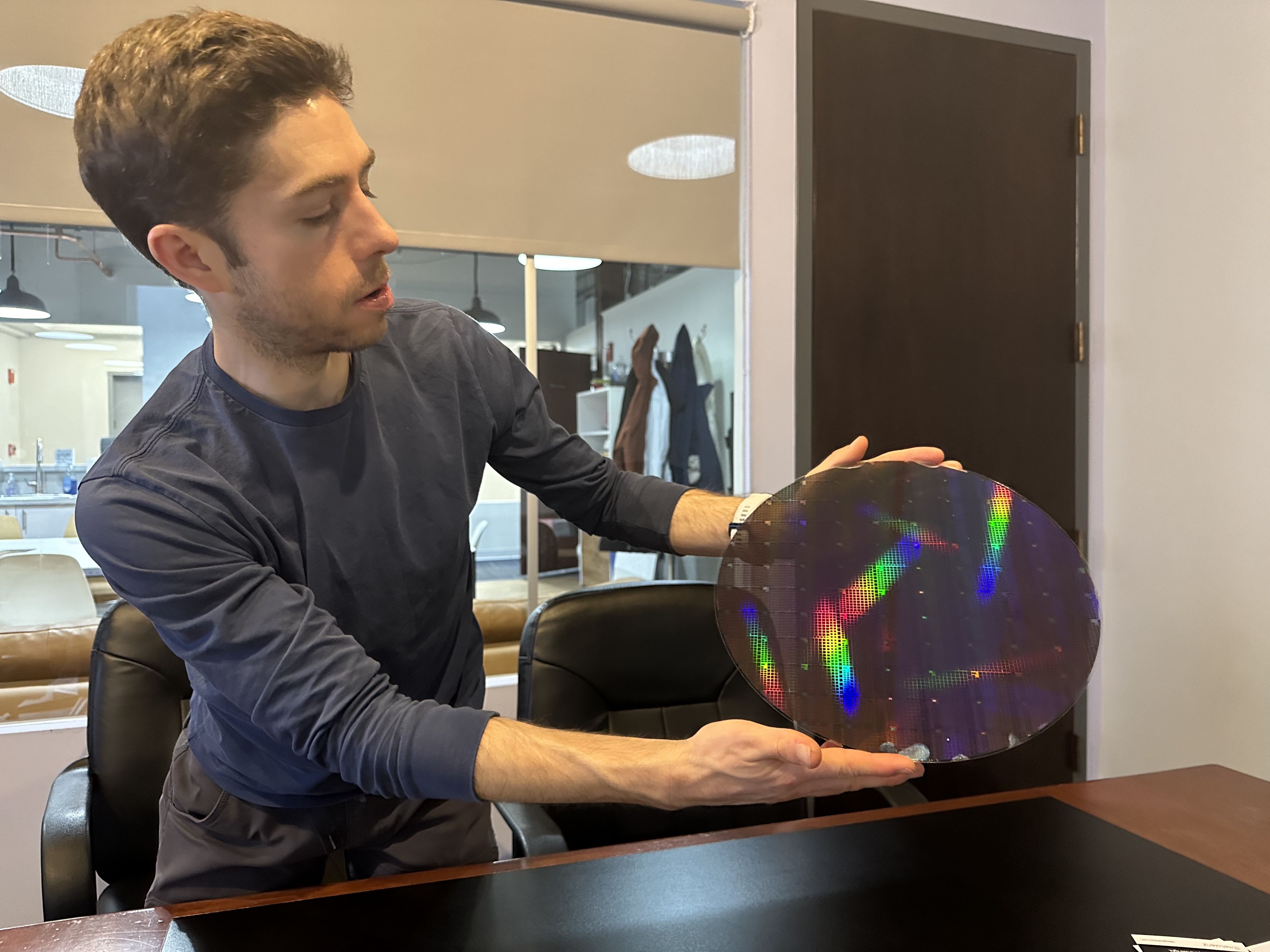
State of play: The startup is testing the Polar ID system, along with the algorithms and chips.
- Employees test the Polar ID's ability to suss out photos and 3D masks of the employees versus their actual faces.
- The company has also tested with outside volunteers across various racial and ethnic backgrounds, Devlin said
Zoom in: Metalenz created a mask of one of its employees, Dan, to test the Polar ID features and unlock the phone.
- I wore the mask of his face to try to trick the facial recognition features. Access denied.
- Dan's own face unlocked the phone.
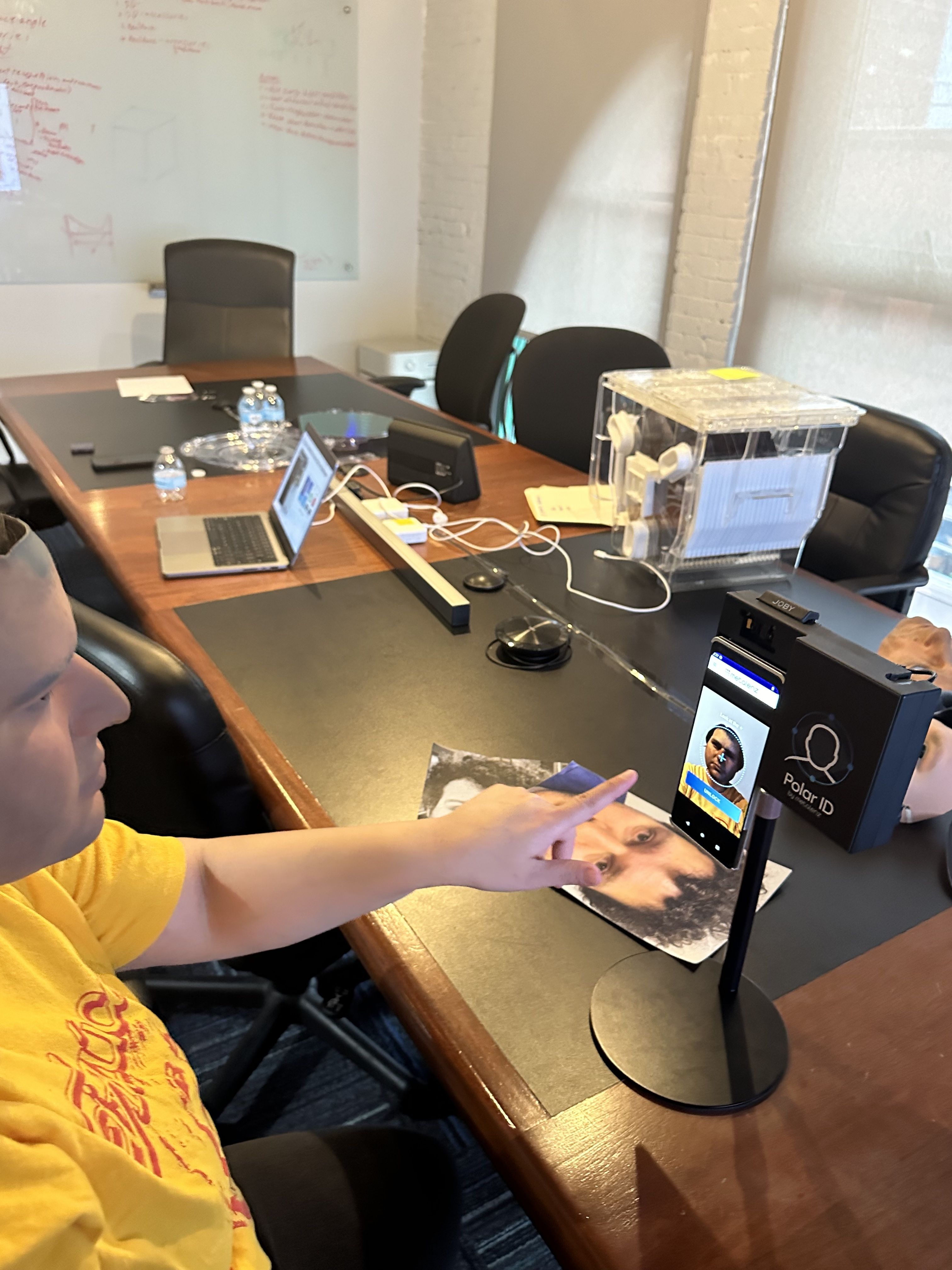
Yes, but: I didn't get to test the Polar ID features with my own face as the default, so I didn't get to experience firsthand how it works with a completely new user.
Between the lines: Polarization imaging isn't new. The technology has been used in medical devices and labs.
- But for the first time, Metalenz is making the technology available for mass production for Polar ID as low as $5 (Devlin says Apple's materials for FaceID are $14 a piece, citing YoleSystem Plus; Apple didn't respond to requests for comment).
What's next: Devlin expects to update the Polar ID software in the next two years to include health monitoring features.
- He also wants to offer features that let third-party apps use the technology to detect health conditions or abnormalities not monitored directly by Polar ID.