Massachusetts libraries saw dozens of book ban attempts in 2023

Add Axios as your preferred source to
see more of our stories on Google.
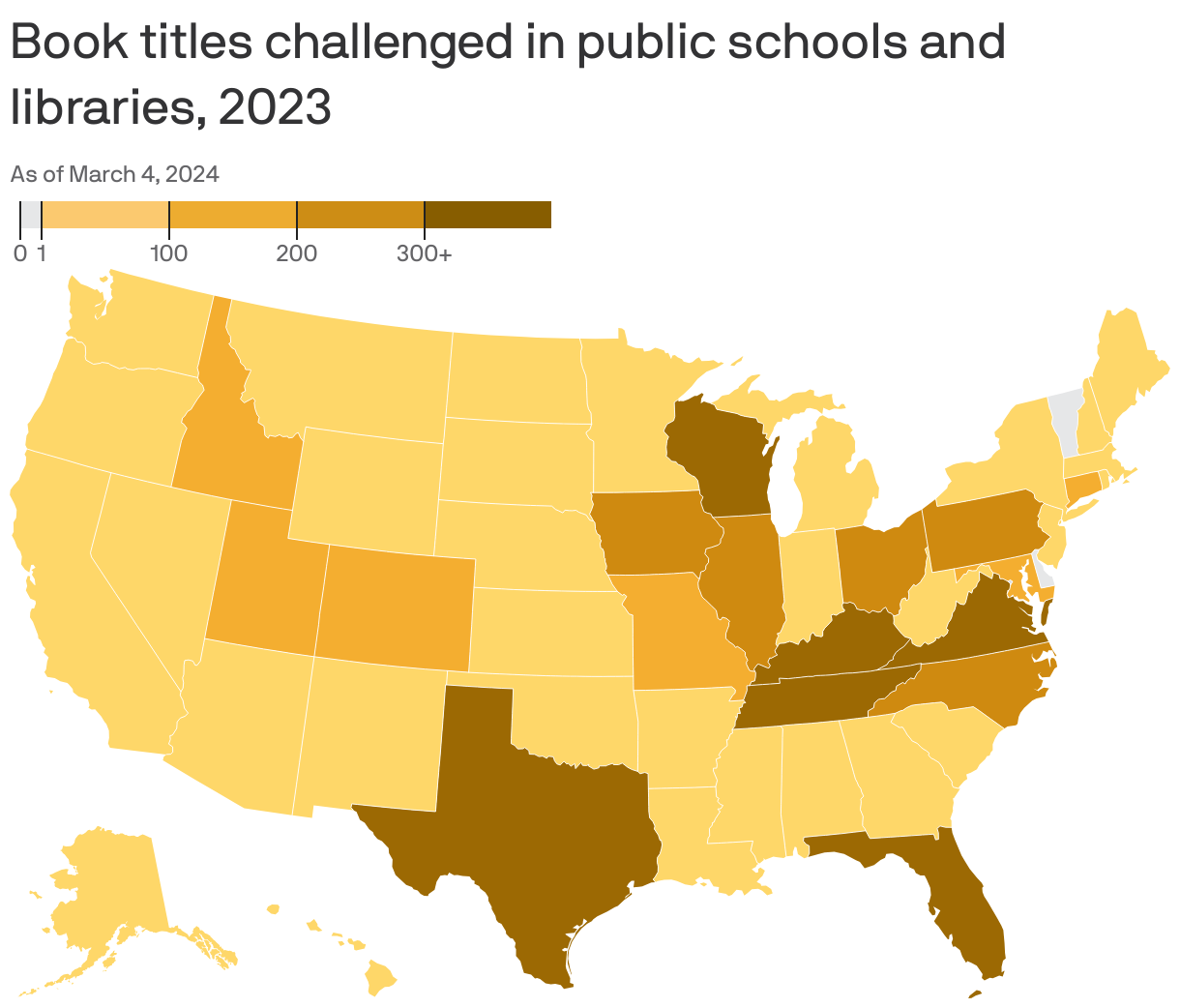
Massachusetts libraries faced dozens of book ban attempts in 2023, according to new data from the American Library Association.
Why it matters: Even liberal Massachusetts isn't immune to attempts to ban books that opponents argue are inappropriate for children — often books that center LGBTQ+ people or people of color.
Zoom in: Massachusetts schools and public libraries reported 37 book ban attempts involving 63 titles last year.
- Book ban attempts are down from 2022, but the number of titles challenged is up, per the ALA.
- The most targeted title in Massachusetts was, "Gender Queer: A Memoir"
A plainclothes officer searched an eighth grade classroom in Great Barrington for a copy of "Gender Queer" last year after someone complained it had pornographic images.
- The search sparked a walkout at Monument Mountain Regional High School in December, per the Berkshire Eagle.
- The Great Barrington Police Department later apologized for the search.
What they're saying: "Every challenge to a library book is an attack on our freedom to read," says ALA President Emily Drabinski.
- "Libraries that reflect their communities' diversity promote learning and empathy that some people want to hide or eliminate."
Zoom out: The number of books targeted for censorship at U.S. schools and libraries rose 65% in 2023 over 2022, a new record, writes Axios' Jennifer A. Kingson.
- The titles range from newer books with multicultural and LGBTQ+ themes to classics like "Lord of the Flies" and "To Kill a Mockingbird."
- The data doesn't track all book challenges, just those that got media coverage or were reported directly to the ALA.
Between the lines: Opponents of targeted books are going beyond school libraries and putting more pressure on public libraries, Kingson writes.
- The number of titles targeted for censorship at public libraries rose by 92%, versus 11% at schools.
- And demands for "censorship of multiple titles, often dozens or hundreds at a time" drove the overall surge, per ALA.