Allergy season has gotten longer in Boston


Add Axios as your preferred source to
see more of our stories on Google.
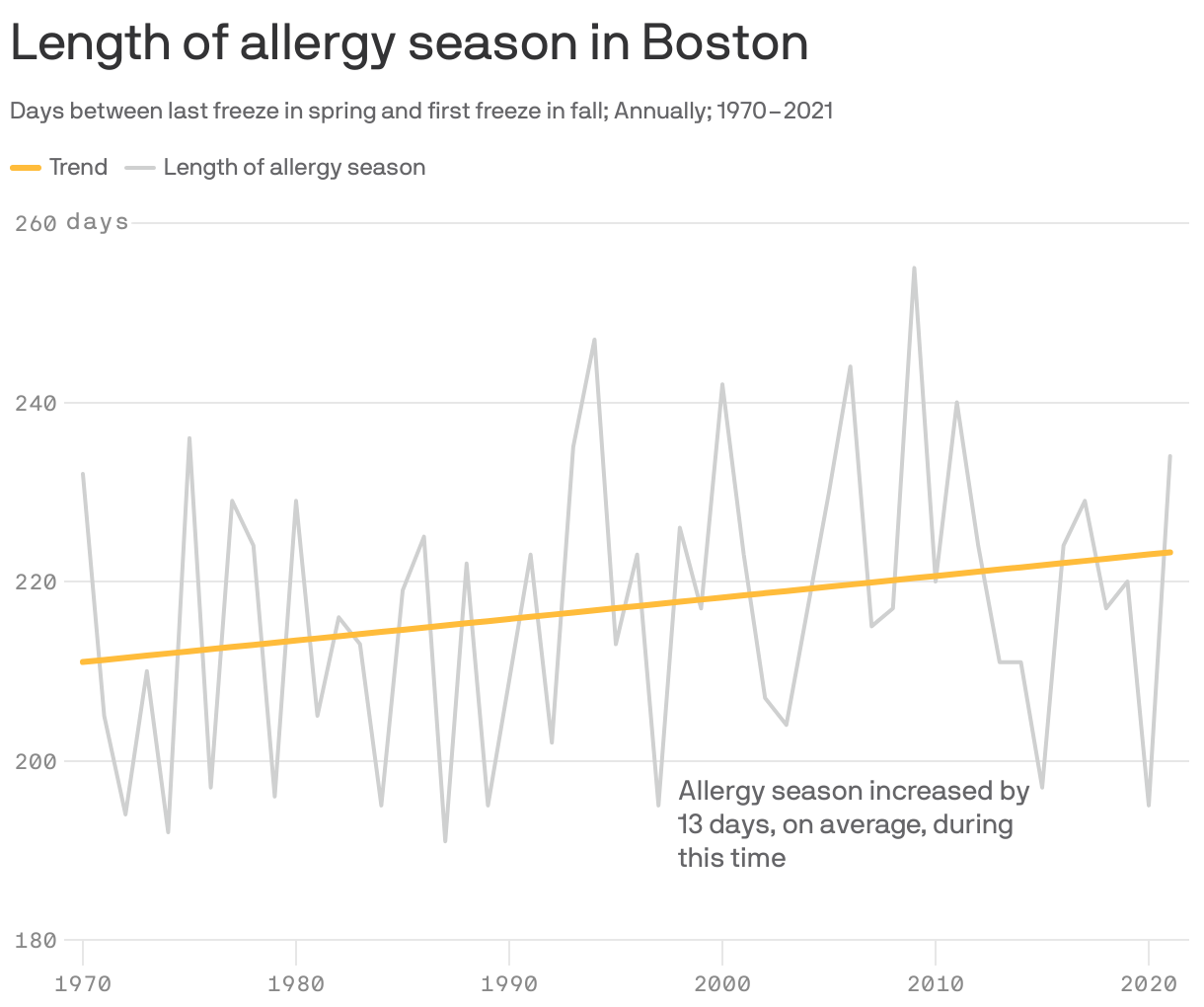
Allergy season in the Boston area increased by 13 days on average between 1970 and 2021, per an analysis from Climate Central, a nonprofit climate news organization.
- That's based on the number of days between the last freeze each spring and the first freeze each fall — essentially, the annual window during which seasonal allergy sufferers are most likely to rely on their antihistamine of choice to get by each day.
The big picture: Allergy season increased by 15 days on average between 1970 and 2021 across about 200 U.S. cities.
Why it matters: The lengthening allergy season is tied to climate change, per Climate Central, with big health ramifications for the roughly one-quarter of Americans who suffer from seasonal allergies — and for respiratory health more broadly.
- "Earlier spring and longer periods of freeze-free days mean that plants have more time to flower and release allergy-inducing pollen," per Climate Central.
- From 1990 to 2018, pollen counts increased by 21% nationwide, with the greatest increases in the Midwest and Texas, according to a 2021 study, Axios' Arielle Dreher reports.
Zoom out: The "freeze free" season has lengthened by at least a month in more than 30 cities.
- Reno, Nevada’s allergy season is now 99 days longer than it was in 1970.
Yes, but: Allergy seasons shortened in a handful of cities between 1970-2021, including Denver (-15 days) and Charlotte (-9 days).
What's next: Ongoing climate change means further deviation from what was once considered the norm.
- "We do expect that areas that haven't previously had substantial pollen seasons will potentially start to experience pollen seasons," William Anderegg, director of the Wilkes Center for Climate Science & Policy at the University of Utah, told Arielle.