Texas Testbed: What's next for 3D-printed homes

Add Axios as your preferred source to
see more of our stories on Google.
Illustration: Megan Robinson/Axios
This report is part of "Texas Testbed," a series on how the state is becoming a real-world lab for emerging technologies.
Giant robotic printers are back at Community First! Village, building more than 100 homes as part of the East Austin neighborhood's expansion for people coming out of homelessness.
Why it matters: It's just one sign of how Texas has quietly become the proving ground for one of homebuilding's biggest experiments: 3D-printed homes.
Driving the news: University of Texas architecture professor Kory Bieg, who researches digital fabrication and emerging technology, says 3D-printed construction is finally beginning to mature after more than a decade of experimentation.
- "This isn't a novelty anymore," says Bieg.
State of play: Austin-based Icon, at the vanguard of the technology, has become one of the country's best-known builders of 3D-printed homes since constructing its first permitted house in East Austin in 2018, though it wasn't immediately occupied.
- Since then, the company has partnered with Lennar on one of the world's largest 3D-printed neighborhoods in Georgetown, built lakefront luxury homes, begun construction on El Cosmico's hotel and residences in Marfa, printed military barracks at Fort Bliss in West Texas, and is developing technology for NASA to eventually build a Moon base.
- Texas is also home to other robotic construction efforts, including Muddy Robots' clay-based printing research and new 3D-printed housing projects emerging in Houston.
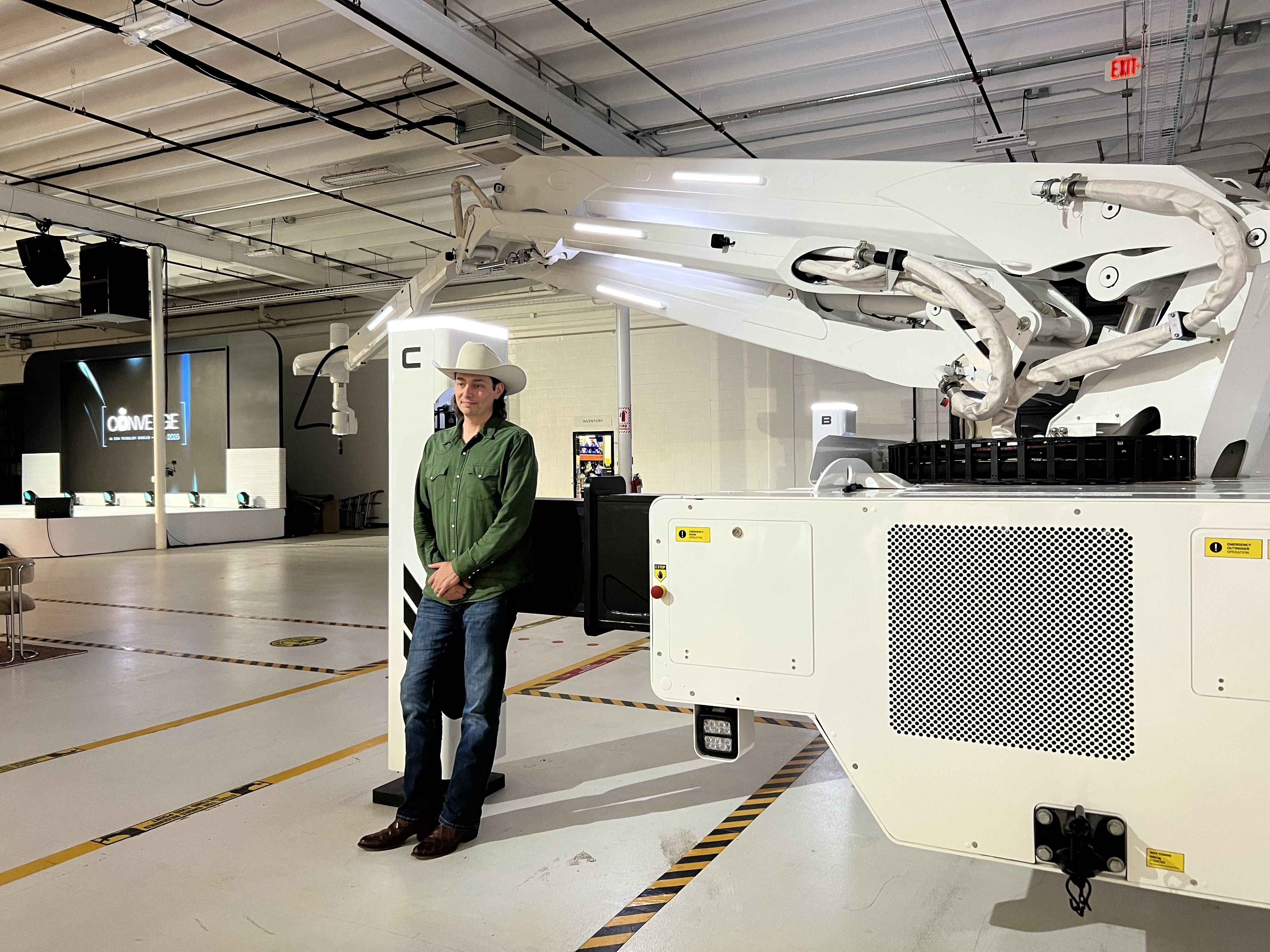
How it works: Icon's robotic printer can build a home's structural walls with a cement-based mortar, layer by layer within 24 hours, which Icon founder Jason Ballard tells Axios requires only two workers overseeing the project compared to 15 workers for a conventional wall system.
- Icon's latest 3D-printing robotic construction system, Titan, has a $900,000 price tag with wall construction costs at $20 per square foot.
Friction point: 3D-printed technology only solves one part of the equation, and Bieg says framing is among the least expensive parts of building a home.
- 3D-printed homes still require conventional plumbing, electrical systems, HVAC, windows and other finish work, all of which rely on traditional labor.
- Still, Icon has reduced costs by integrating channels for plumbing and electrical wiring directly into its printed wall systems, according to Bieg.
- "I think that's been a way in which they've been able to bring down the cost of their technology to a place that starts to compete with our traditional building conventions," Bieg says.
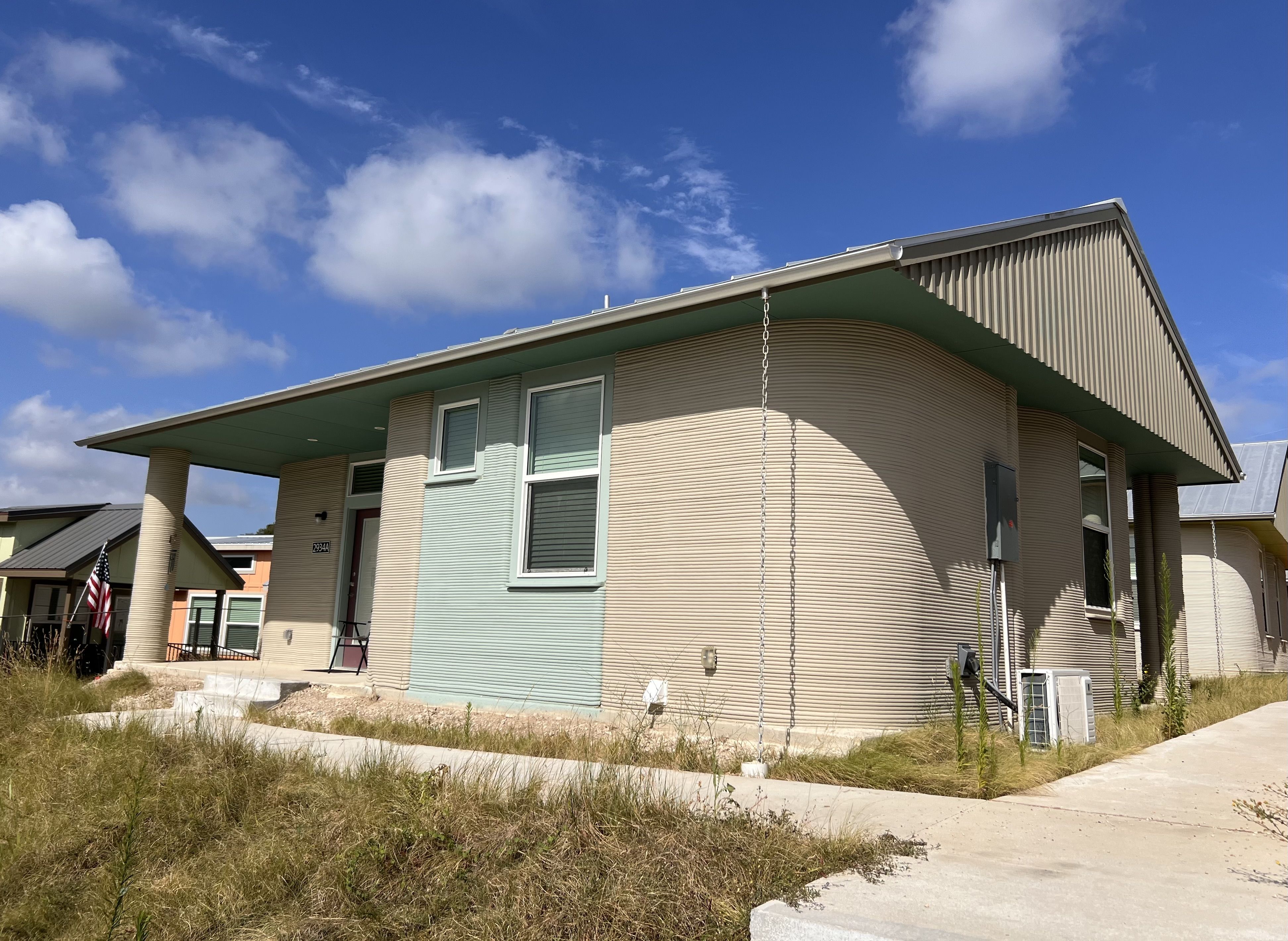
Zoom in: Icon is working to prove that 3D-printed homes can help solve the housing affordability crisis in Austin's Community First! Village, where the company built some of its first homes for the chronically unhoused beginning in 2019.
- Community First! Village rents range between roughly $350-$550, depending on the size of the home, according to founder Alan Graham.
- Some of the homes don't have plumbing — or have partial plumbing — which lowers the cost to build and rent. Residents walk to a nearby building for toilets, showers and a kitchen.
- "If we can build consistently and profitably for Community First! Village, that means we're on the right track," Ballard says.
What they're saying: But it remains to be seen whether the technology can help drive down overall housing costs.
- Ashley Jackson, a real estate agent with Mueller Residential Group, said land costs, infrastructure and housing supply continue to be the main drivers in home prices.
- "Any additional housing, no matter how it's built, is very important," Jackson says. "But I don't think that any product could meaningfully make that affordability greater in just one broad stroke."
- "It will take all types of housing, in all parts of the city, at every price point."
The bottom line: The technology still faces major questions about cost and scalability, but many of those answers are likely to emerge from projects in Texas.
- "It's starting to catch hold in a real way that's starting to maybe make an impact in the construction industry," Bieg says.