Austin airport aims to expand international destinations


Add Axios as your preferred source to
see more of our stories on Google.
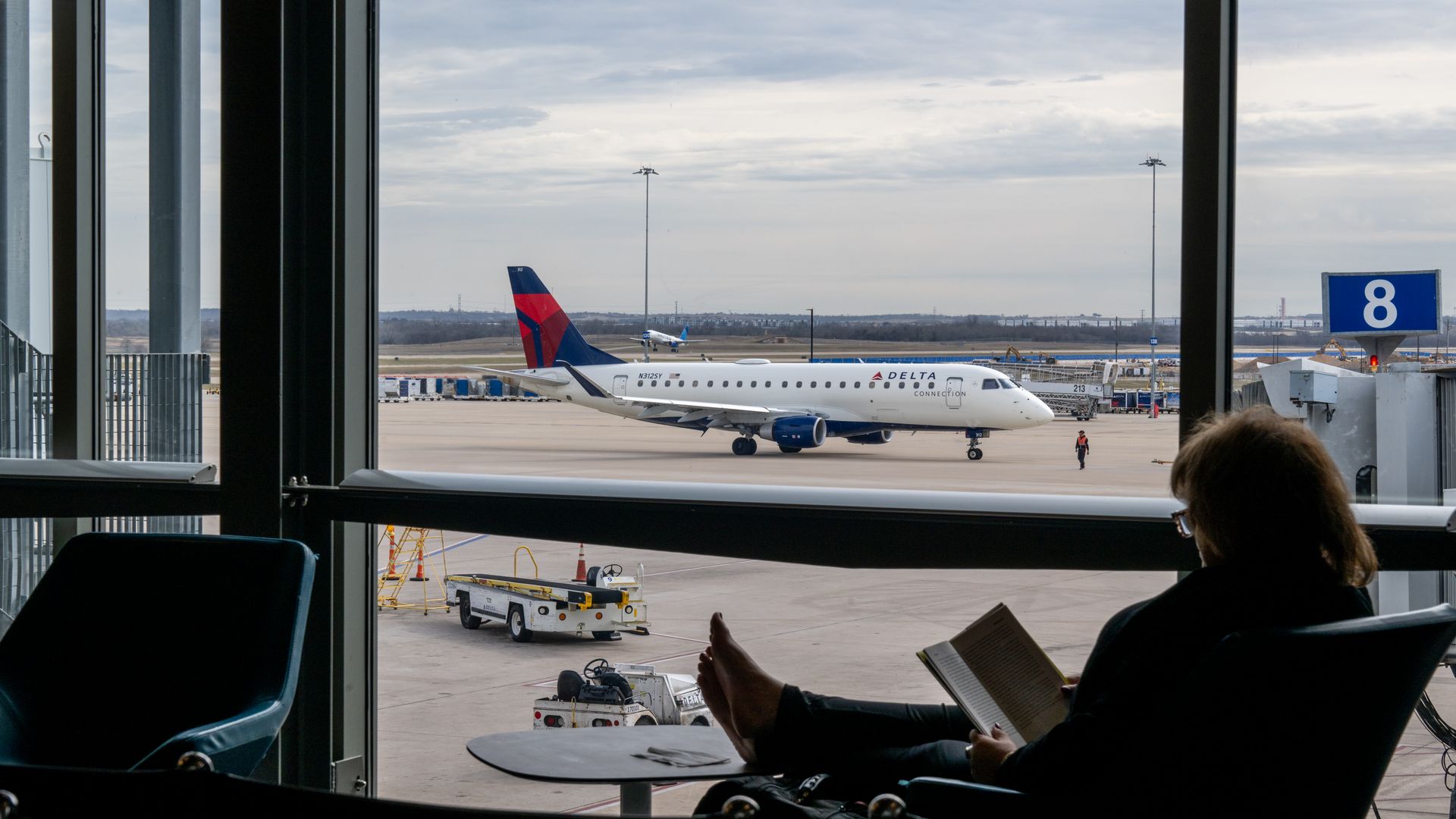
A traveler waits to fly at Austin-Bergstrom International Airport. Photo: Brandon Bell/Getty Images
Austin officials want to land nonstop routes to Paris, Tokyo, Istanbul and other international destinations, per a presentation to a city commission this month.
Why it matters: Nabbing international routes elevates Austin as a destination for business and pleasure and confirms its presence on the international stage.
State of play: Currently, Austin travelers can fly nonstop to Cancún, Mexico; Mexico City; London; Panama City; Frankfurt, Germany; Amsterdam; and Montréal.
- In a presentation to the city's airport advisory commission, city officials and their consultant laid out additional priority markets, including Seoul, South Korea; Guadalajara, Mexico; San José, Costa Rica; Montego Bay, Jamaica; Bogotá, Colombia; Lima, Peru; Reykjavik, Iceland; Dublin; and Dubai, United Arab Emirates.
The intrigue: Kevin Schorr, vice president of Campbell-Hill Aviation Group, told the commission that Austin-Bergstrom International Airport officials are in contact with multiple cities in East Asia for a nonstop flight.
Yes, but: Big challenges remain, especially for East Asian routes, including aircraft availability.
- Flights to Austin from East Asia are naturally longer than to West Coast destinations, meaning more fuel and crew expense, Schorr said.
- One airline "has to be the first one to take that risk" of flying nonstop from East Asia to Austin, he said.
What they're saying: Another hurdle to adding international flights is Austin's position as a medium-size airport sitting near powerhouse hubs like Dallas/Fort Worth and Houston.
- "It comes down to airline economics and risk," Neil Mittal of L.E.K. Consulting tells Axios.
- Airlines have to ask if there is enough demand for long-haul routes, particularly when operating between two major hubs, Mittal says.
- And the airport itself has to be ready. "You have to build a new terminal," he says. "You might have to have longer runways."
Zoom out: The city-owned airport is in the midst of an expansion that could cost upward of $6.5 billion, with plans to nearly double the number of gates.
Between the lines: International routes aren't just prestige plays — they're more profitable, Mittal says.
- Long-haul flights typically feature higher fares and premium seating, and passengers often spend more at airports.
- "International nonstop direct flights is a really important aspect of driving any economic growth within a city," he says.
Reality check: Working with medium-size hubs like Austin can pay off for the carriers, too.
- The airline industry is no longer a luxury product, and growth at traditional mega-hubs is maturing.
Stunning stat: The number of international seats available to and from Austin has more than doubled to 1.4 million since 2019, Schorr said.
- About 2.2 million people traveled nonstop between Austin and overseas locations in the last year.
Zoom out: Austin has been competing with San Antonio for international routes, but, reflecting the wealth and disposable income coursing through Austin, the airport here has far more offerings for international travel.
- San Antonio flies direct to nine locations in Mexico — and to Toronto.
What's next: Airport officials want to work with carriers of existing international routes to add days of the week, change to larger planes, and, in the case of seasonal routes, expand their operating period, Schorr said.
What we're watching: Whether the Austin airport waives fees to lure international routes.
- Schorr said airlines make decisions based on demographic data, demand and airport fees, among other factors.
The bottom line: "It's our duty to make sure that the airlines understand why Austin is that next best opportunity over any of the other airports," Schorr said.