Why Austin allergies are so bad

Add Axios as your preferred source to
see more of our stories on Google.
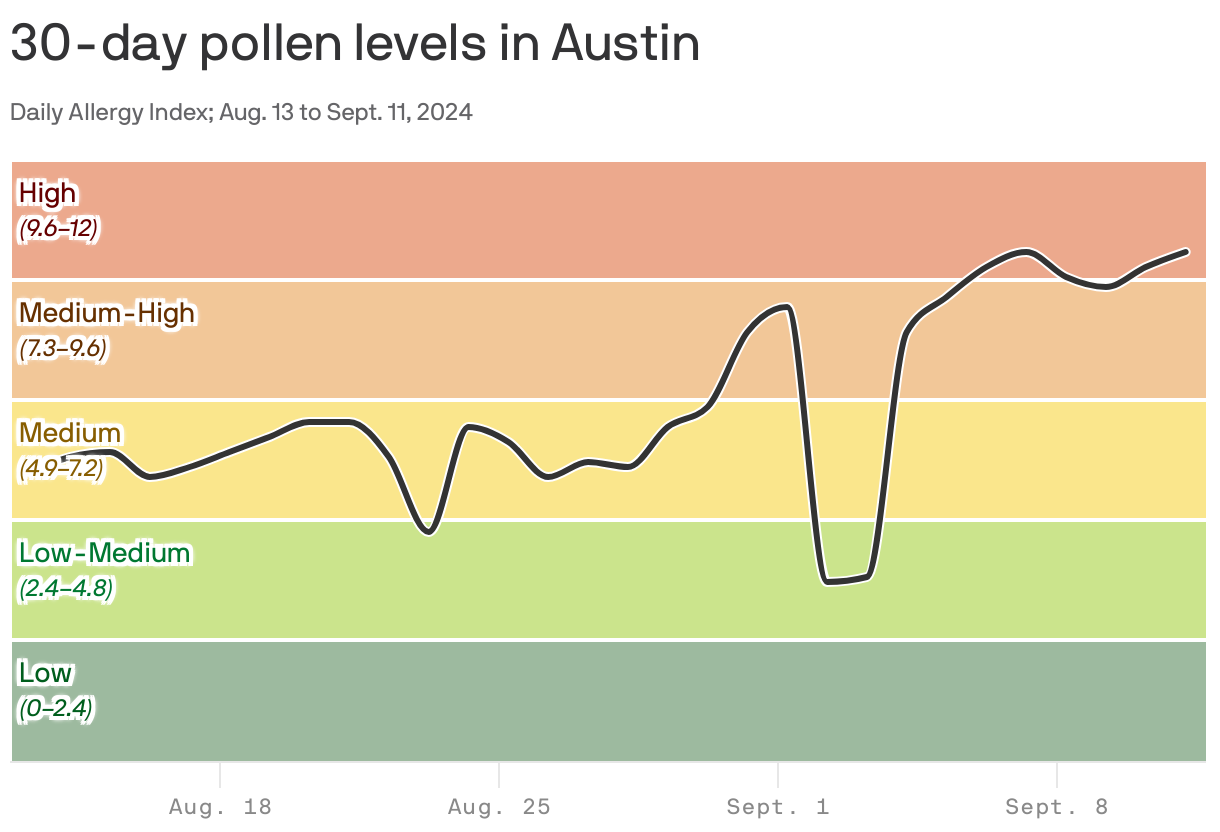
Grab a tissue. Seasonal allergies are hitting Central Texans hard this month.
Why it matters: Climate change is making allergy seasons longer and more intense in many cities.
- September can be one of the toughest months for allergy sufferers in this part of Texas.
By the numbers: AustinPollen.com, which averages the area's pollen counts, has shown elevated levels over the last week. Ragweed has hovered in the moderate-to-high range, along with grasses, weeds and elm.
Zoom in: Central Texans deal with a nearly year-round allergy season because of tree pollen.
- Plus, the rain we saw this summer might have heightened fall allergies, allergy specialist Allen Lieberman told KVUE: "This year, I think the plants are looking healthier because we didn't have that intense heat."
- Ragweed and elm season usually runs through the fall before cedar fever strikes around December.
- Oak tends to be the most prominent allergy in the spring, and factors like wind, rain and sun impact the severity each day.
The big picture: Worsening allergy seasons are a concern nationwide. National Oceanic and Atmospheric Association researchers are developing a new pollen forecasting model, the first of its kind for a federal agency.
Pro tips: Newer antihistamines like Claritin, Allegra and Zyrtec offer relief without the drowsiness associated with older antihistamines like Benadryl. They can be combined with nasal steroid sprays like Flonase.
- Several days of continuous therapy may be necessary to curb symptoms.
- Closing windows in the morning and showering before bed can reduce exposure.
- Sign up for local pollen alerts.
What's next: We're bracing for ashe juniper season, which usually hits Austin in December through February and causes cedar fever — severe flu-like symptoms such as itchiness, watery eyes and blocked nasal passages.
- The likelihood of a drier winter could impact cedar season. NOAA estimates a 77% chance of La Niña developing, which drives up the "likelihood of returning to drier, warmer-than-normal conditions in late 2024."
- "In drier winters, we can see a worse cedar fever season since the pollen can remain in the air for longer durations, compared to wet winters," Alison Baylis, regional urban ecologist for Texas A&M Forest Service, told Axios.