Roe's ending could threaten LGBTQ+ rights in Texas, activists warn

Add Axios as your preferred source to
see more of our stories on Google.
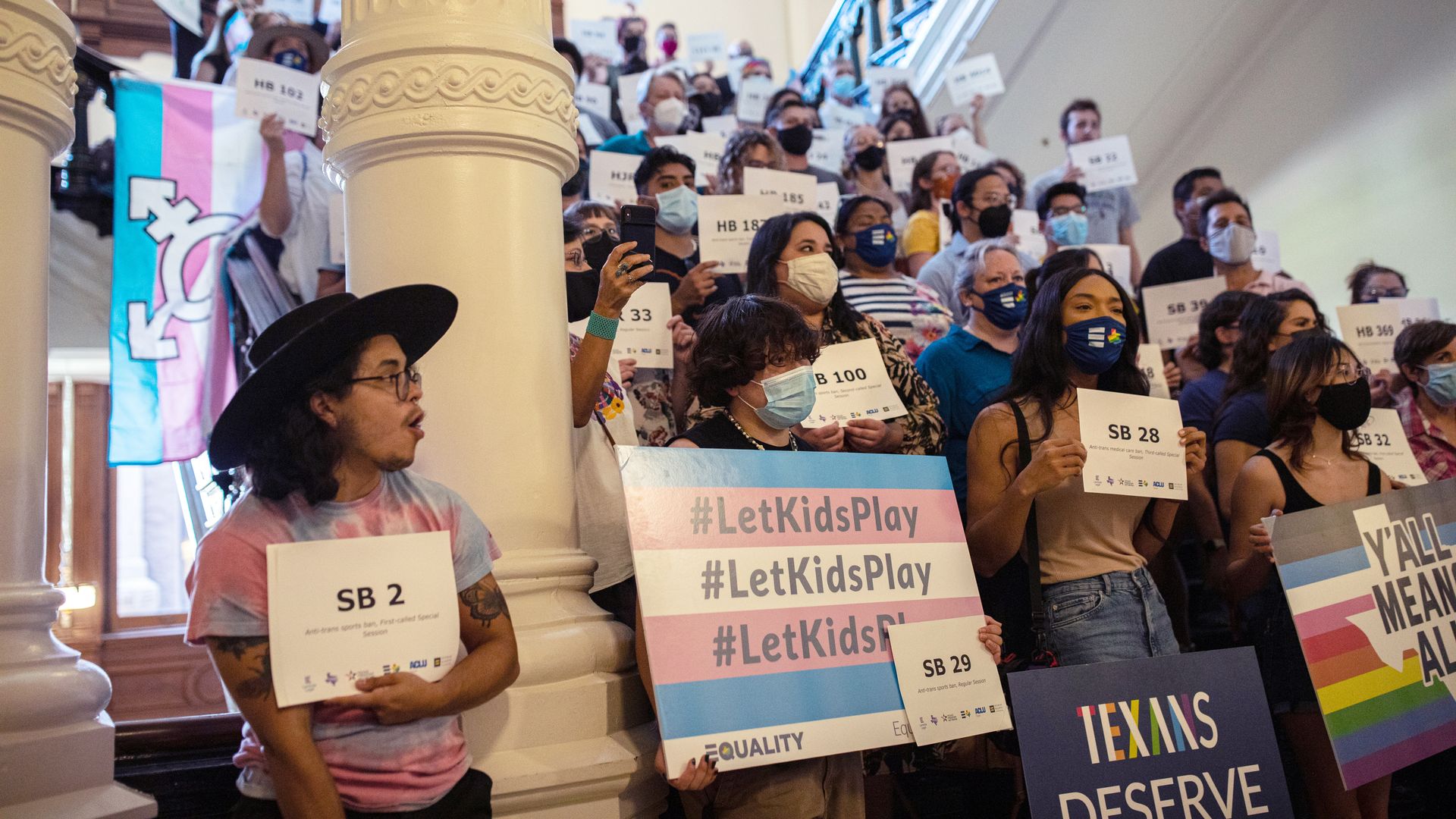
LGBTQ+ rights supporters gather in September at the Capitol to protest state Republican-led efforts to pass legislation that would restrict the participation of transgender student athletes. Photo: Tamir Kalifa/Getty Images
Texas civil rights activists are sounding the alarm over what the end of Roe v. Wade could mean for the future of same-sex marriage.
State of play: Justice Clarence Thomas wrote in his concurring opinion that the U.S. Supreme Court should reconsider Lawrence v. Texas, which legalized the right to same-sex intimacy in 2003, and Obergefell v. Hodges, which legalized same-sex marriage in 2015.
- Thomas dissented in both of those decisions.
Why it matters: Texas lawmakers have never passed a measure to add constitutional and legal protections that would enshrine same-sex marriage into law, a move advocates in other states say would fortify safeguards for LGBTQ+ residents.
- Instead, GOP lawmakers have aimed to halt gender-affirming care and access to sports for transgender children, and most recently, the state party adopted a platform that calls homosexuality "an abnormal lifestyle choice."
- Lt. Gov. Dan Patrick also promised a Texas version of a Florida bill, referred to by critics as the "Don't Say Gay" law, which bans classroom instruction on sexual orientation and gender identity from kindergarten through third grade.
What they're saying: Texas Attorney General Ken Paxton has not ruled out the possibility of trying to get a case in front of the Supreme Court that could challenge rulings like Lawrence and Obergefell.
- Paxton stopped short of saying he would support the legislature if laws testing those cases were passed: "I'd have to see how the legislation was laid out and whether we thought we could defend it. If it's constitutional, we're going to go defend it."
Yes, but: No other justice joined Thomas' concurring opinion, and Justice Samuel Alito suggested in the court's majority opinion that no other prior decision is at risk of being overturned.
Meanwhile: In a series of tweets, LGBTQ+ political action group Equality Texas blasted Paxton's remarks, saying "it's not the government's business who we have sex with."
- "The right to privacy is fragile in the United States, and we recognize that the Dobbs decision places a network of rights in peril," the group said of the ruling that overturned Roe v. Wade.
State Rep. Erin Zwiener, a Driftwood Democrat and member of the Texas House LGBTQ Caucus, said conservatives have been shifting further to the right, despite polling that shows most Texans support gay marriage.
- "We're in this moment where the things we've taken for granted, protected by federal case law, are all in doubt," Zwiener said.
Of note: At least some members of the far right of the GOP have asked the state to test the Obergefell v. Hodges ruling.
- State Rep. James White, a tea party Republican from southeast Texas, last year asked Paxton to clarify the same-sex marriage decision, arguing that Texas law should trump the Supreme Court's ruling.
- Paxton's office declined to issue an opinion, instead deferring to the Supreme Court.
What to watch: The Texas Capitol will be the next battleground for LGBTQ+ rights, Zwiener said.
- "For the last couple sessions, most of the focus on LGBTQ issues have been targeted at the transgender community," Zwiener said. "I don't think those attacks will let up, but I am seeing the rhetoric shift to including the entire LGBTQ community and specifically targeting marriage."