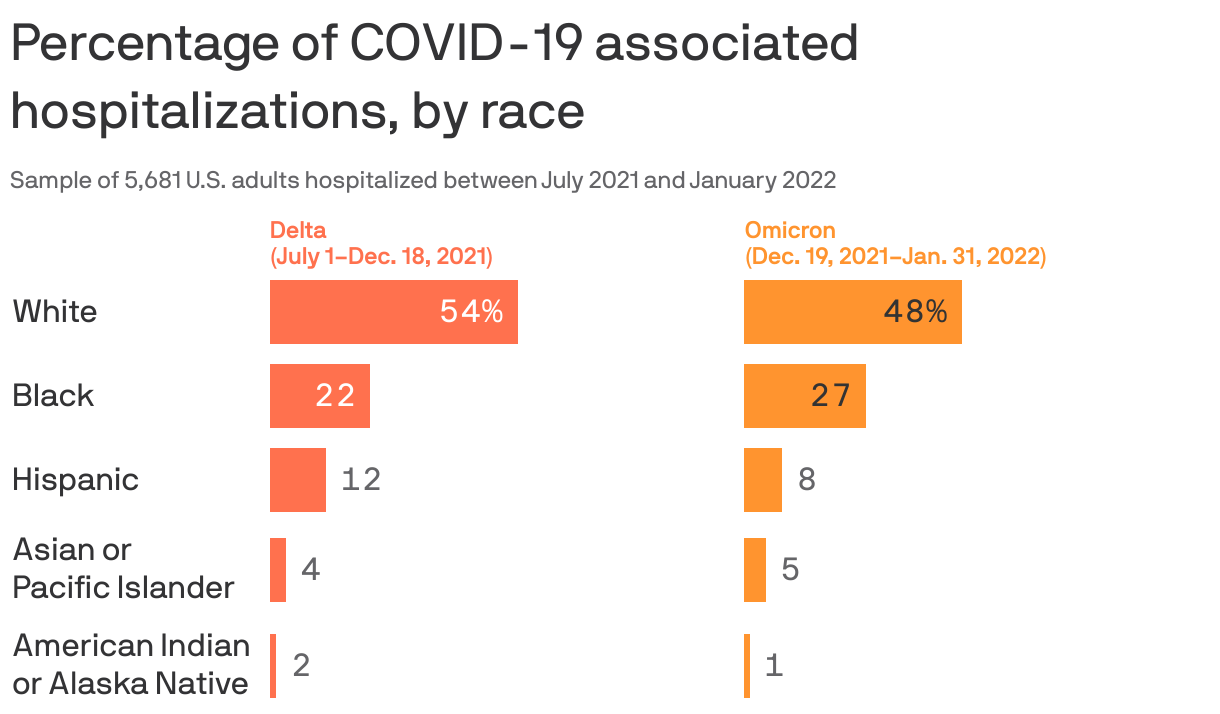
Black adults accounted for a higher percentage of hospitalizations when Omicron was the predominant variant spreading in the U.S. (27%) than during the Delta-predominant period (22%), CDC data released Friday shows.
Driving the news: The findings suggest the increased hospitalization risk during Omicron could be due, in part, to lower proportions of Black adults receiving both of their primary vaccines and booster doses, the authors write.
Psychiatry's most influential diagnostic manual has a new disorder in its latest edition: prolonged grief.
Why it matters: The diagnoses could open up new ways of treating mental distress associated with grief and have that care paid for by insurers, the New York Times reports.
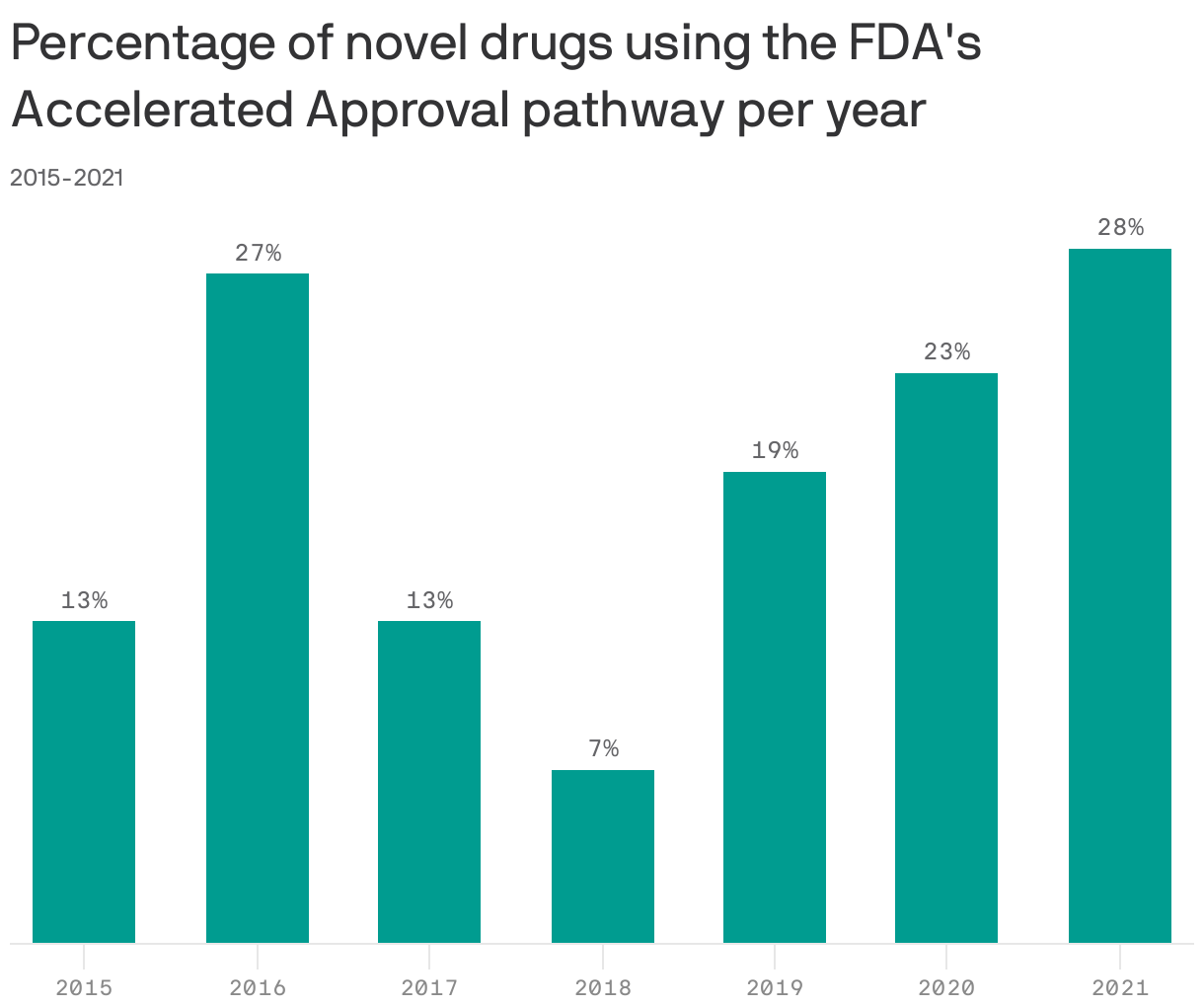
The FDA's conditional approval of a controversialAlzheimer's drug last year has sparked heightened scrutiny and an attempted overhaul of a popular regulatory pathway used to fast-track cancer drugs and certain other treatments.
Why it matters: Accelerated approval allows patients to access new drugs deemed to meet unfilled needs much faster than if the drug went through the regular approval process. But critics say that more needs to be done to prove these drugs actually work in the real world, which could have big implications for the pharmaceutical industry.
The U.S. should focus on "preparation, not on panic" amid a rise in COVID-19 cases in Europe, Surgeon General Vivek Murthy told "Fox News Sunday."
The big picture: The BA.2 variant, a subvariant of omicron, appears to be driving a recent spike in cases in the United Kingdom, Germany, France, Switzerland and other European countries, according to CNBC.