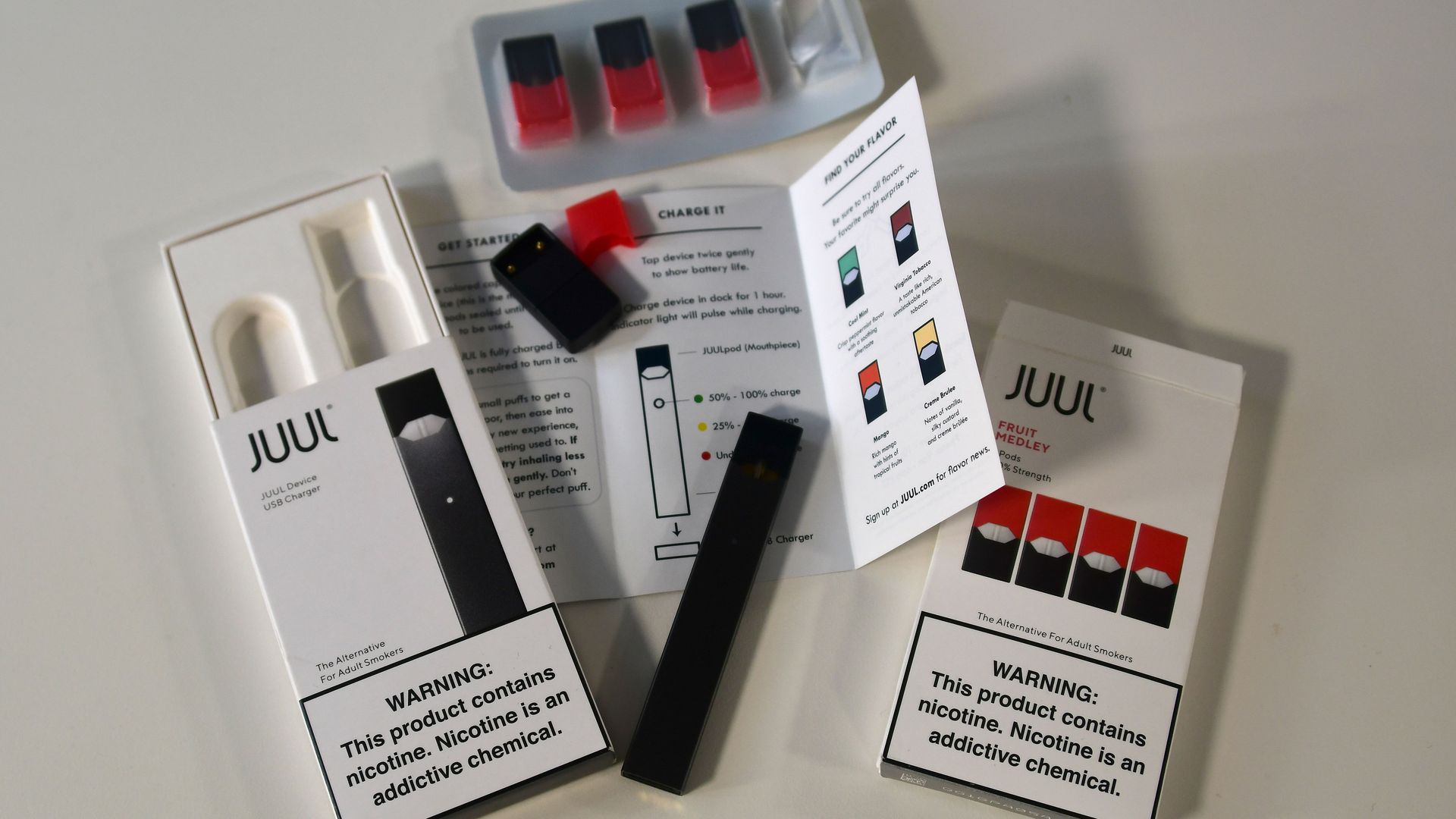
Doctors and leading addiction specialists are worried that the "unseen consequences" of teenage vaping and Juul addictions are greater than previously realized, the Washington Post reports.
What's happening: E-cigarettes allow users to ingest more nicotine than they would using traditional cigarettes. Addiction treatment specialists say that some teenagers who use e-cigarettes show signs of nicotine toxicity and respiratory problems. Doctors note that teenagers use e-cigarettes at faster rates than traditional cigarettes, and experts worry they make teenagers more vulnerable to other kinds of substance abuse.
The New York Times takes a step back from the lawsuits and criminal charges against opioid manufacturers to note that McKinsey, the consulting firm, also keeps coming up in those proceedings.
The big picture: Purdue Pharma and Johnson & Johnson both hired McKinsey to boost opioid sales. McKinsey hasn't been charged or sued for any role in the crisis, but details about the company's involvement have nevertheless crept out through testimony and court filings.
Much like their counterparts in Congress, Republican governors are not prepared to deal with the fallout if they finally succeed in persuading the courts to throw out the entire Affordable Care Act.
The big picture: Blue states are somewhat more prepared, because they're more willing to pass their own versions of some of the ACA's coverage requirements, but it would still impossible for even the most motivated state to reconstitute the entire law.
The big picture: Citing industry sources who had discussed the plan with the administration, Reuters says that it would likely seek to lower prices in Medicare Part D, which covers drugs you pick up at the pharmacy counter. The administration's most sweeping proposal to date — to piggyback off of the lower prices in European countries — was limited to Part B, which covers drugs administered by a doctor.