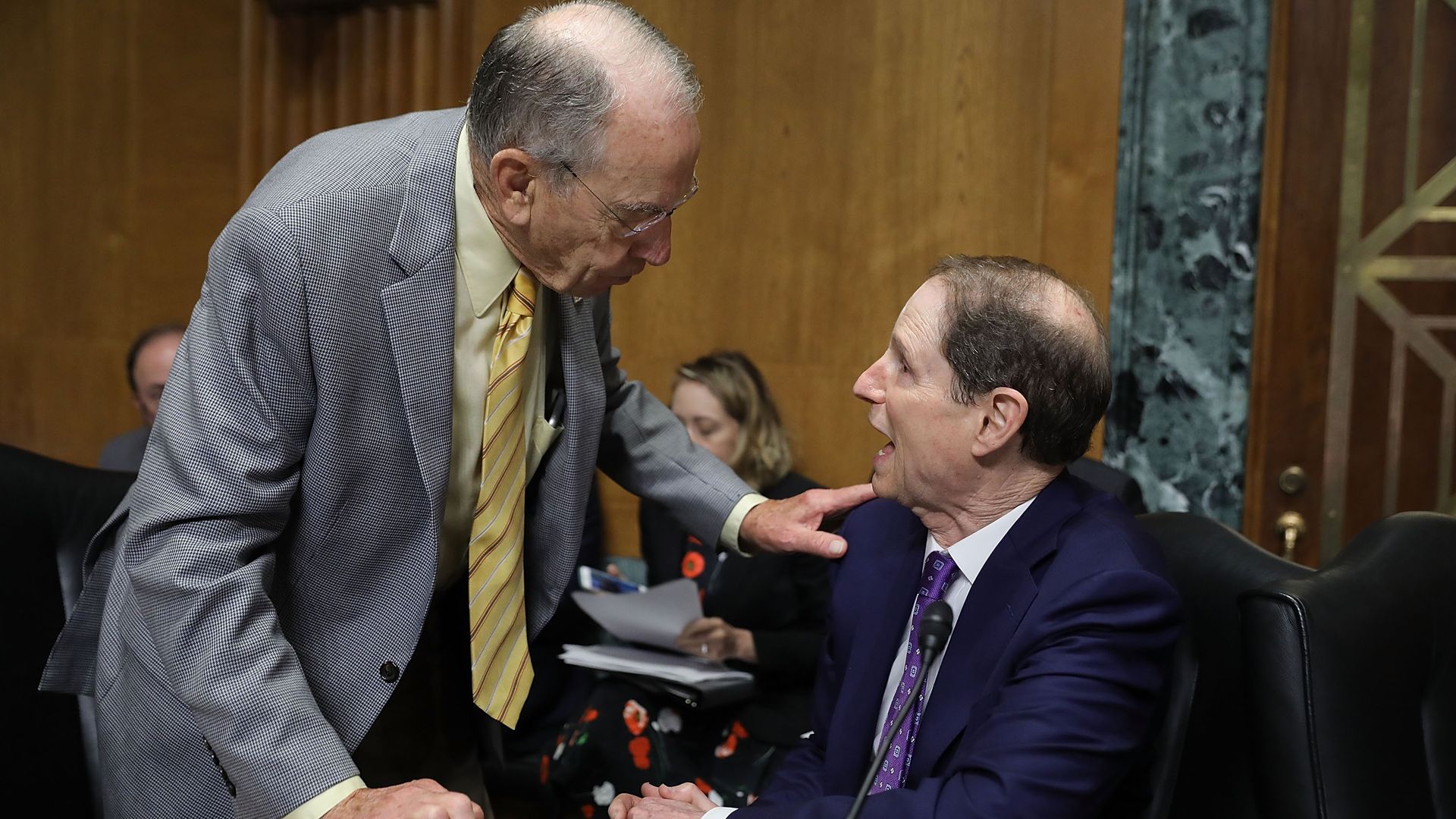
Sens. Chuck Grassley (R-Iowa) and Ron Wyden (D-Ore.) — the incoming chair and ranking member of the Finance Committee, respectively — plan to introduce a bill cracking down on the kind of tactics Mylan used to pay lower Medicaid rebates for EpiPens.
Why it matters: This is a strong signal that there's room for the committee to work together on drug pricing issues next year.
NJ.com raises a good point: New Jersey has done just about everything it can to counteract the Trump administration’s cuts to the ACA. Yet ACA enrollment is down by about 16% this year in the state.
Between the lines: Enrollment is down across the board, compared to the same period a year ago.
HHS' new report about ways to improve “choice and competition” in the U.S. health care system is stuffed with plenty of standard conservative talking points, but a few interesting policies endorsed by independent experts are also tucked inside.
Details: Several of the Trump administration's recommendations mirror an April 2017 policy paper authored by health care policy experts Martin Gaynor, Farzad Mostashari and Paul Ginsburg.
After pushing rising health care costs onto workers for years through higher deductibles and more cost-sharing, big employers are now taking on a more active role trying to control those costs directly, the Wall Street Journal reports.
Details: A whole lot of options are on the table, from direct purchasing agreements with hospitals to onsite clinics to the unusual program in Utah that pays people to travel to Mexico for their drugs.
Now that they've won the House and the 2020 presidential campaign is about to start, Democrats will have to decide how much Medicare for All should dominate their health care agenda.
The big picture: The idea has strong appeal for many Democrats, as does the more limited approach of letting 50-64 year olds buy into Medicare. But both ideas also require spending political capital that could be devoted to other health issues. They also run the risk of dividing moderate and progressive Democrats, and could give Republicans the chance to get off the ropes on health care in 2020.
A slew of recent incidents and investigations offer a stark reminder that the U.S. health care system — and hospital care in particular — struggles with serious shortcomings in quality, even though we spent $3.5 trillion on health care in 2017.
The bottom line: "We are unnecessarily killing thousands of people every year because hospital quality is not what it should be," said Leah Binder, CEO of The Leapfrog Group, an organization that grades hospital care.