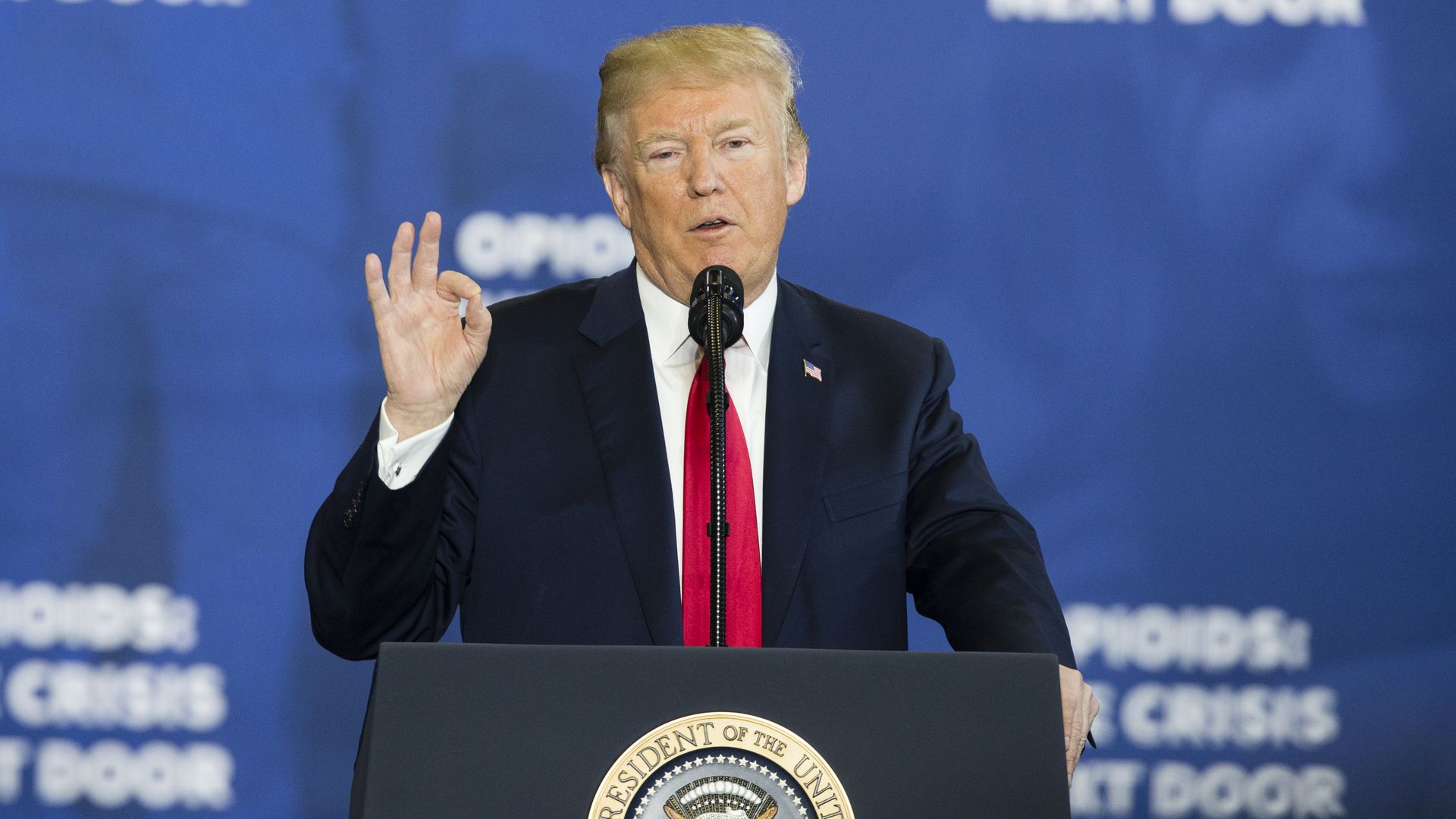
The White House will roll out the next phase of its response to the opioid crisis this week, roughly a year after President Trump’s high-profile declaration that the epidemic constitutes a public-health emergency.
Details: On Wednesday, Trump will sign Congress' recently passed opioids legislation, which, among other things, eases limits on Medicaid funding for addiction treatment and expands access to medication-assisted treatments similar to methadone. He’ll be joined in the East Room by roughly 20 other organizations announcing their own initiatives, senior White House counselor Kellyanne Conway said in an interview.
High-profile celebrities, including The Beatles' Ringo Starr, have been sharing stories and personal accounts of their struggles with addiction at the recent fundraiser for the addiction advocacy nonprofit Facing Addiction with NCADD, per the Associated Press.
Why it matters: Addiction and alcoholism are two of the leading causes of death in the United States for people under the age of 50, according to government data. The diseases cost the country about $442 billion a year, according to Facing Addiction Impact Report.
When Senate Majority Leader Mitch McConnell suggested this week that Republicans might take another run at repealing the Affordable Care Act if they win more seats in November, it was a good line for Republican voters — but not for the rest of the public.
Between the lines: The law really was unpopular throughout most of Barack Obama's presidency — especially in late 2013 and 2014, when the website was crashing and people's individual health plans were being canceled. But look when it became more popular again: right after Donald Trump became president. And it still is, even though Republican voters still want to repeal it.