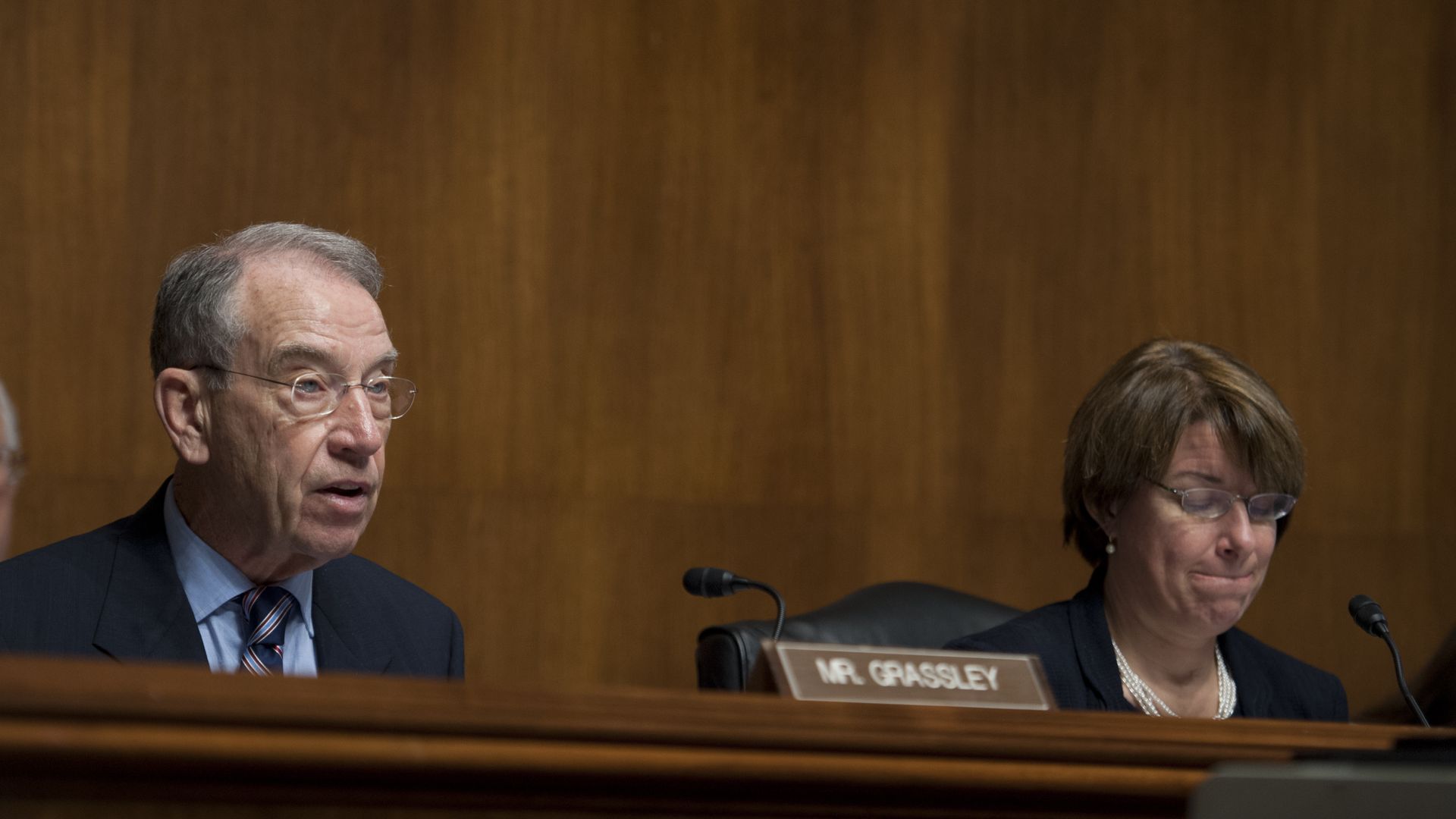
Sens. Chuck Grassley and Amy Klobuchar are urging the Federal Trade Commission to crack down on "pay-for-delay" pharmaceutical deals involving biosimilar drugs that could potentially violate antitrust law.
The bottom line: Pay-for-delay tactics have been around for a while and lead to higher drug costs. The senators pointed to a recent patent settlement for AbbVie's Humira, saying that "while European patients will benefit from biosimilar competition later this year, Americans may be without access to Humira biosimilars for almost five more years."
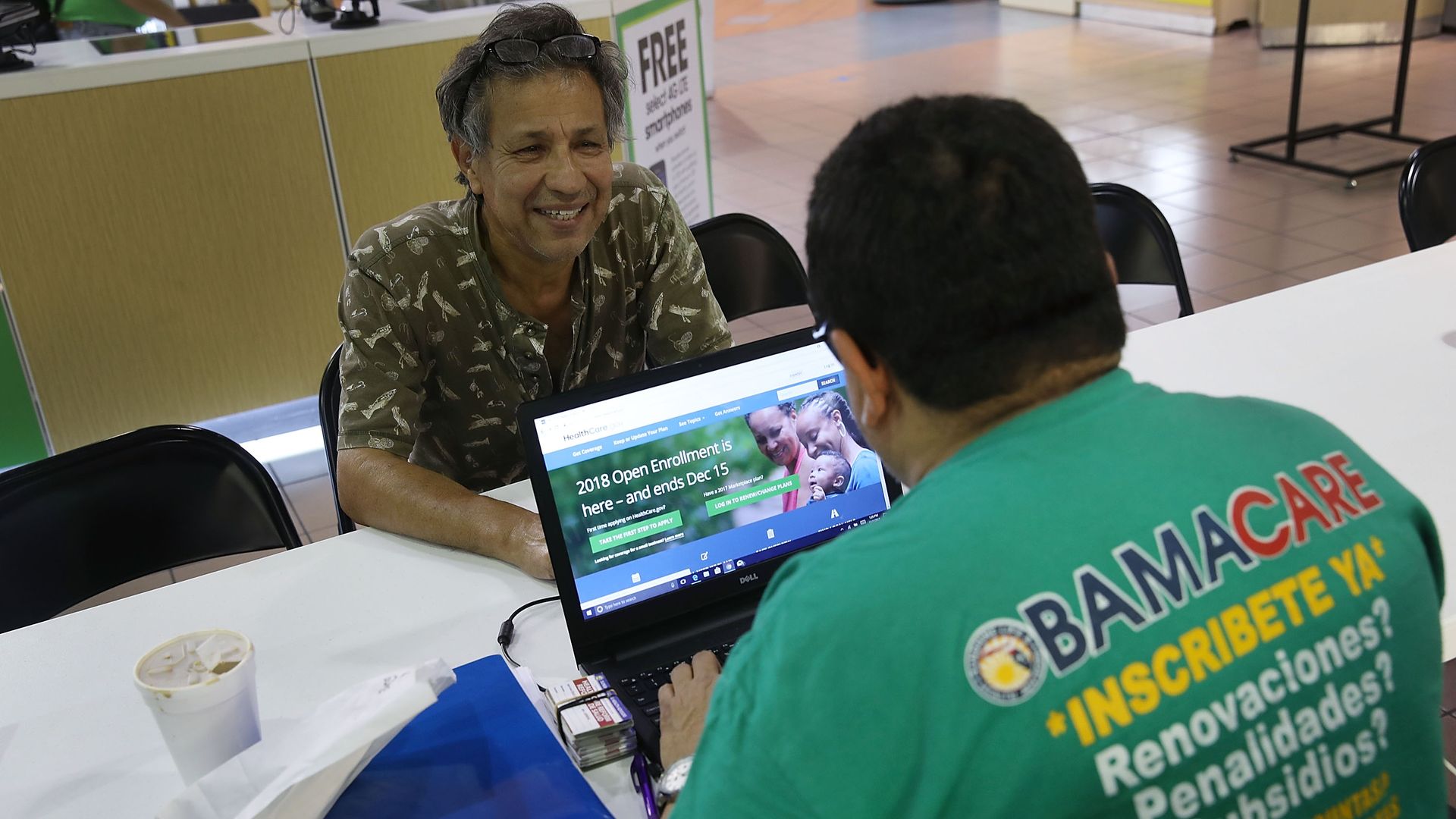
The Washington Examiner has a good breakdown of a surprising trend: More insurers are entering the market for ACA coverage next year, despite a slew of expert predictions that options would dwindle in the face of political uncertainty.
The catch: The conventional wisdom has been that regulatory uncertainty would lead to market exits and higher premiums. Instead it's leading, so far, to market entries — and higher premiums.
Beyond the chicken pox and flu, viruses are increasingly believed to play a role in other serious diseases, like cancer and brain diseases.
Case in point: Researchers announced today in Neuron that they found more live herpes viruses in the brains of patients with Alzheimer's disease than in those without the disorder. This doesn't prove the virus causes the fatal neurodegenerative disease 5.7 million Americans currently live with, but it suggests it plays a role in Alzheimer's pathology and may inform treatment.
The supply of prescription opioids is falling in almost every state, but Congress and the private sector still have a lot more to do to stem the tide of a still-growing epidemic.
Between the lines: States with laws limiting opioid prescriptions have seen the steepest declines in supply, suggesting that intervention can work. That's good news for both Congress and a coalition of health industry players responding to the crisis.
The U.S. pays the highest prices in the world for prescription drugs, and up to one in five prescriptions go unfilled because Americans can’t afford them.
Why it matters: When it comes to drug pricing, there is no incentive for any one part of the U.S. health care system to change. So it will take a dramatic shift for patients to see lower drug prices any time soon.