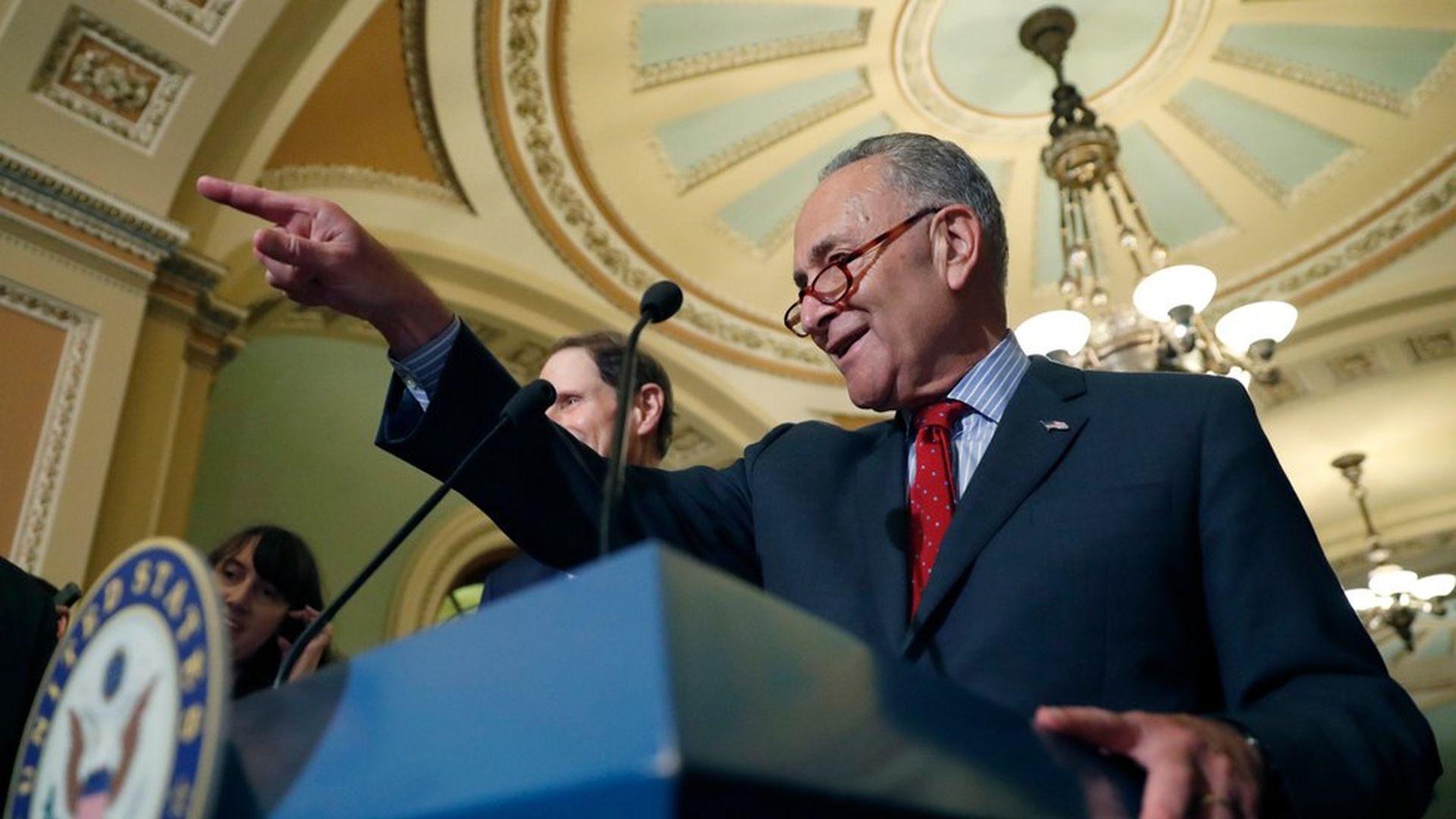
Following news that the Graham-Cassidy health care plan would not receive a vote, Senate Democrats said that they were ready to move forward with the GOP to better the Affordable Care Act. At the Democrats' weekly press conference, Chuck Schumer said, "We are ready at this moment to roll up our sleeves and work in a bipartisan way to stabilize this system and make improvements."
One more thing: Schumer said that he'd spoken with Puerto Rico's governor and pushed back on President Trump's comments that recovery efforts in Puerto Rico were going well, saying, "I'm not blaming. I'm beseeching for quick action…It is not going fine. Absolutely not. They need help now."
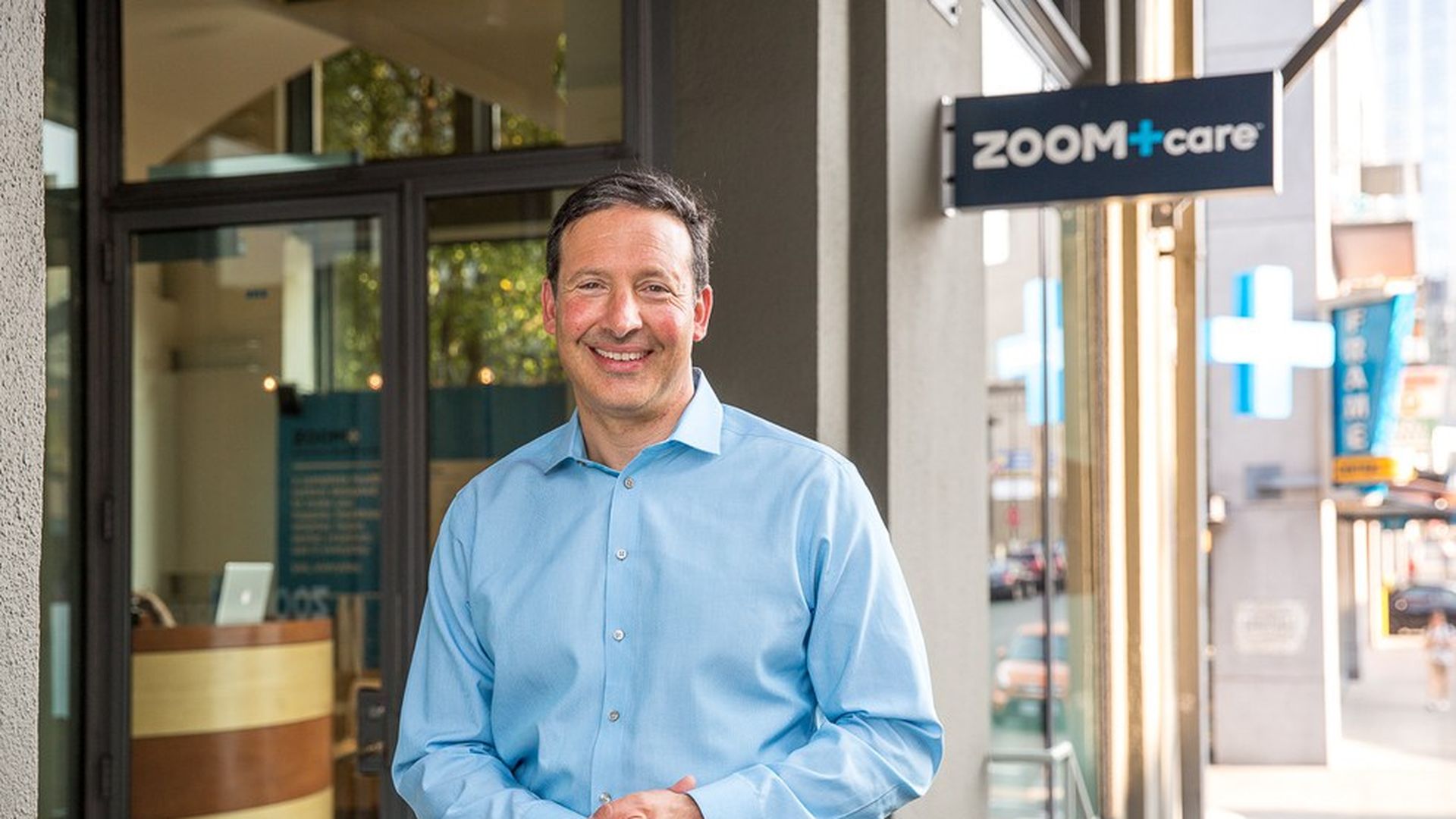
Venture capital firm Endeavour Capital is asking a court in Oregon to appoint a receiver for Zoom, the health care startup that operates clinics and has been under investigation by the FBI for allegedly falsifying medical claims. Endeavour, which has poured $61 million into Zoom, says an independent third party overseeing Zoom would "clear the way for a significant, badly needed cash infusion."
Between the lines: The two sides say they are "deadlocked," but asking for a court-appointed receiver usually indicates a much deeper rift. And in this case, Zoom's finances appear to be on the line. Zoom did not immediately respond to questions.
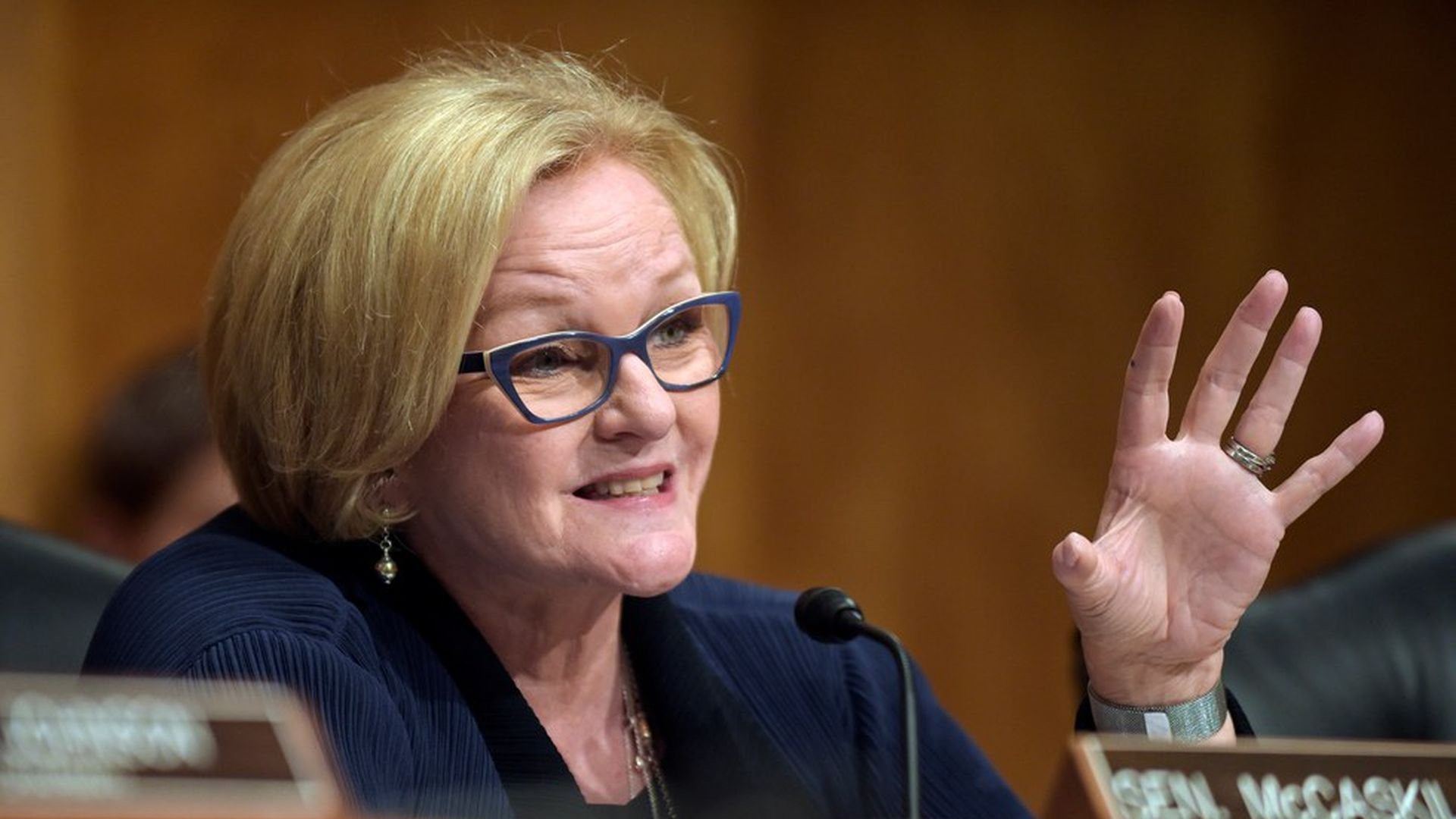
Sen. Claire McCaskill has sent a letter to Envision Healthcare CEO Chris Holden, demanding answers about the company's practices of billing emergency room patients for out-of-network charges. McCaskill heavily cited a New York Times report and a study that found an Envision subsidiary called EmCare routinely manages hospital ERs and avoids contracting with insurers so it can bill higher rates to patients.
Why it matters: Envision has faced heat from patients and shareholders, and now an influential politician is pushing to know sensitive matters, like how many complaints its ERs have fielded and what percentage of ER visits involve out-of-network billing. Envision has until Oct. 11 to respond to McCaskill's office.
Humira, the blockbuster anti-inflammatory drug that is routinely blasted on TV commercials, netted $13.6 billion in gross U.S. sales last year — the most of any brand-name prescription drug. The 20 top-selling drugs generated more than $98 billion in gross U.S. sales in 2016, or about $20 billion more than the U.S. Department of Transportation's budget from last year.