Tuesday's health stories

Trump reportedly thinks the House health bill is "mean"
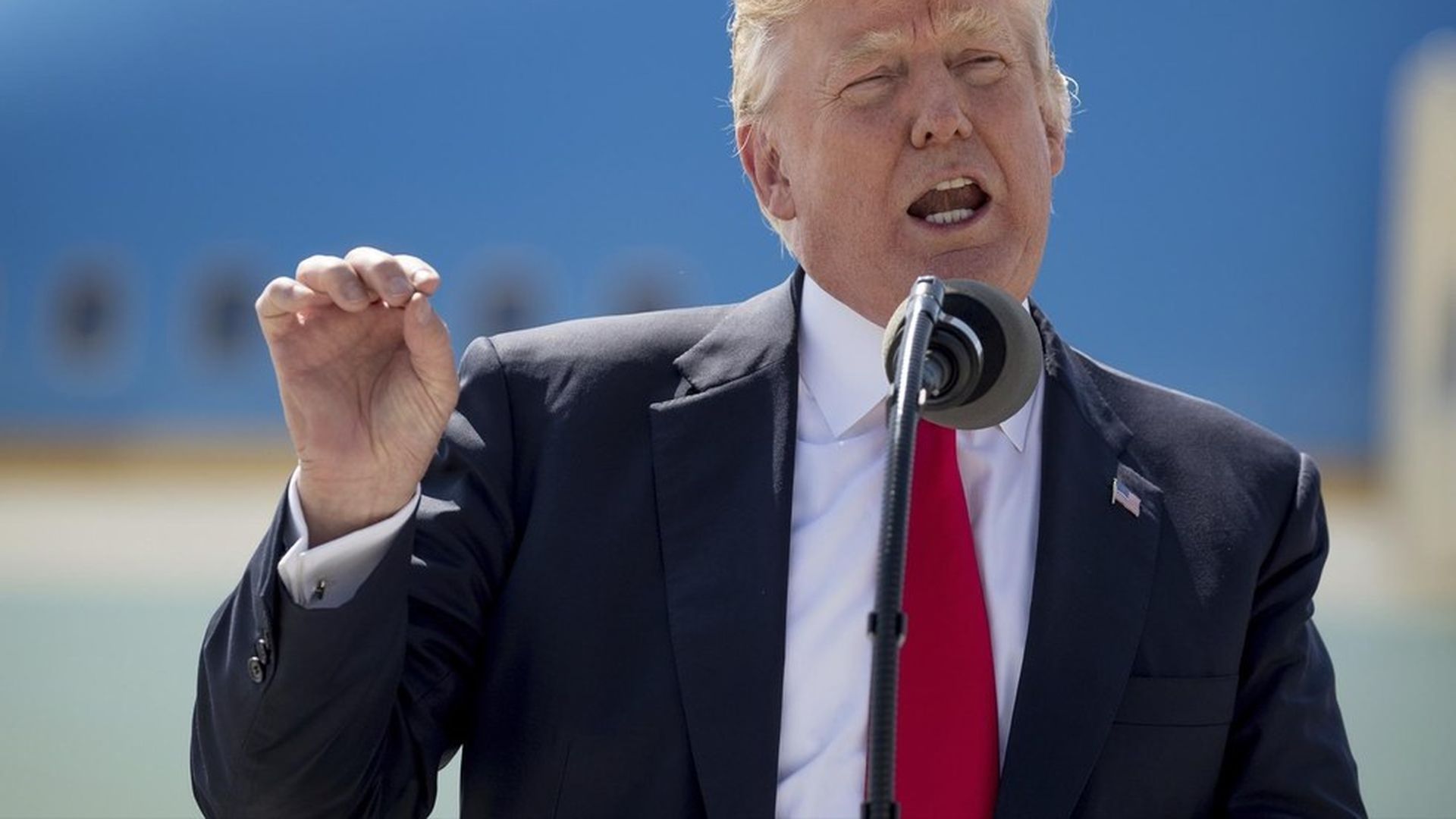
President Trump has told Republican senators that the House's American Health Care Act is "mean" and wants the Senate version of the bill to be "more generous," per the AP.
It's not known exactly what portions of AHCA Trump was criticizing, but in a statement on health care outside of Air Force One in Milwaukee this afternoon, he promised that the Senate would "come up with a solution — and a really good one" to repealing the Affordable Care Act.
Mitch McConnell dodges questions on ACA repeal
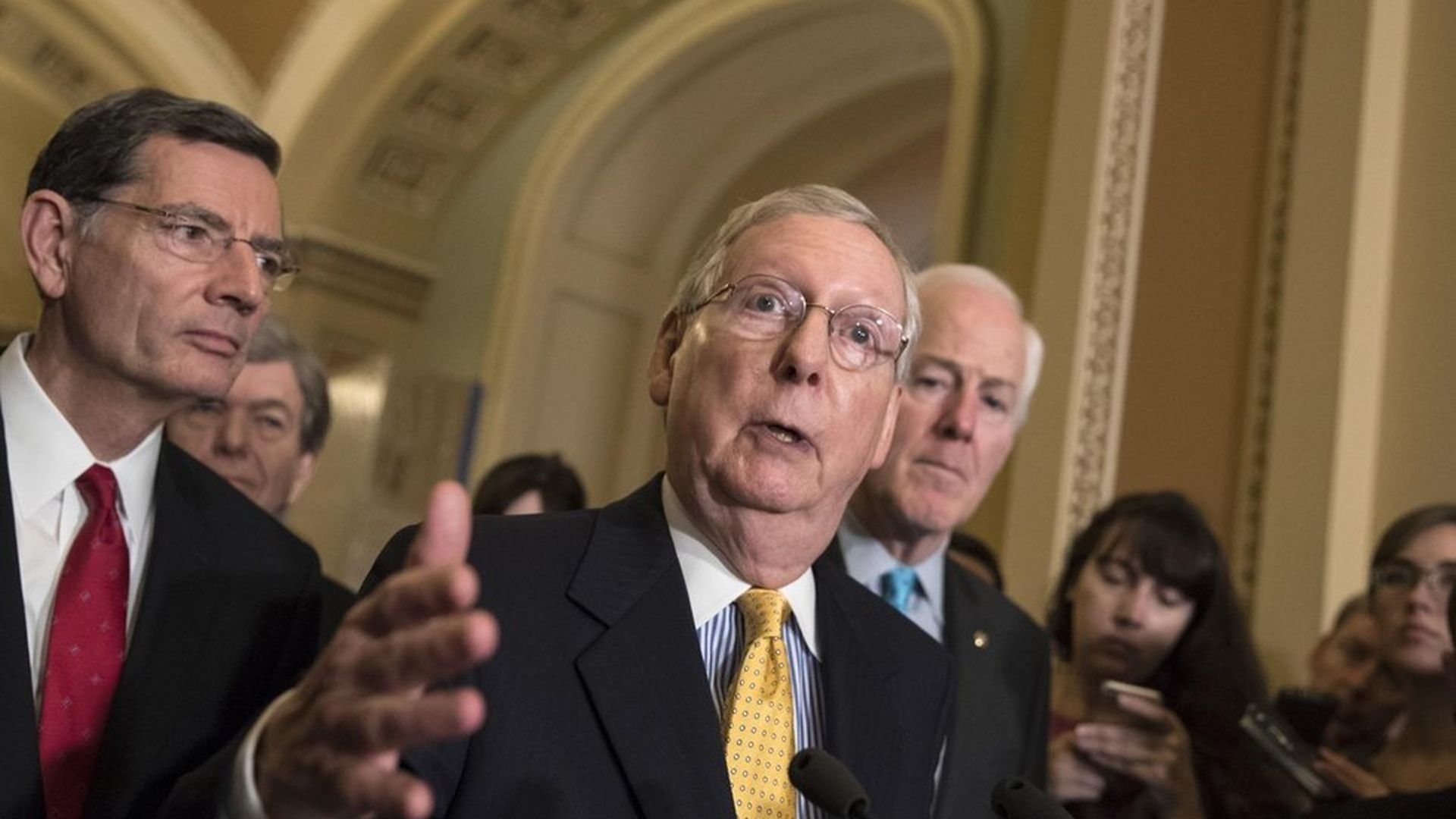
Senate Majority Leader Mitch McConnell continued to dodge questions on the timeline for — and even the existence of — the Senate's bill to repeal and replace the Affordable Care Act at the GOP's weekly press conference this afternoon.
- When the bill will be passed: "Well, you know, I'm not going to answer that with specificity. Our goal is to move forward quickly. The status quo is unsustainable. Something has to be done. Something has to be done soon."
- When the public can see the bill: "We'll let you see the bill when we finally release it."
- The bill's existence: "Look, we've been dealing with this issue for 7 years. It's not a new thing. We've spent a lot of time on it…Nobody's hiding the ball here, you're free to ask anyone anything."

Centene expands ACA presence as other insurers flee
Centene, a publicly traded health insurer that mostly covers the Medicaid population, will beef up its participation in the Affordable Care Act's individual exchanges — just as other insurers such as Aetna are retreating.
Centene said Tuesday it will enter Kansas, Missouri and Nevada and sell more ACA plans in six existing states. Centene covers 1.2 million ACA exchange customers, 90% of whom receive financial assistance through the law's subsidies.
Between the lines: Centene has been profitable on the exchanges and sees opportunity where other insurers see red ink. But it's worth noting why Centene has been profitable: It relies on extremely narrow networks of doctors and hospitals and high deductibles, but low premiums that attract healthier, price-sensitive buyers.
Exclusive: FBI is investigating an Oregon health care startup

Zoom, a health care startup based in Oregon, is on the brink of a meltdown. The FBI has issued a subpoena to Zoom, and numerous people have either quit or been laid off, according to interviews with several former Zoom employees.
The FBI is looking into allegations that Zoom retroactively falsified medical claims to avoid paying into an Affordable Care Act program called risk adjustment — in which health plans with healthy customers pay to help support insurers with sicker ones. Zoom declined to comment.
Why it matters: Zoom's alleged tampering of medical claims may have damaged other insurers that played by the rules — and it's sure to raise questions about whether other companies have done the same thing.