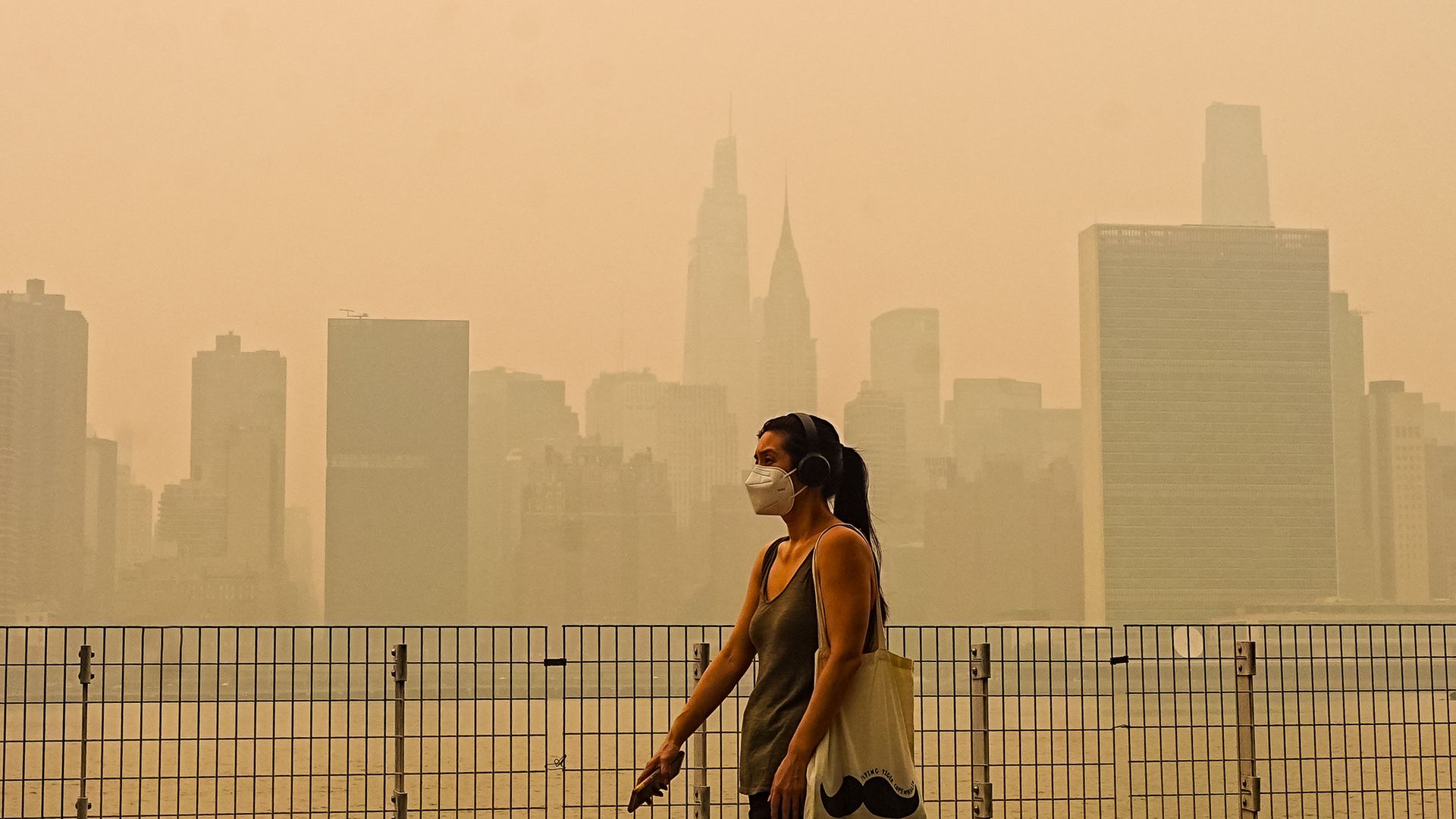
President Trump is threatening to raise tariffs on Canada over wildfire smoke that drifted from the country into the U.S., triggering health warnings and disrupting outdoor activities.
Why it matters: Dealing with Canadian wildfire smoke is becoming a semi-regular occurrence in the Midwest and Northeast.
Tim Pawlenty, the new head of the solar industry's lobbying group, sees his gig through lenses that are purple and green.
Why it matters: Minnesota's former GOP governor arrives at the Solar Energy Industry Association (SEIA) at a time of huge political problems for renewables under Trump 2.0.
But there are some tailwinds, too. Rising demand and AI put a premium on energy that can come online fast, and affordability is the political buzzword of the moment as electricity bills rise.
Ukraine's drone attacks on refineries have hammered Russia's oil infrastructure, creating an economic shock that is increasingly visible worldwide, including in the U.S.
Why it matters: The effectiveness of the Ukrainian drone campaign is helping drive up world energy prices already elevated by the Iran war.
Toronto pedestrians walk as wildfire smoke turns the skies orange. Photo: Cole Burston/AFP via Getty Images
The wildfire smoke drifting into the eyes, throats and lungs of millions of Americans and Canadians this week is a stark reminder that the planet is changing in unsettling ways.
The smoke, from wildfires raging in northern Minnesota and Canada, is causing dangerously bad air across the Midwest and Northeast — and could soon waft elsewhere.
Air quality alerts have been issued in New York, Chicago, Toronto and more, with officials urging folks to stay inside.