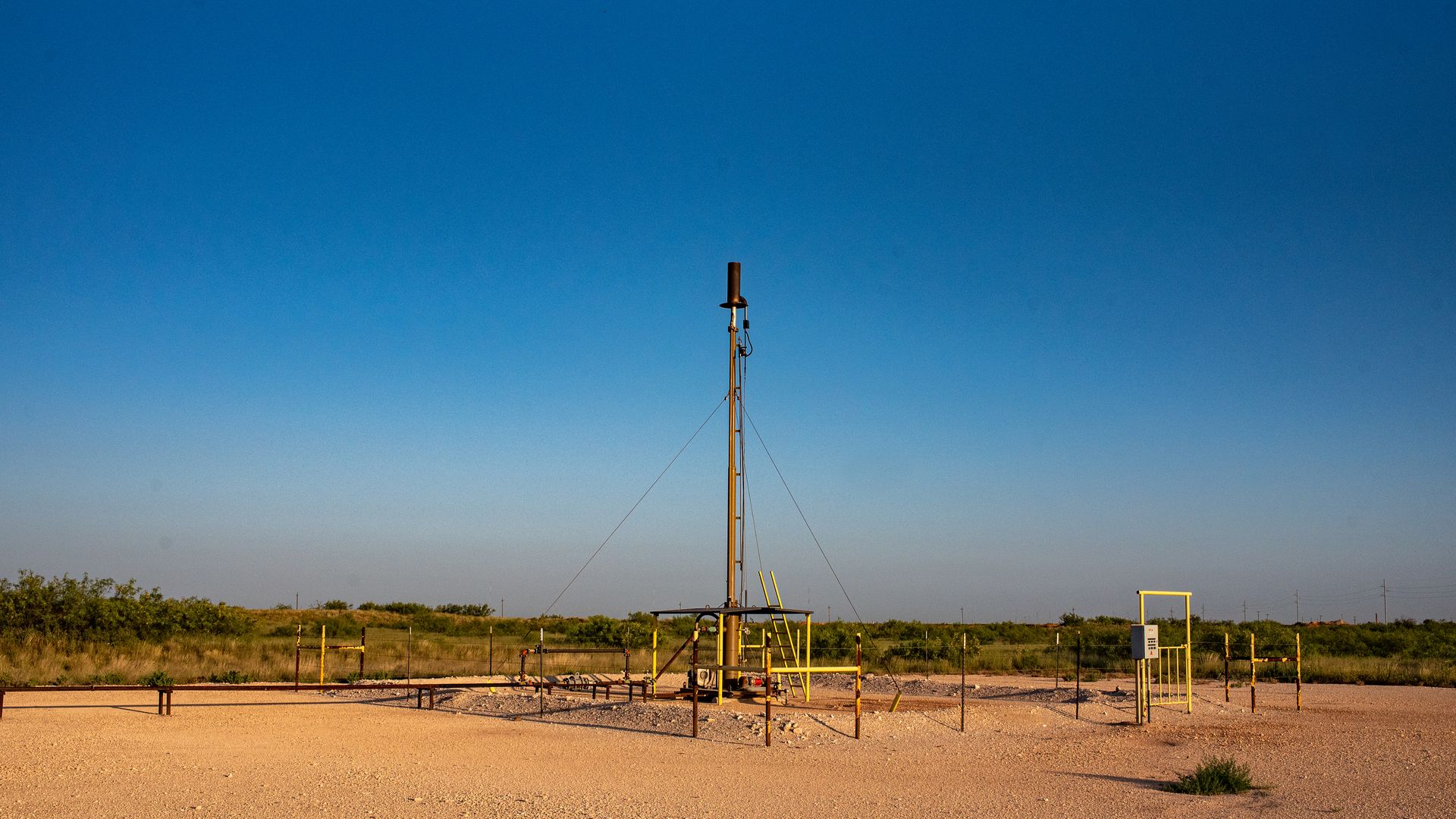
The Supreme Court ruled Wednesday that Texas and oil interests can't challenge the Nuclear Regulatory Commission's permit for a privately owned temporary nuclear waste storage site.
Why it matters: The 6-3 ruling is a win for the commission'sefforts to make progress in finding a home for high-level spent fuel from commercial reactors — a longtime source of gridlock among federal and state officials.
The Supreme Courtruled Wednesday that EPA decisions to reject multiple state ozone pollution plans can be challenged separately in regional courts.
Why it matters: Itenables more sprawling legal battles over implementation of federal standards for smog-forming pollution that moves across state borders.
A few details are emerging about Ford's affordable EV project, due in 2027.
Why it matters: Ford, like other global automakers, is scrambling to make electric vehicles profitably and still compete with lower-cost Chinese brands.
Analysts are slashing estimates for U.S. EV sales in coming years as GOP lawmakers and Trump officials scuttle tax credits and emissions rules.
Why it matters: Transportation is the biggest U.S. share of CO2. And dimming sales forecasts show a market that remains tethered to fast-changing policies.
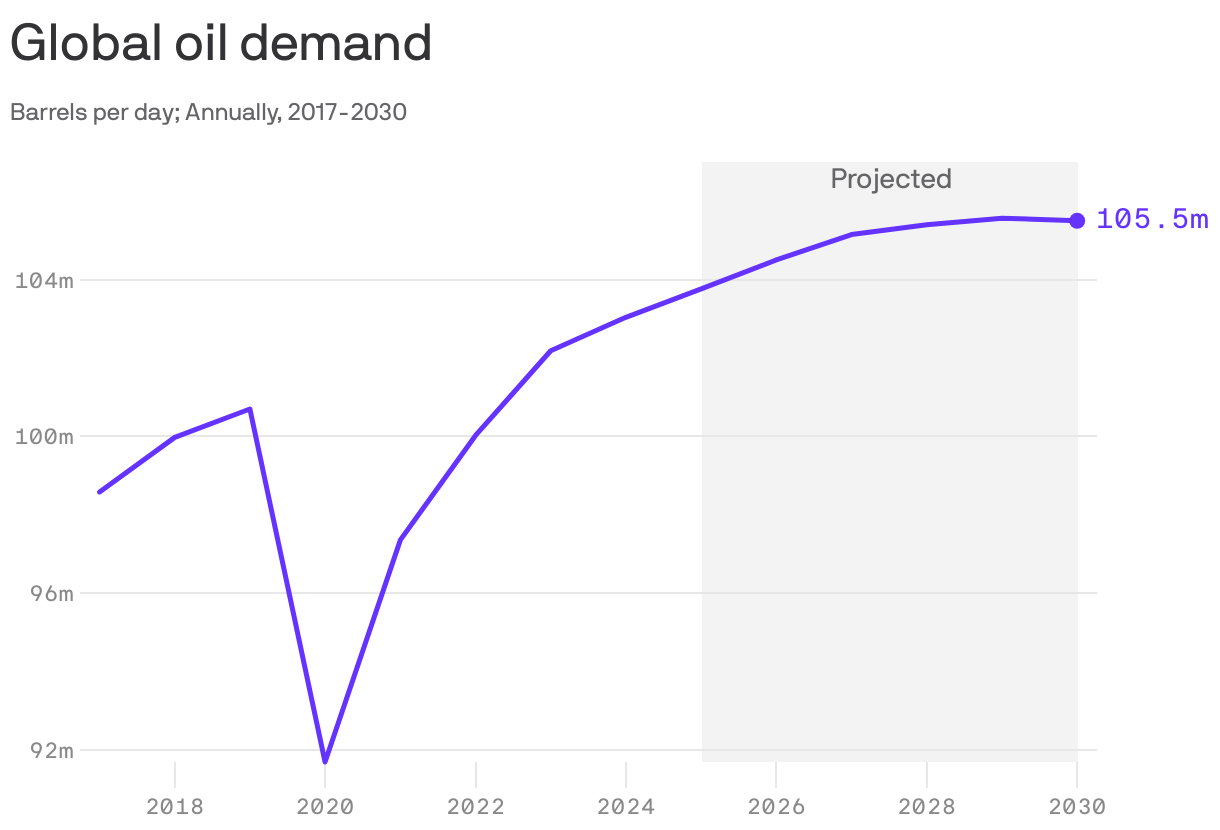
The International Energy Agency is sticking by its controversial view that global oil demand growth will end this decade, even dipping slightly in 2030.
Why it matters: The timing of a peak — and more importantly, the slope of any decline — affects everything from emissions to investment strategies.
A business-backed group with GOP ties is dropping ads in conservative media that urge six Republican senators to preserve IRA energy tax credits.
Why it matters: The $1.5 million buy — details of which were shared exclusively with Axios — expands the new coalition Built for America's Trump-focused campaign to defend the IRA on MAGA grounds.
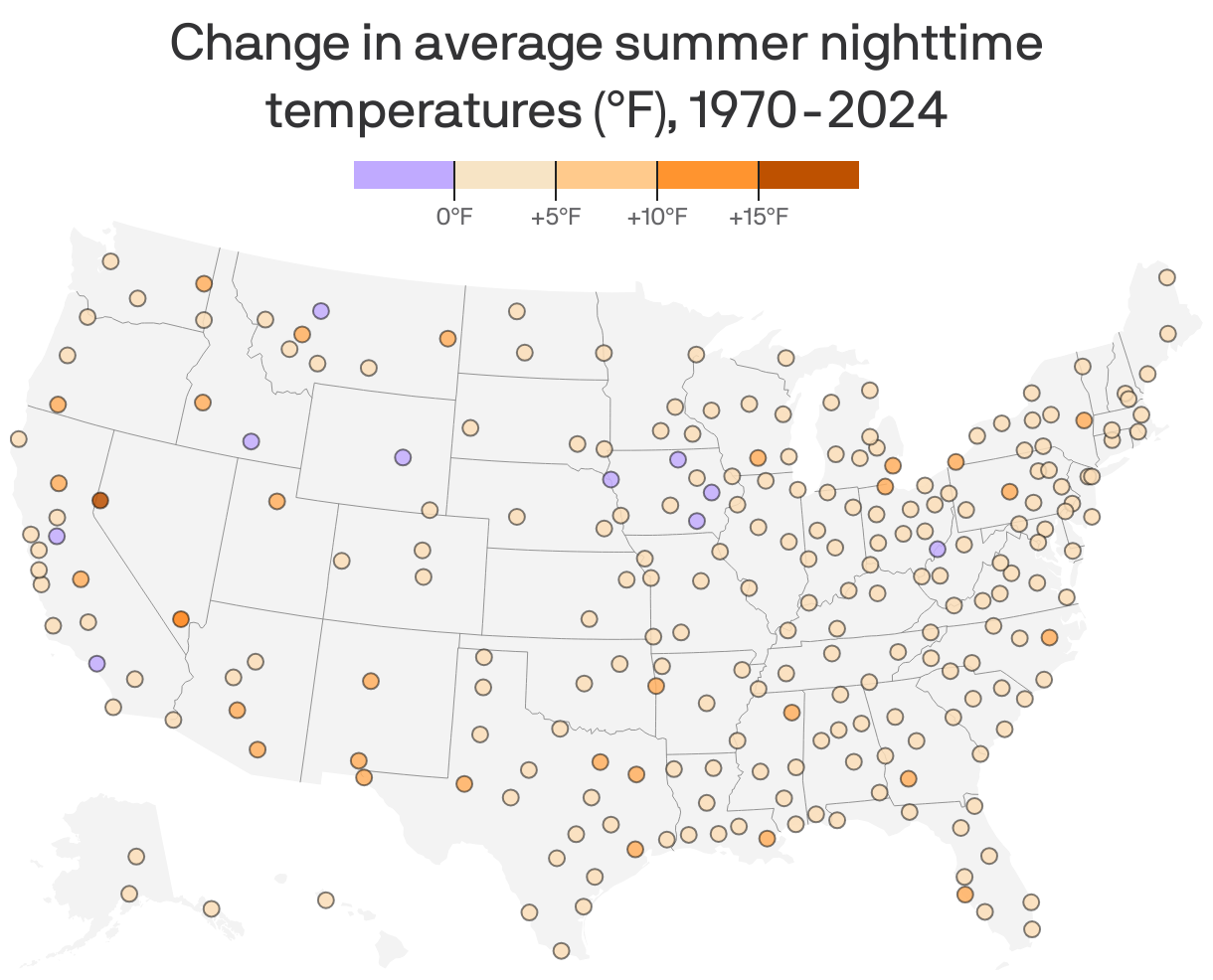
Data: Climate Central; Map: Alex Fitzpatrick/Axios
Summer evenings are getting warmer across much of the U.S. —especially in Nevada and other parts of the Southwest — amid climate change, a new analysis shows.
Why it matters: Higher overnight temperatures can have health consequences for vulnerable groups, as well as increase demand for air conditioning.