The White House rolled out initiatives Monday aimed at jump-starting the development of large offshore wind farms that together would power over 10 million homes.
Why it matters: The target of 30 gigawatts of generating capacity by 2030 would go well beyond the big projects already on the drawing boards.
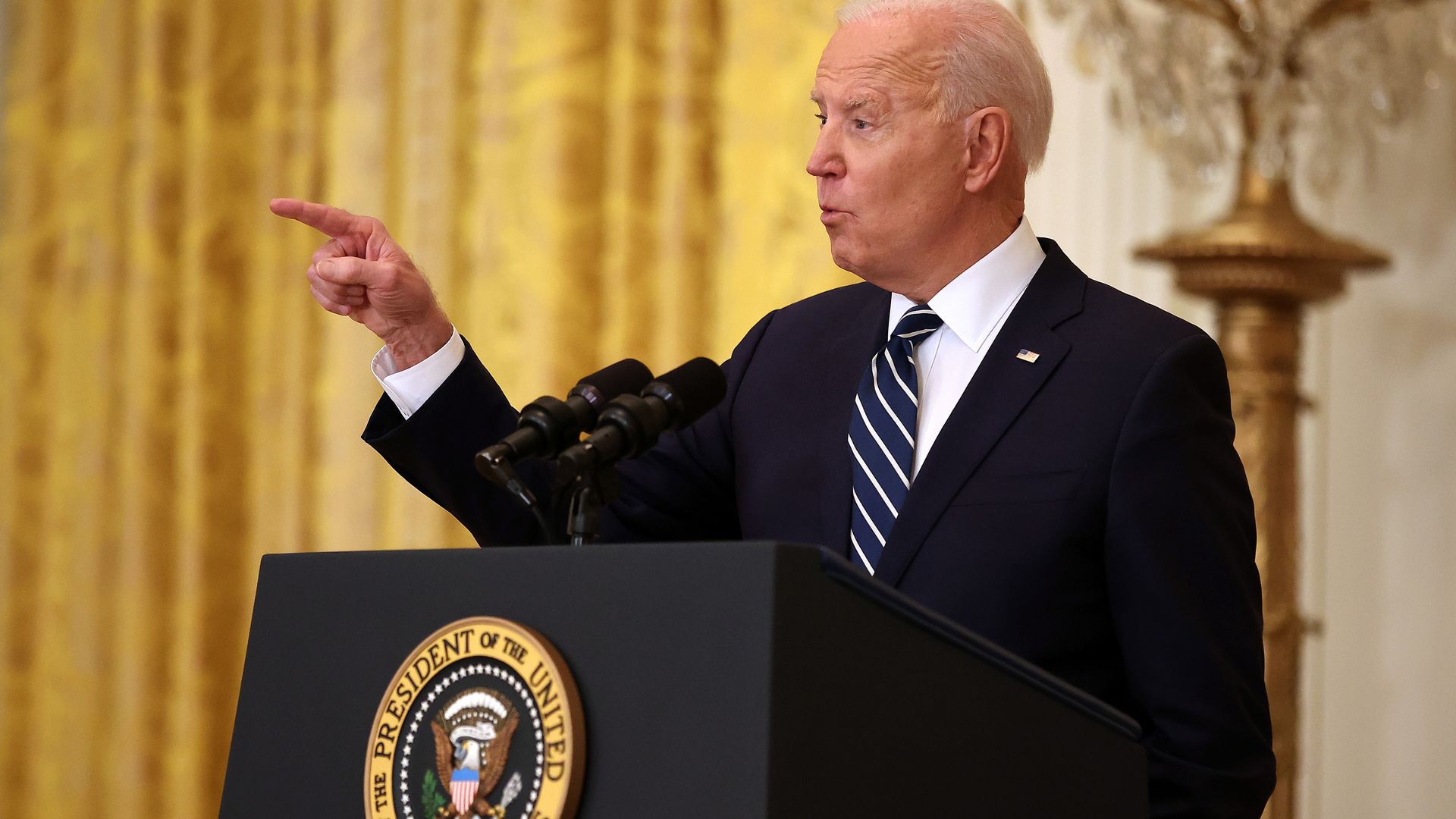
President Biden is expected to show his cards this week when it comes to energy and climate provisions he'll ask Congress to include in a big-dollar infrastructure package.
Why it matters: Biden campaigned on major investments in zero-carbon power, electric vehicle charging, climate-resilient infrastructure and more.
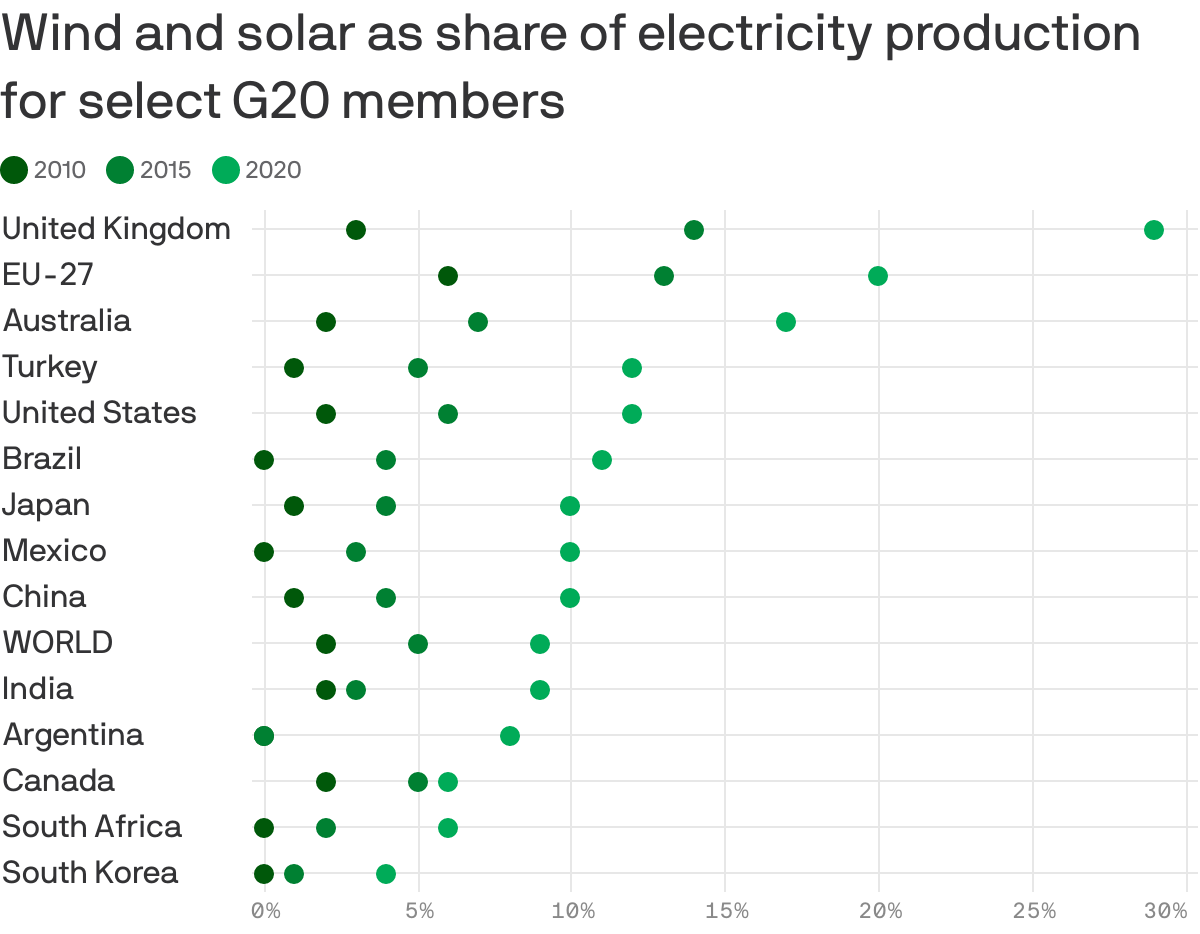
Data: Ember Global Electricity Review; Chart: Axios Visuals. Note: Indonesia, Russia and Saudi Arabia have "near-zero" wind and solar, the report states
New analysis shows how wind and solar growth are helping to displace coal-fired generation, but not nearly enough to slash overall emissions from electricity at a time of generally rising global demand.
Driving the news: Last year, a 15% rise in wind and solar generation combined with the pandemic briefly halting power demand growth led to a record drop in coal-fired output, the environmental think tank Ember said.
Progressives are trying to sell President Biden's infrastructure initiative with new cable TV ads arguing clean energy projects will immediately create thousands of jobs.
Why it matters: White House press secretary Jen Psaki suggested Sunday that Biden will split his potential $3 trillion package in two — investments in infrastructure, followed by billions more for the “caregiving economy.” The first political fight may be over what qualifies as infrastructure.
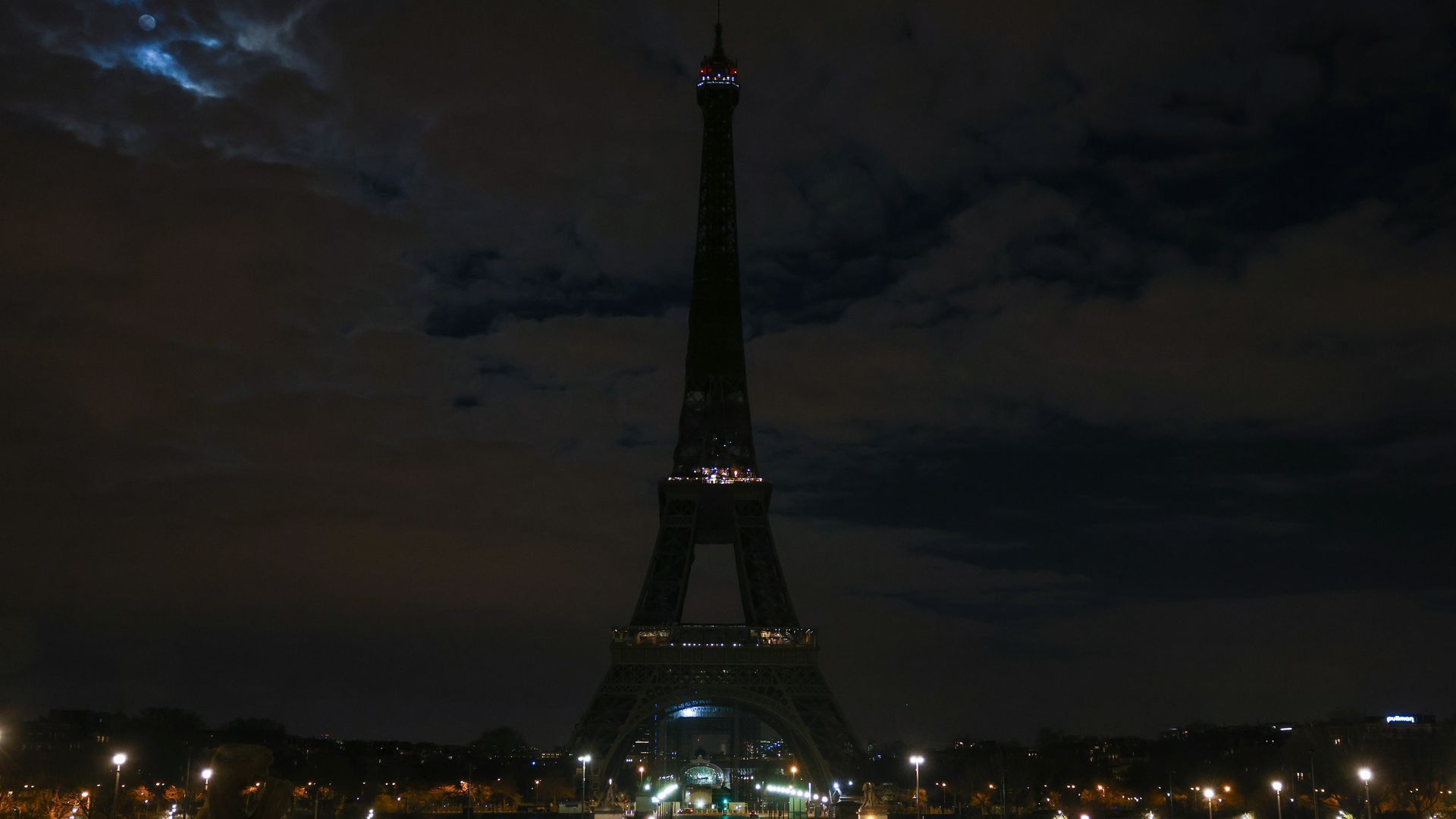
Cities around the world were turning landmark lights off Saturday for Earth Hour, with this year's theme highlighting the link between the destruction of nature and increasing outbreaks of diseases like COVID-19.
The big picture: City landmarks around the world went dark for an hour at 8:30p.m. to mark global action on climate change. Organizer WWF said in a statement, "COVID-19 has given us a stark warning of the risks, vulnerabilities and inequalities of our interconnected systems."