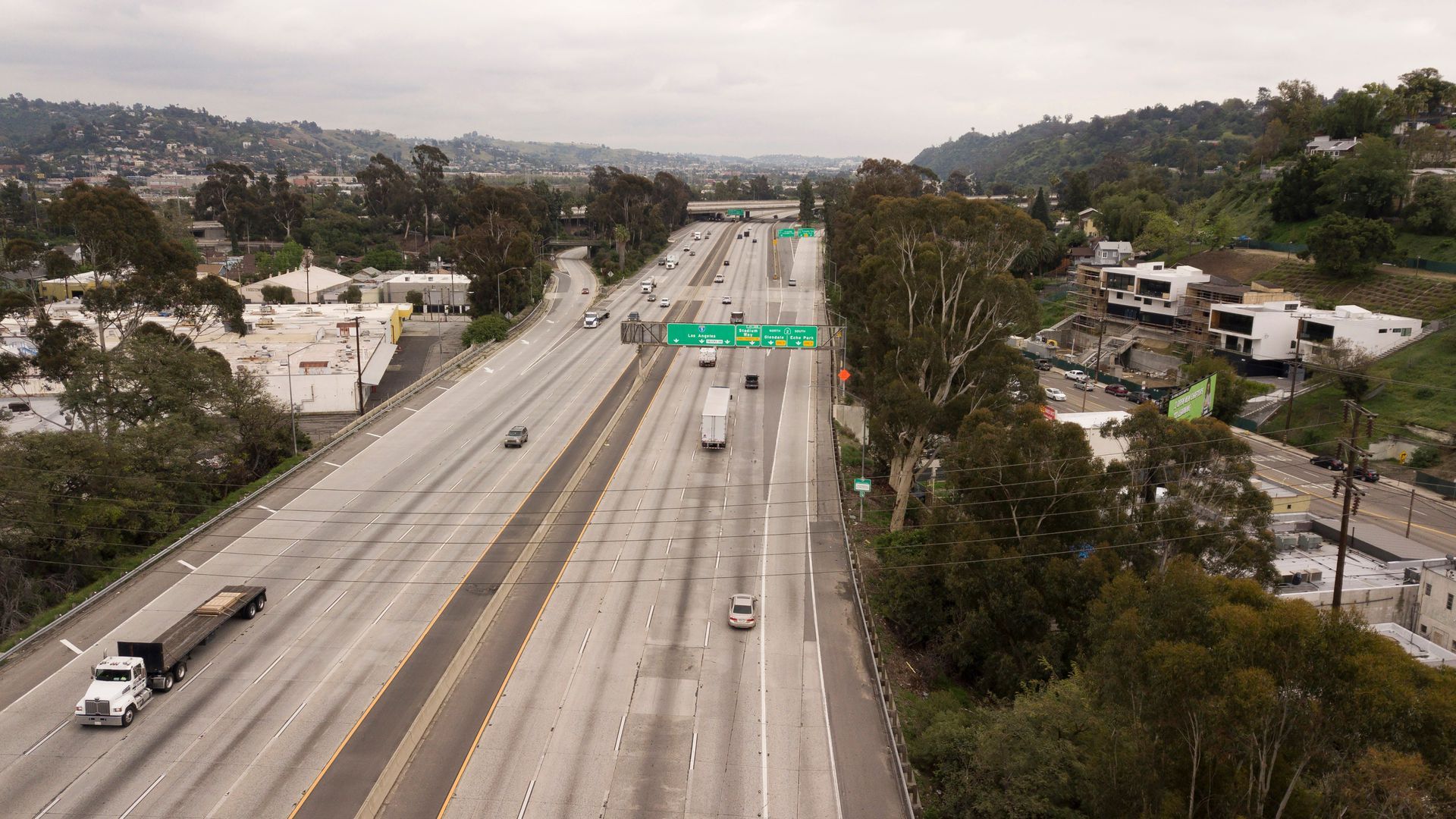
A recently released study finds that curtailed societal activity during the early stages of the pandemic also reduced emissions of pollutants that usually act to cool the climate.
The big picture: Coronavirus measures helped lead to a sharp, if temporary, reduction in greenhouse gases, but some other pollutants actually act to cool the climate — and with emissions of those significantly reduced as well, the climate warmed for a few months.
A sweeping new review makes the case that nature has a fundamental economic value — and our account is badly overdrawn.
Why it matters: The natural capital created by clean water and air, biodiversity and basic resources has been the foundation of human prosperity, but because it has no clear economic value, we too often treat it as infinite. Securing a sustainable future may require treating nature less like lottery winnings and more like a retirement account.
Jennifer Granholm, President Biden's nominee for energy secretary, is hinting that the new administration will be supportive of U.S. liquefied natural gas exports — but wants the gas sector to get cleaner too.
Driving the news: Her position is spelled out in newly available answers to written questions from lawmakers on the Senate Energy and Natural Resources Committee.
Putting U.S. carbon emissions on a steep downward path would cost plenty of money. But waiting to act is way more expensive, a new analysis out this morning concludes.
Driving the news: The research firm Energy Innovation modeled two policy scenarios for reaching net-zero emissions by 2050, a common target for limiting the amount of future warming.
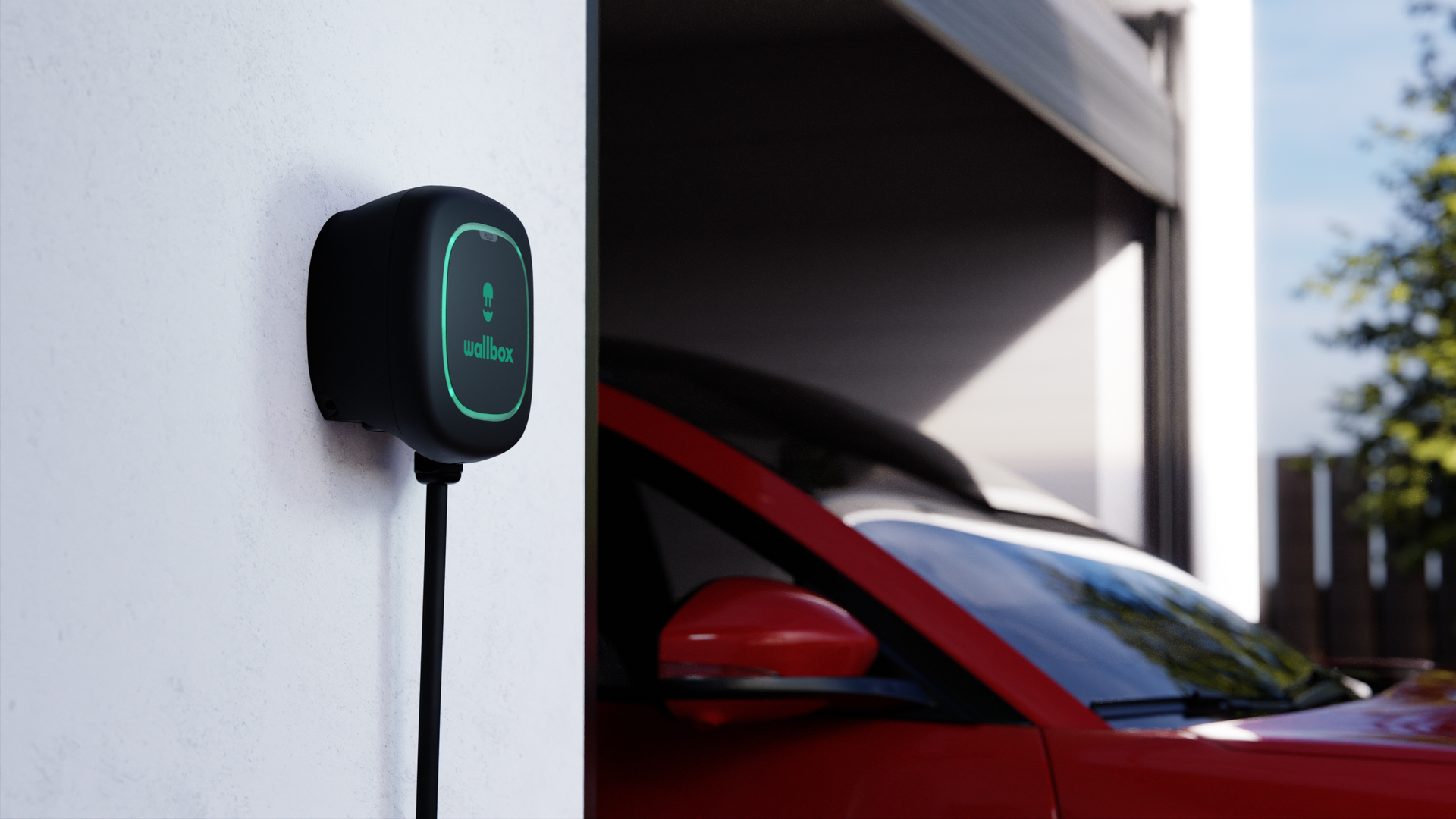
If electric vehicle sales are going to take off in the U.S. as expected, demand for home chargers will likely surge as well.
Why it matters: Even though President Biden has vowed to add 500,000 public EV charging stations across the country, the reality is that most EV owners will be able to get all the power they need by plugging their car into a home charger overnight.
The COVID-19 pandemic is an "accelerant" of a divergence between the world's poor and its wealthy, Rockefeller Foundation President Rajiv Shah said at an Axios event Tuesday.
Why it matters: Shah said "history has shown we did not do enough" for the world's lower income communities coming out of the 2008 recession, "and we have experienced this tremendous divergence as a result."
Ambitious long-term emissions targets are now pretty commonplace for big emitting nations, but two things highlight the deep disconnect between the goals and getting on a path to achieve them.
Driving the news: A new BloombergNEF analysis looks at climate policies in G20 economies that would actually spur implementation of measures consistent with the goals of the Paris Agreement.
Exxon on Tuesday announced a roughly $20 billion dollar quarterly loss, signaling the latest challenges for the company that has now posted losses in the last four quarters.
Driving the news: The company's Q4 result stemmed from over $19 billion in write-downs on the value of its assets. But excluding the impairments, Exxon posted a small profit of 3 cents per share, and its stock ticked up slightly this morning.
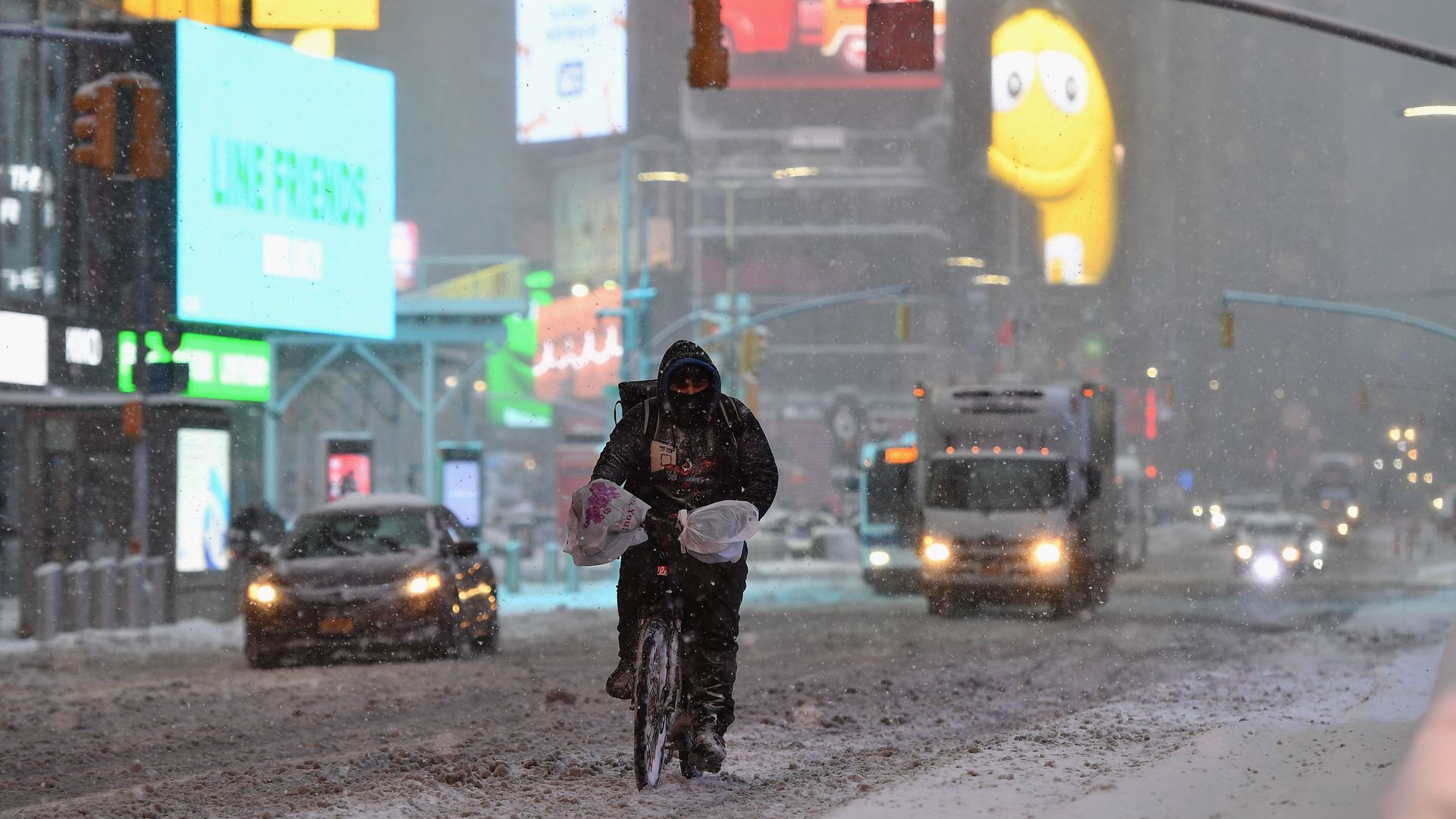
The first major winter storm of 2021 was lashing much of the Eastern U.S. over Monday night, with up to 30 inches of snow falling in some places.
The big picture: COVID-19 vaccination sites and schools closed across the Northeast, including in Massachusetts, Connecticut, and New York City, where the outdoor subway service was suspended. New Jersey's Transit also paused its bus and rail operations. Hundreds of flights were canceled or delayed in NYC, Philadelphia and Boston. At least three deaths have been attributed to the storm in Pennsylvania, per AP.