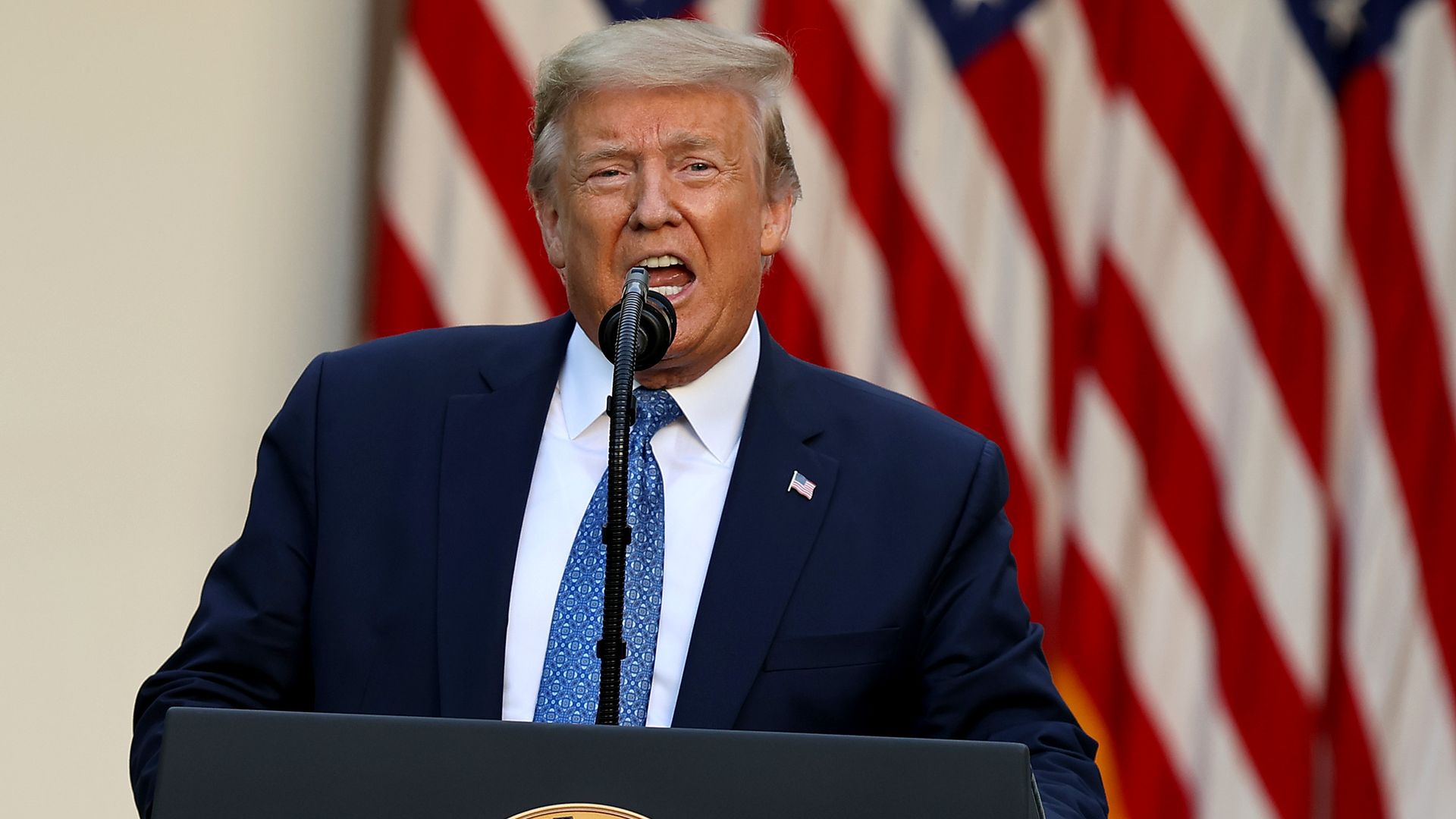
President Trump signed an executive order on Thursday allowing agencies to accelerate infrastructure projects that may have significant environmental impact without formally weighing those potential consequences or requesting public input, the Washington Post reports.
Why it matters: The move is based on Trump identifying the coronavirus pandemic as an economic emergency, which waives the usual rules that federal agencies follow when reviewing projects like highways and energy infrastructure.
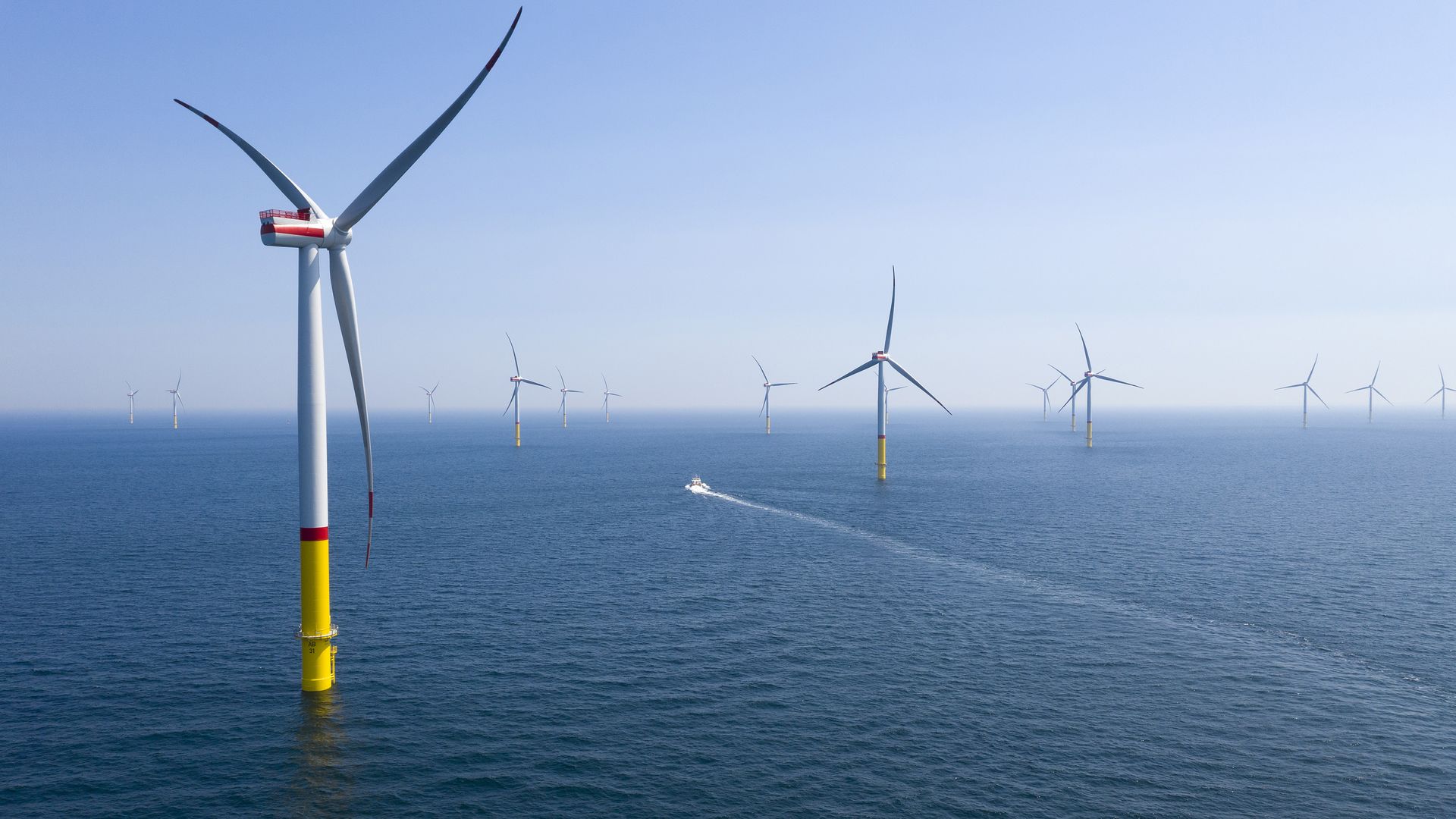
The huge multinational oil-and-gas company Total plans to acquire a 51% stake in a very large offshore wind project slated for construction off the Scottish coast called Seagreen 1.
The state of play: The project 1.14-gigawatt project is slated to begin operation at the end of 2022 and will produce enough energy for roughly 1 million homes, Total said.
Oil companies in the battered shale patch are starting to bring back some production as prices climb, but a new report underscores how the pandemic is taking a heavy financial toll despite signs of revival.
Driving the news: Fourteen North American producers have filed for bankruptcy thus far during the second quarter, per a tally from the law firm Haynes and Boone, which closely tracks the sector's finances.
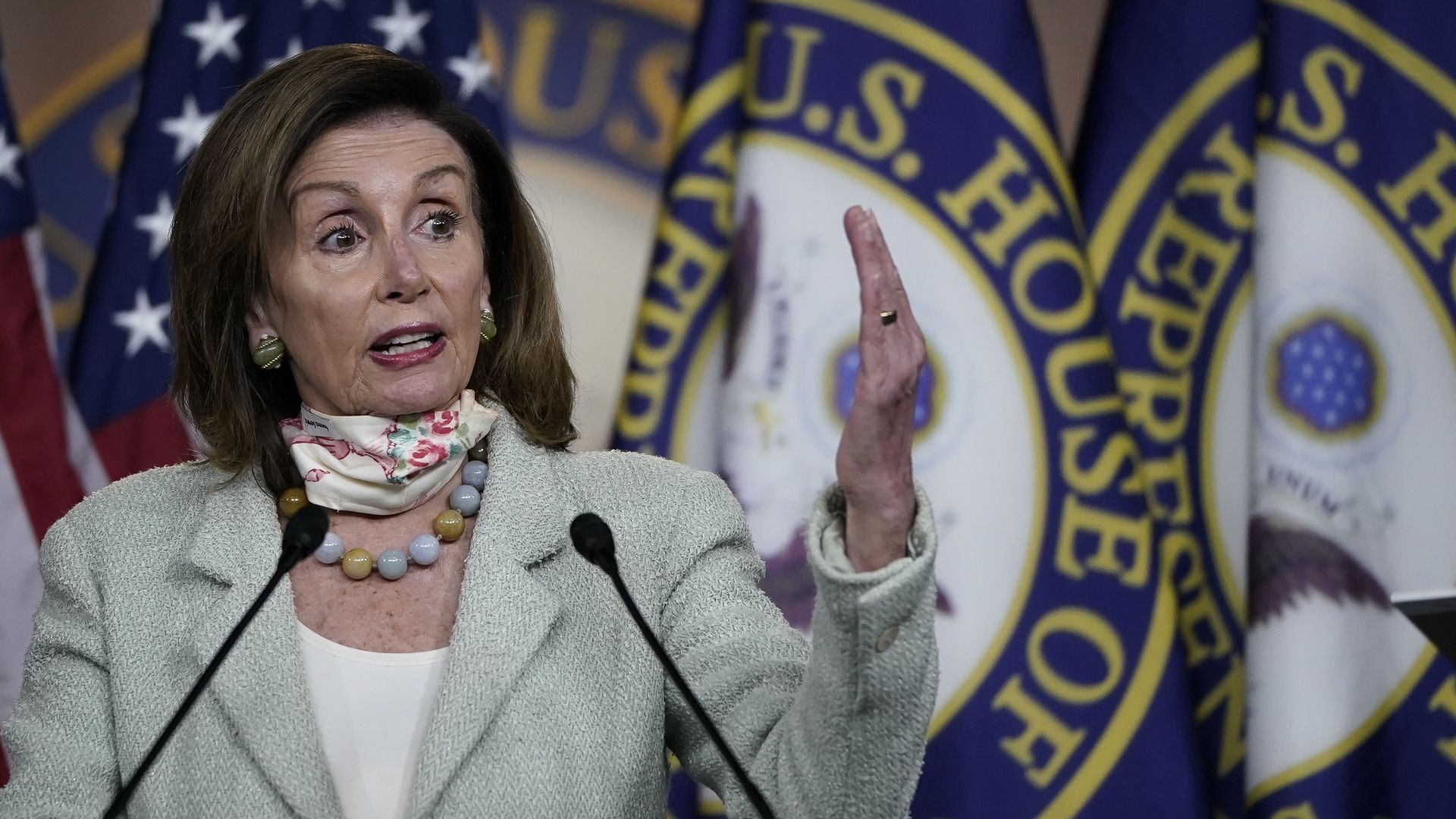
House Democrats unveiled a five-year, roughly $500 billion transportation proposal Wednesday aimed at bolstering mass transit and creating carbon-cutting initiatives.
Why it matters: The bill arrives as mass transit agencies are struggling with a collapse in ridership from the coronavirus pandemic, and facing a tough future as social distancing will require reduced capacity and virus-wary riders may stay away in favor of cars.
The downturn in the Permian Basin, the heart of the U.S. oil patch, was large enough to cause a big drop in electricity use there, analysis from a University of Chicago energy think tank shows.
What they did: Their analysis looks at daily declines and fluctuation compared to a pre-COVID baseline (captured above), as well as the average drop-off since mid-March, which is 24%.
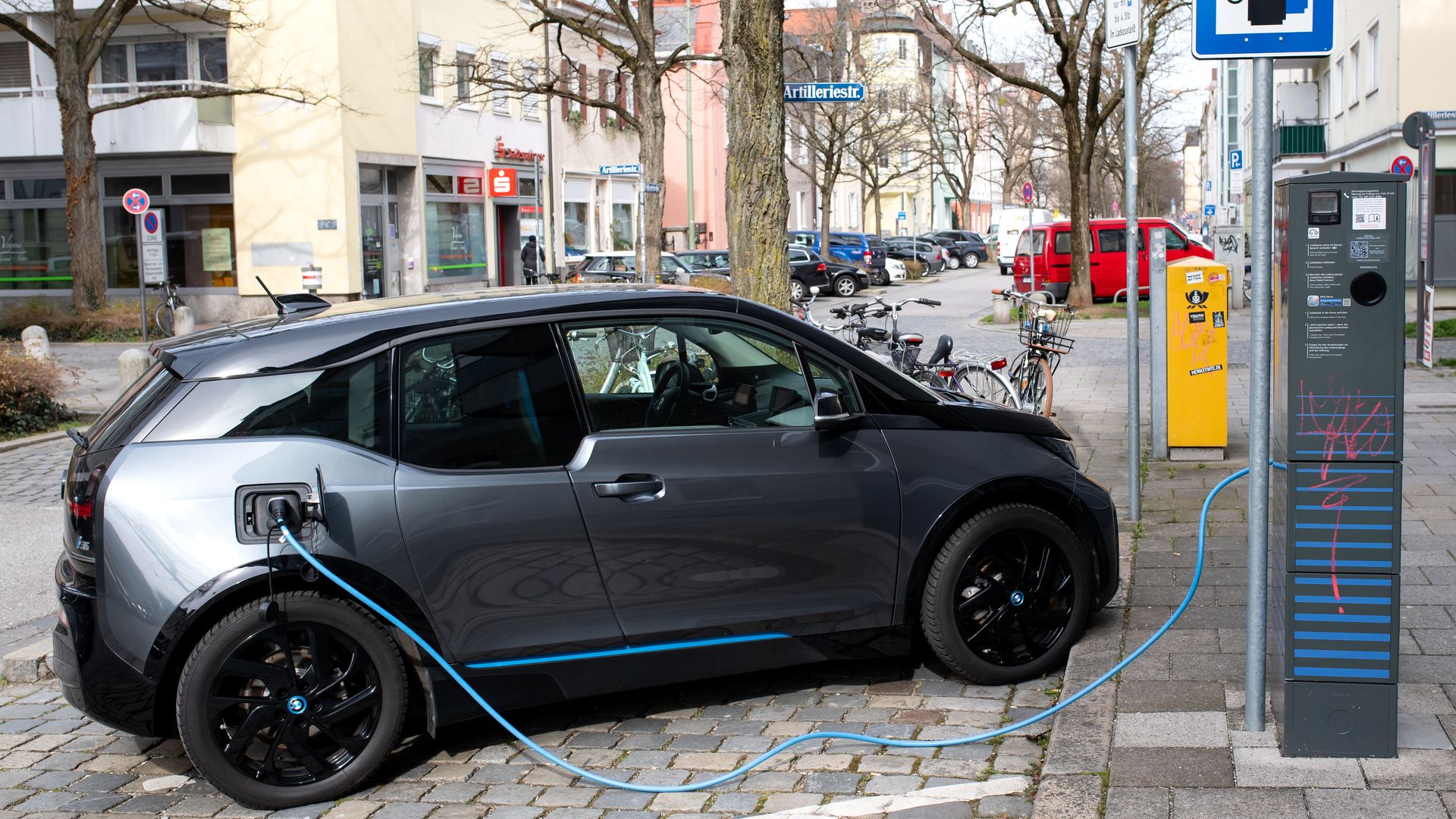
"Germany is doubling incentives offered to buyers of battery-powered cars as part of a 130 billion-euros ($146 billion) economic recovery package for the period through the end of next year — but the government refused pleas for the program to include internal-combustion cars," Automotive News reports.
Why it matters: It fills in some of the blanks in the wider — and very open — question of how much governments will seek to use stimulus packages to bolster low-carbon technology as they support domestic industries.
Energy trade associations are denouncing systemic racism that perpetuated the killing of George Floyd by white police officers and other similar acts of racial discrimination in recent years.
Why it matters: The comments show how transcendent this topic is becoming as protestors take to the streets around the country calling for an end to police violence which has disproportionately impacted black people.
The killing of George Floyd in police custody and protests against systemic racism are prompting many green groups to declare their support for racial justice, and one thing to watch now is how this all might influence Joe Biden's platform.
Driving the news: Even before the recent mass upheaval in response to Floyd's death, Biden said he was expanding outreach and eyeing wider plans around environmental justice, or the disproportionate pollution burdens facing poor communities and people of color.