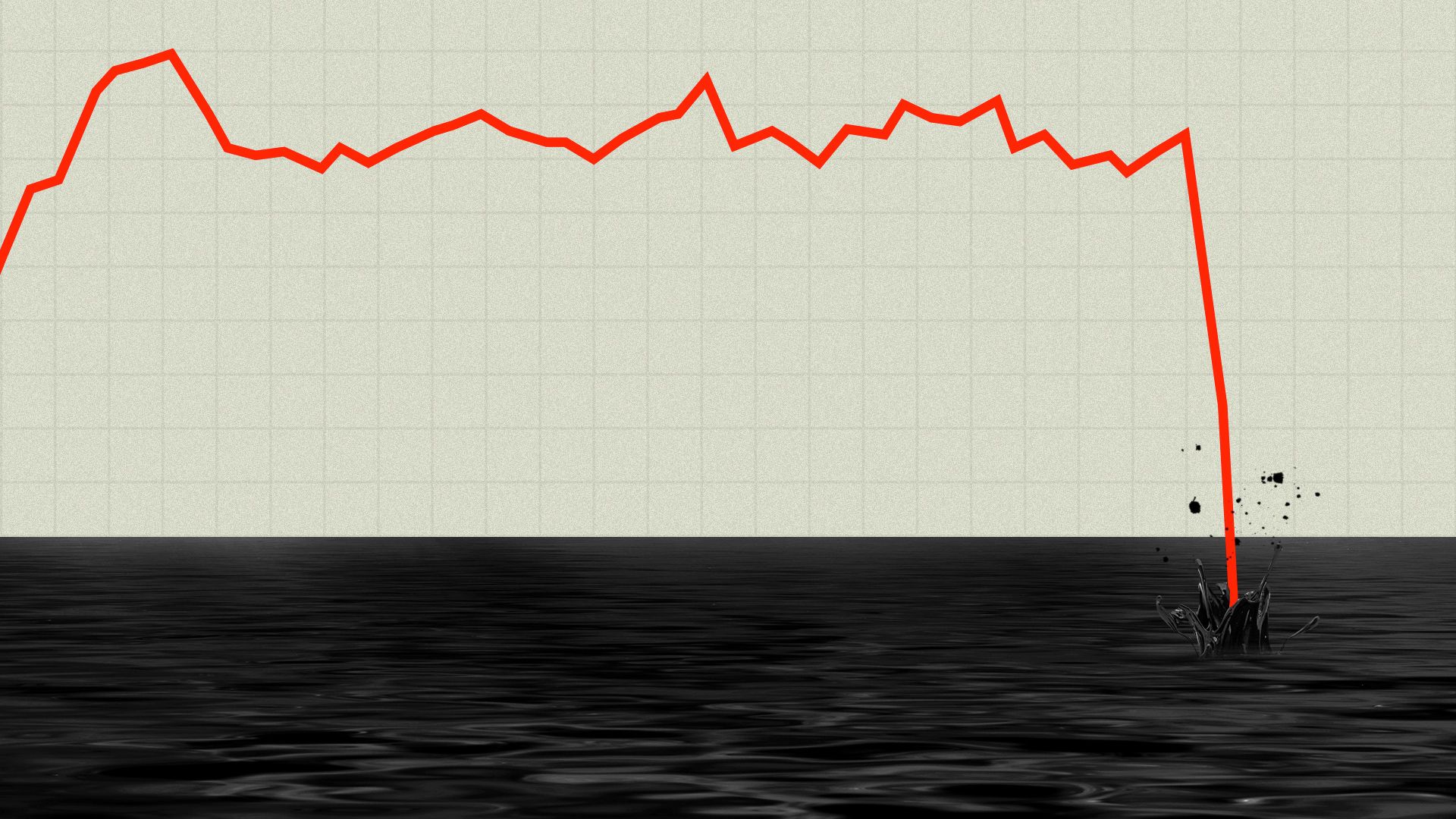
Oil prices haven’t changed all that much in response to the announcement Sunday of an international agreement on historically steep oil production cuts.
Where it stands: The global benchmark Brent crude is trading in the $31-per-barrel range, not far from where it ended last week, and the U.S. benchmark WTI at around $23.
China might delay submitting revised climate plans to the United Nations "at least until after the U.S. presidential election in November as officials focus on reviving the economy from an unprecedented slowdown," Climate Home News reports.
Why it matters: China is the world's largest greenhouse gas emitter, and the story signals how the coronavirus-related postponement of critical United Nations talks, which had been slated for November, could shake up the landscape.
Oil prices rose after news of a production cut agreement between the world's largest producers, but experts warn the move will not be enough to sustainably hold up prices or change the industry's bleak trajectory.
Driving the news: Crude futures jumped about 5% to near $25 a barrel for WTI crude after the OPEC+ alliance agreed to a 10 million barrels-per-day production cut beginning in May that ended a price war between Saudi Arabia and Russia.
The world is short on many things we need — masks, tests, toilet paper — yet we’re too long on one thing we suddenly don’t need much: oil.
The big picture: This oversupply crisis is, understandably, lost on people. We’re locked down with nowhere to go, not seizing cheap pump prices, struggling to manage our grave new world and mourning loved ones afflicted by the coronavirus.
The OPEC+ group led by Saudi Arabia and Russia finalized plans Sunday to steeply cut oil production by a combined 9.7 million barrels per day, Bloomberg and Reuters report, capping a tumultuous, days-long stretch of international talks that included the U.S. Additional cuts are expected from producers outside the OPEC+ group.
Why it matters: The agreement marks oil producers' first coordinated response to the COVID-19 pandemic, which has caused an unprecedented collapse in global oil demand and pushed prices to very low levels.