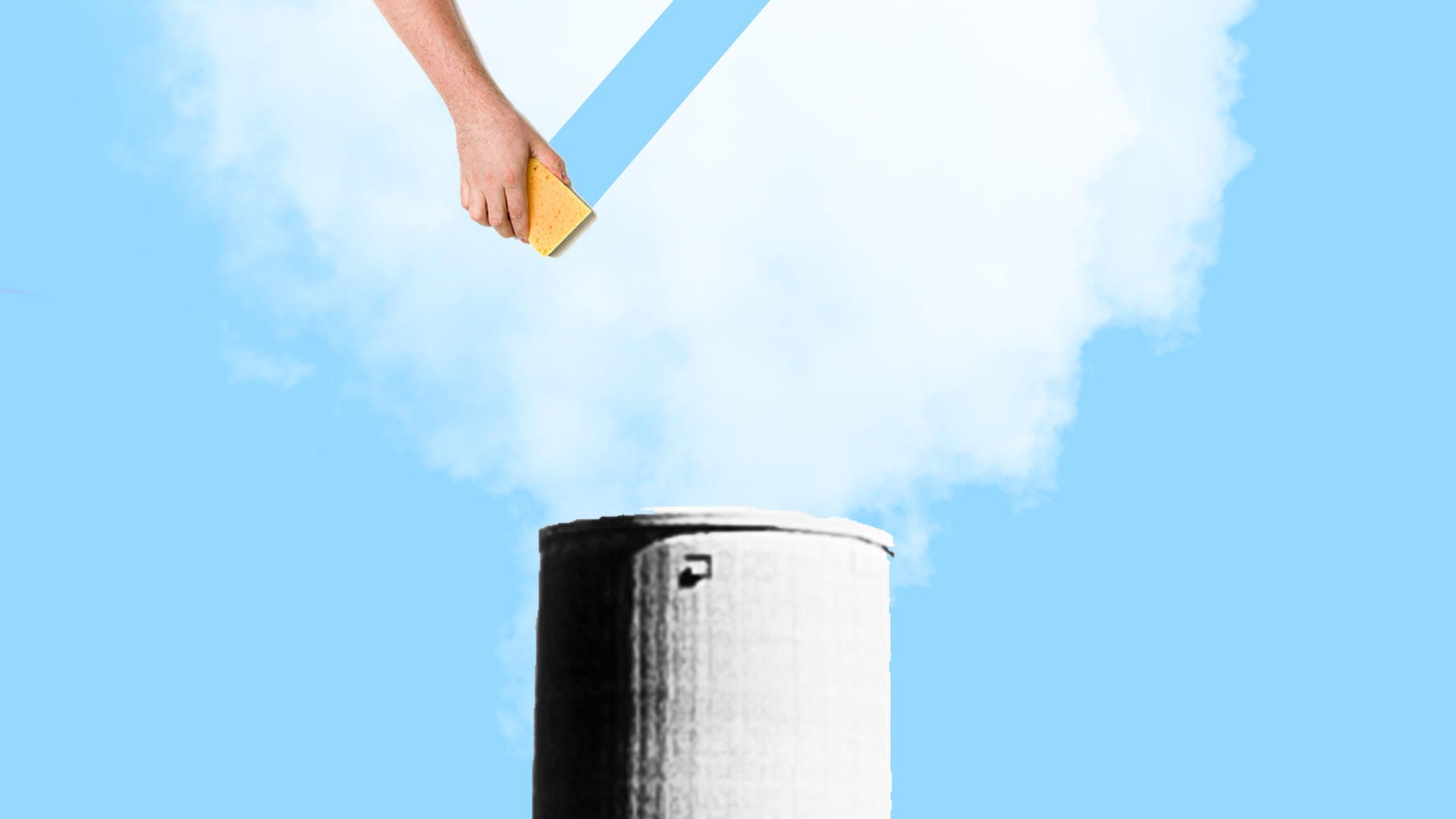
Technology behind capturing carbon dioxide emissions and turning them into everyday products — everything from lipstick to concrete — is getting a multi-million dollar boost in a new initiative led by the University of Michigan.
Why it matters: These technologies, as far-fetched as they may seem, are technically feasible and are increasingly essential in two ways: addressing climate change and prolonging the use of fossil fuels in a carbon-constrained world.
Southern California Gas Company reached a $120 million settlement with both the county and state government after a gas leak at a storage facility in October 2015 that allowed natural gas to flow into the air for months, Attorney General Xavier Becerra announced on Wednesday.
The big picture: The settlement still needs approval from the Los Angeles Superior Court, but if given the green light it would create a new internal safety committee, retain an ombudsman, and shift costs on paying the settlement away from the company's local ratepayers.
The Securities and Exchange Commission has asked Tesla for information related to CEO Elon Musk's tweets about taking the company private, according to The Wall Street Journal.
Why it matters: Musk tweeted "funding secured" for a possible $420 per share bid, but there has been lots of skepticism because he hasn't yet identified any participating investors. The SEC reportedly wants to know if the statement was factual. If it wasn't, he could be subject to accusations of market manipulation.
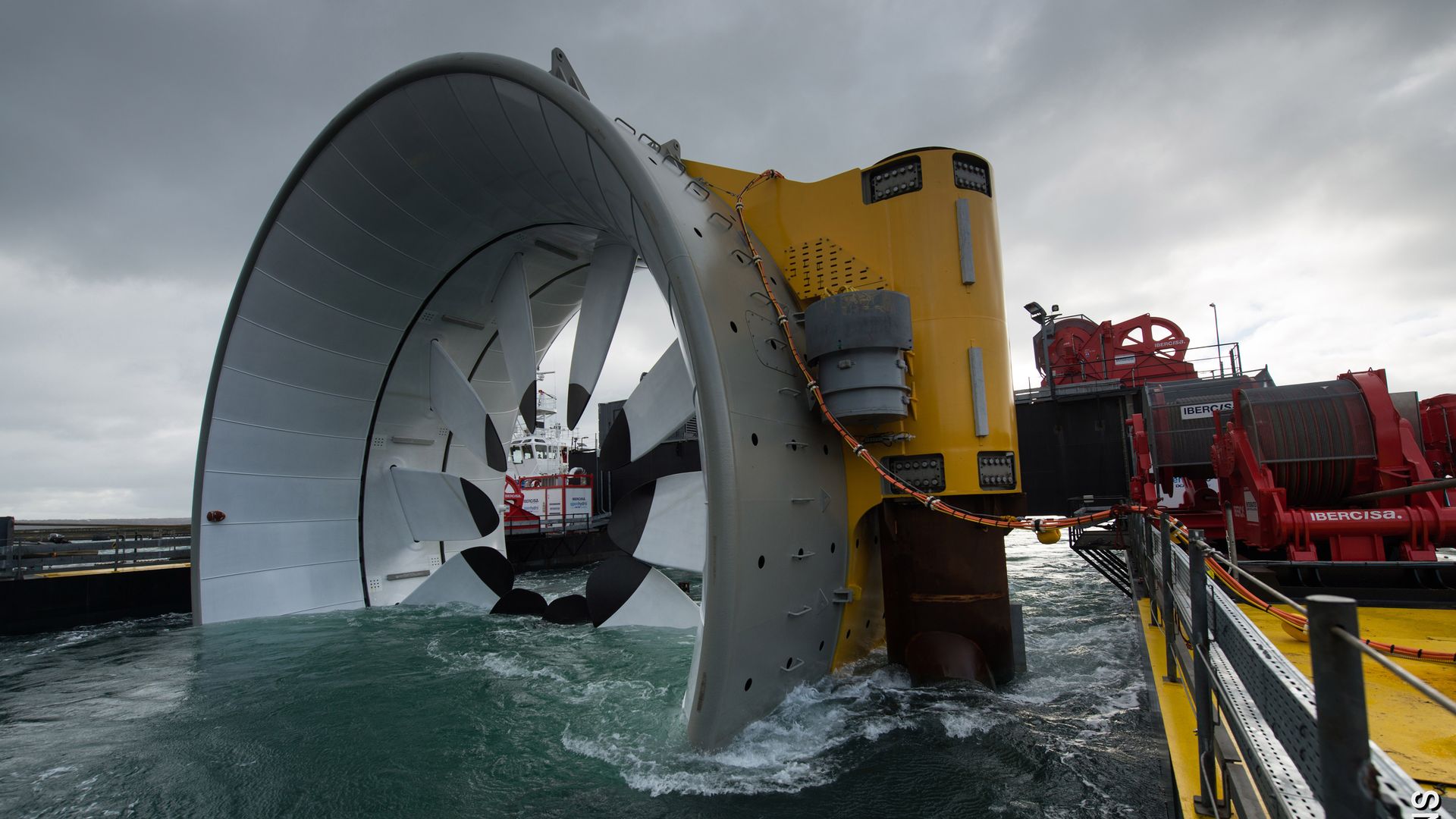
The French marine energy company Naval Energies announced this past week that it will stop all investment in its tidal energy business. Naval Energies' subsidiaries, OpenHydro Group and its sister organization OpenHydro Technologies, have entered the liquidation process following the decision.
The bottom line: Naval Energies cited slow growth and a closing of the tidal energy market as a reason for their decision. At the time of investment Naval Energies was expecting the tidal energy sector to mature rapidly, anticipating a turnover of €1 billion by 2025. While the industry still has a great deal of potential, most investors simply don’t have the patience or risk appetite for these technologies.
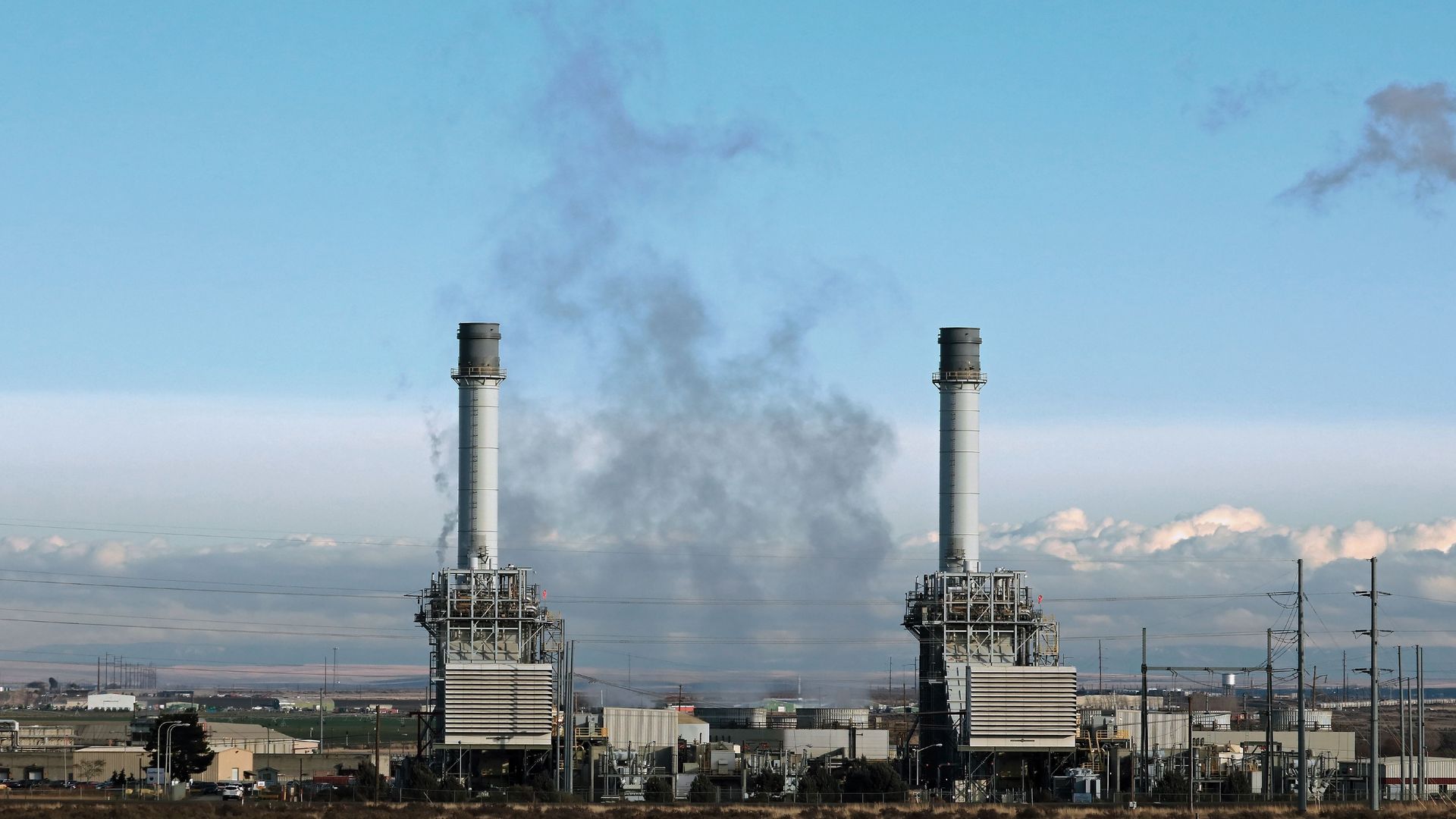
February to April of this year was the first three-month period in which the carbon intensity of total U.S. electricity generation fell below that of the U.S. gas-fired power fleet, per the latest available data from the Energy Information Administration.
Why it matters: This phenomenon challenges the conventional wisdom that gas will be the critical — even the primary — tool for decarbonizing the U.S. going forward. Although gas has played a prominent role in driving down U.S. emissions over the past decade, driving a switch from coal in many markets, it is likely that the more than $100 billion in planned new gas capacity will face increasing uncertainty, particularly in states with policies that mandate new generation to contribute to grid emissions reductions.
Commerce Secretary Wilbur Ross ordered the National Marine Fisheries Service to "facilitate access to the water" needed to fight ongoing wildfires, rather than continue to provide some of it for protecting endangered species, such as Chinook salmon.
Why it matters: The policy directive follows tweets President Trump sent that were met with confusion by California officials, including firefighters, who said the state has more than enough water to combat the blazes.
July marked California's hottest month on record, with an average temperature of 5°F above the 20th Century average, according to data released Wednesday by the National Oceanic and Atmospheric Administration.
Why it matters: The heat helped dry out vegetation, creating ideal conditions for large, rapidly-spreading wildfires. The largest wildfire on record in California, known as the Mendocino Complex Fire, eclipsed 300,000 acres for the first time in state history.
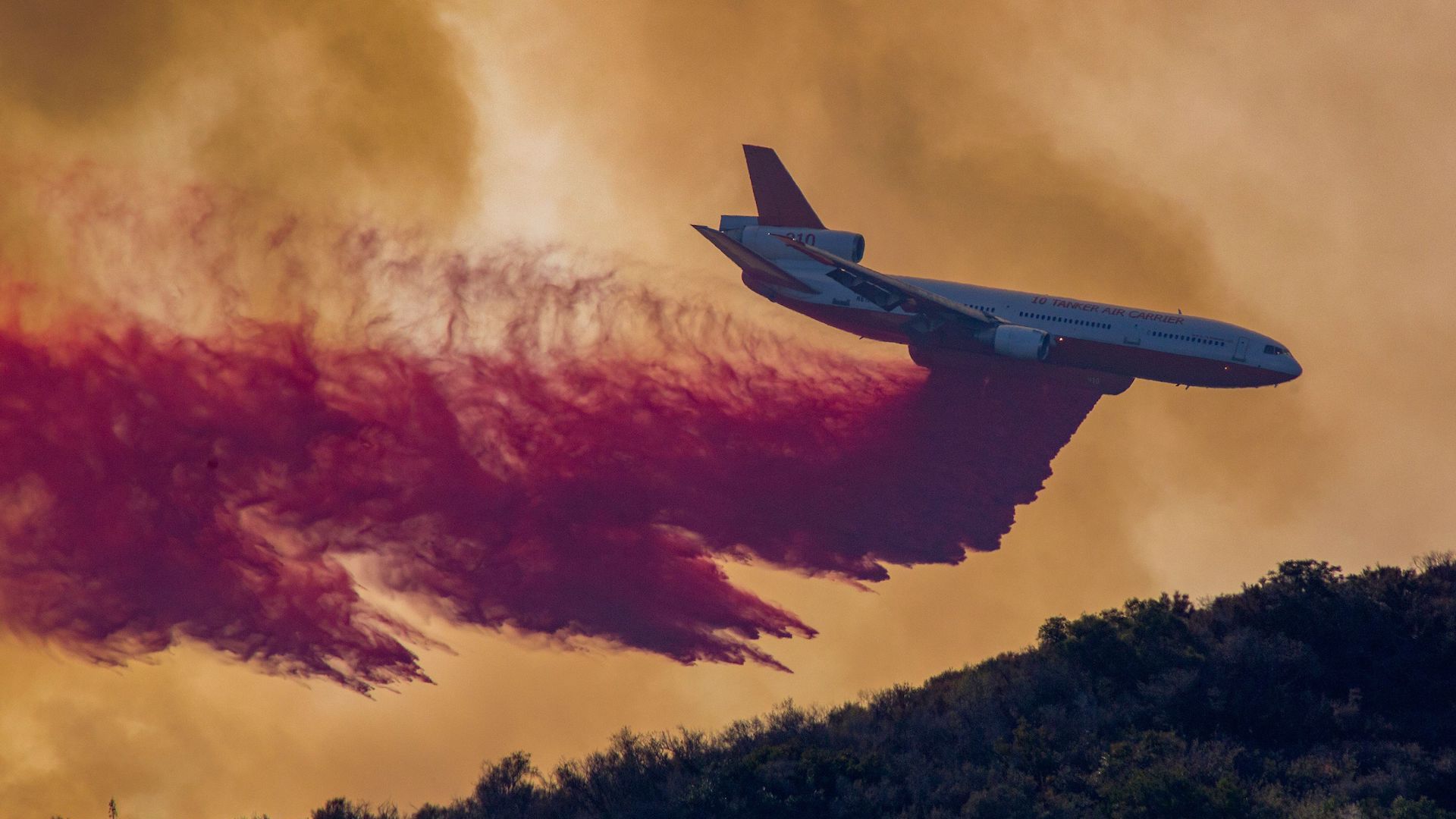
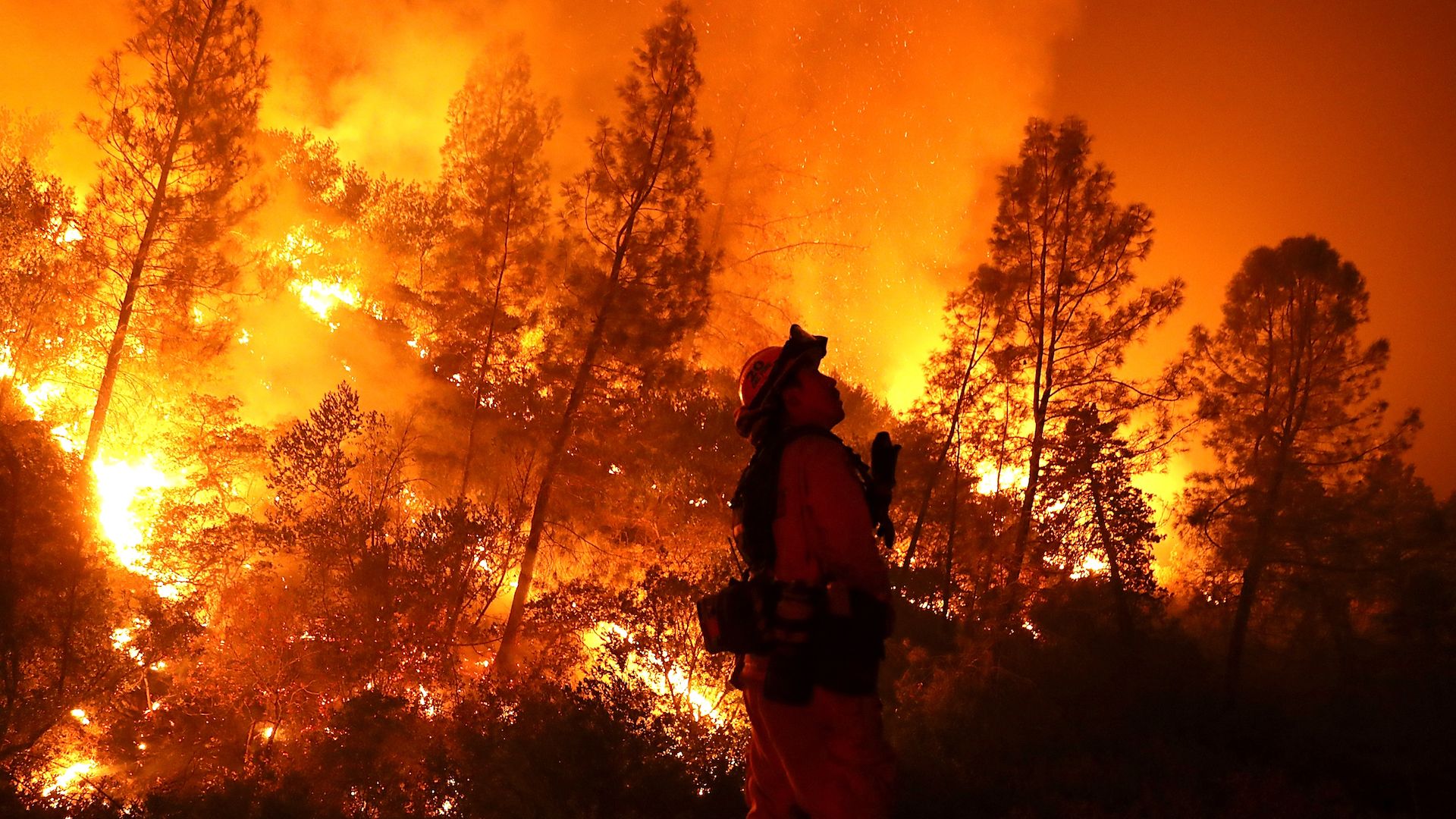
Wildfires have turned California into a smoke-filled, hazardous landscape as thousands of firefighters — some from as far away as Australia and New Zealand — struggle to contain more than a dozen massive blazes. Many of these fires began during July, which was a brutally hot month across the state.
Why it matters: The unprecedented wildfire siege has killed at least 9 people and burned thousands of homes and businesses across the state. There is no sign of any beneficial rains to come, and we're not yet at the peak of the fire season, which normally comes in the fall. In other words, the situation may get worse before it gets better.