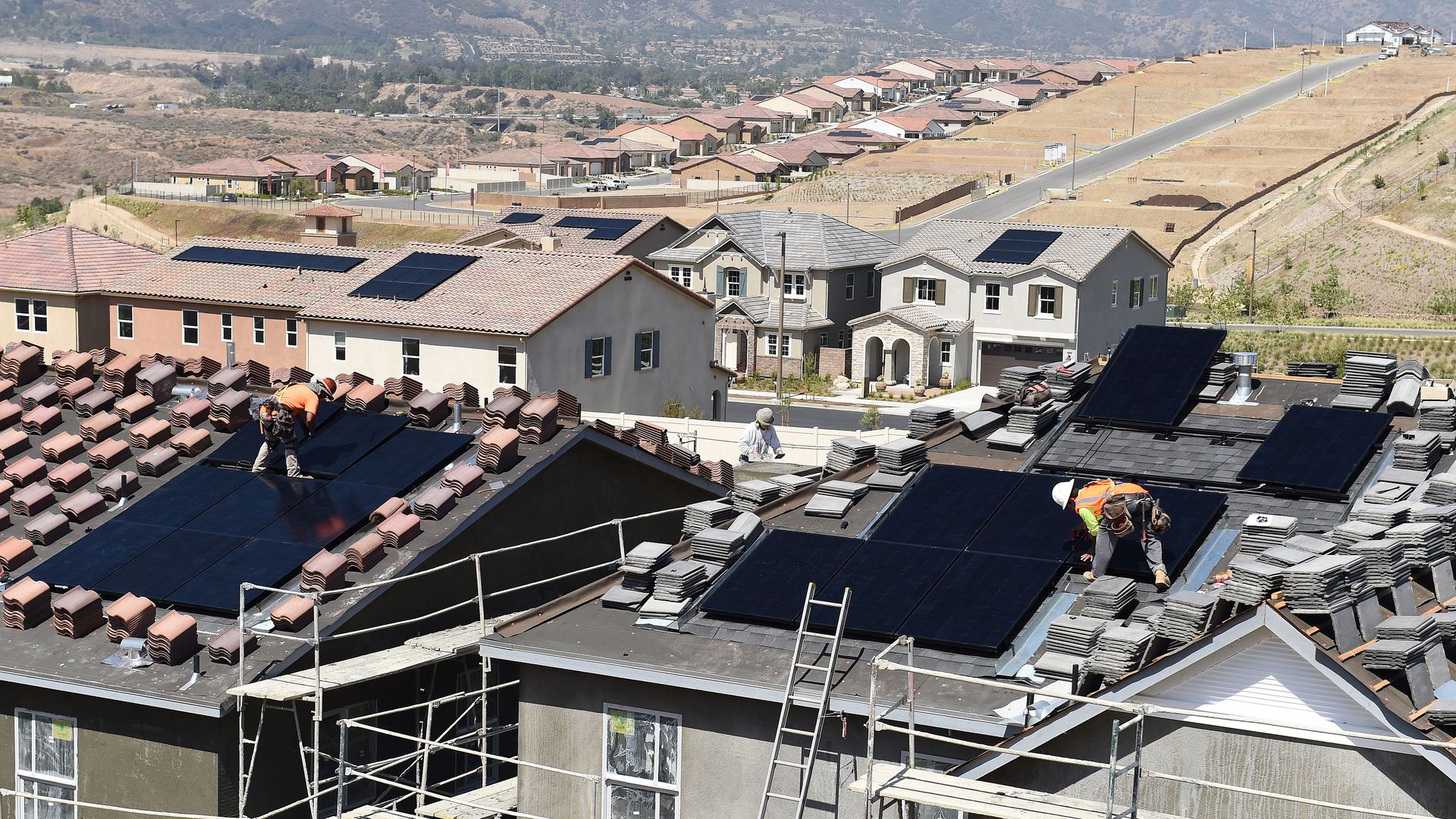
Earlier this month, the California Energy Commission mandated that all newly constructed low-rise residential buildings must include solar power.
Why it matters: While California prides itself on its leadership on climate change and innovative energy technology adoption, this decision is likely to misfire. Forcing people to install solar panels may actually exacerbate grid problems, creating negative secondary impacts without meaningfully greening the electricity system.
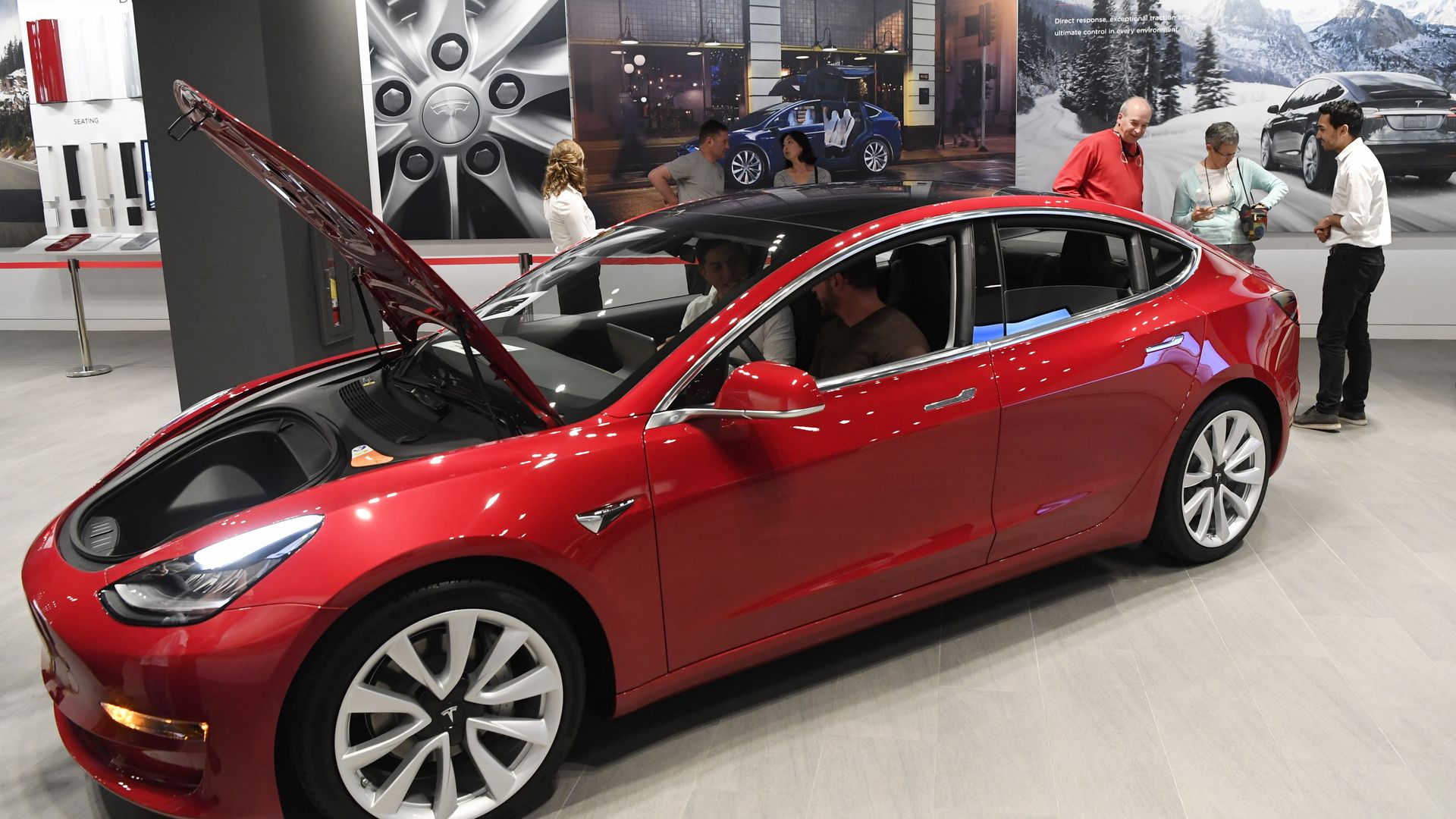
The Tesla Model 3 did not receive an endorsement from Consumer Reports due to flaws like a long stopping distance and its cumbersome touchscreen controls, reports CNBC.
Why it matters: Though Tesla disputes Consumer Reports' reported stopping distance — which the magazine says was longer than that of a Ford F-150 pickup — the failure to obtain a recommendation is another thorn in the side for Elon Musk's electric carmaker, which has faced issues meeting production goals for its mass-market vehicle.
President Nicolás Maduro was declared the winner of Venezuela’s presidential election on Sunday with 68% of the vote. Although the main opposition parties boycotted the election, the two opposition candidates who participated came in at 21% and 11%. Maduro will serve another 6-year term after an election characterized by low turnout — 46% compared to 80% in the previous race — and widespread allegations of fraud.
Why it matters: Although Sunday’s outcome is a far cry from the landslide victories of Maduro’s predecessor, Hugo Chávez, the country’s economic mismanagement and steady march toward authoritarianism are bound to continue.
By 2040, 80% of city buses worldwide will be electric, according to a just-released report by the consultancy Bloomberg New Energy Finance.
The big picture: China dominates the market right now and accounting for 99% of the market last year, according to BNEF. But EV bus adoption is expected to accelerate significantly in Europe and elsewhere by 2040.
Some of America’s biggest energy companies are lobbying Washington to change — critics say weaken — oversight of a federal tax credit going to facilities capturing carbon emissions.
Why it matters: The scramble shows the challenge of tackling climate change piecemeal through the nation’s tax laws in the absence of overarching policy.