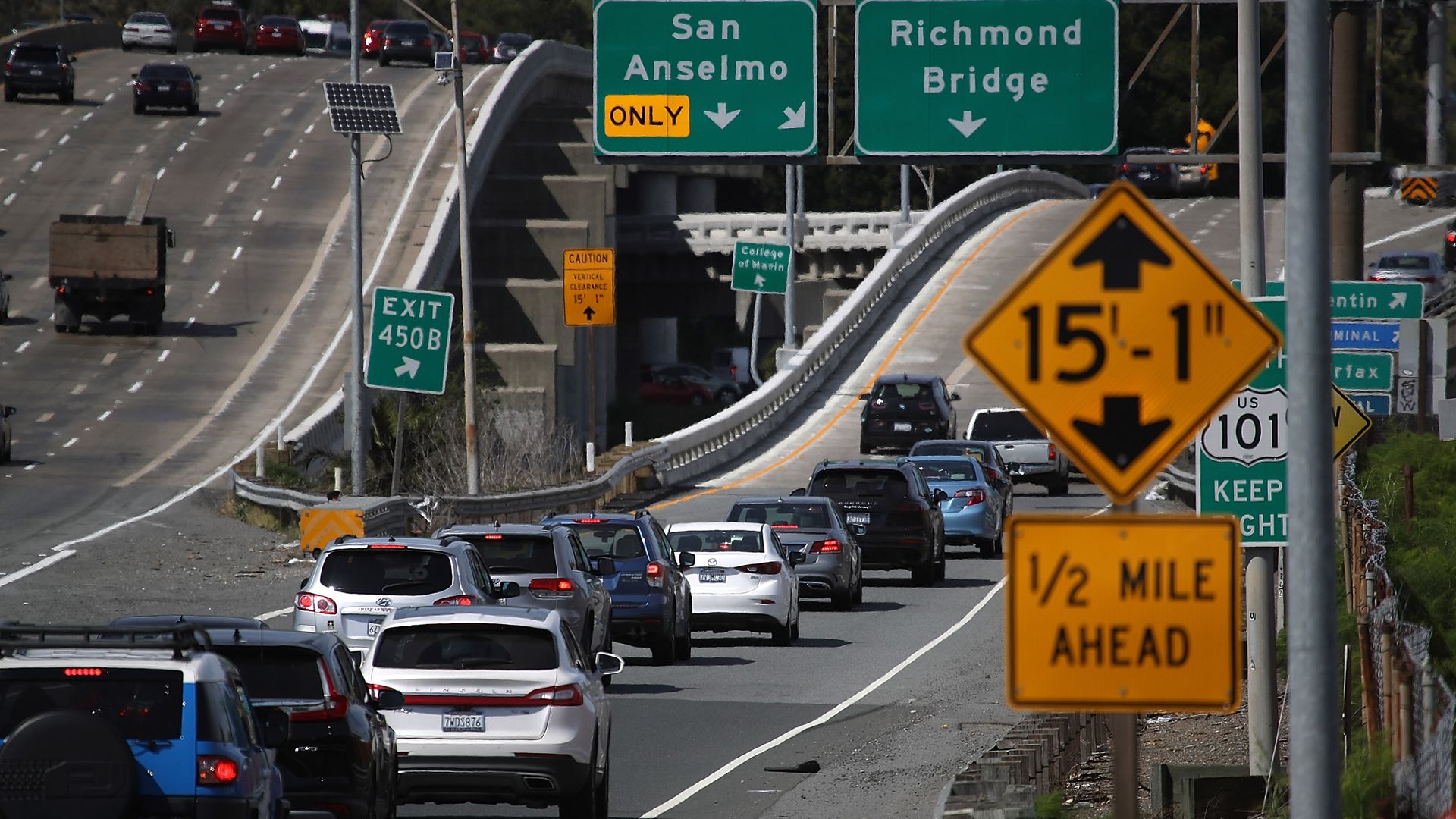
On April 2, the EPA issued its final determination to roll back the federal greenhouse gas (GHG) vehicle emissions standards, one of the most effective policies for reducing carbon pollution. The Obama administration enacted the policy with auto industry support in 2009, but the EPA has now called the standards for model years 2022–2025 “not appropriate."
Why it matters: The Trump administration may freeze air pollution standards at 2020 levels and limit states’ authority to enforce more stringent ones, sparking a familiar legal battle with leading states and making it more difficult for them to meet pollution reduction goals.
Global tourism accounted for 8% of the world's greenhouse gas emissions from 2009 to 2013, according to a paper published in Nature Climate Change — four times more than previous estimates.
The big picture: The biggest culprits for the jump were transportation, shopping, and food. Not surprisingly, high-income countries were the main drivers of the increased carbon footprint — but, as the cost barriers of international travel come down, more and more people worldwide are able to head abroad.
Electricity, the thing we all use but don’t really notice, has unexpectedly become a hot topic under President Trump.
Why it matters: His administration is mulling bailouts for coal and nuclear power plants in a questionable attempt to strengthen the electricity grid. Meanwhile,this winter’s cold snaps drove up New England’s power bills and Puerto Rico is still grappling with one of the world’s worst power outages. Here’s a primer + glossary to help light the way.