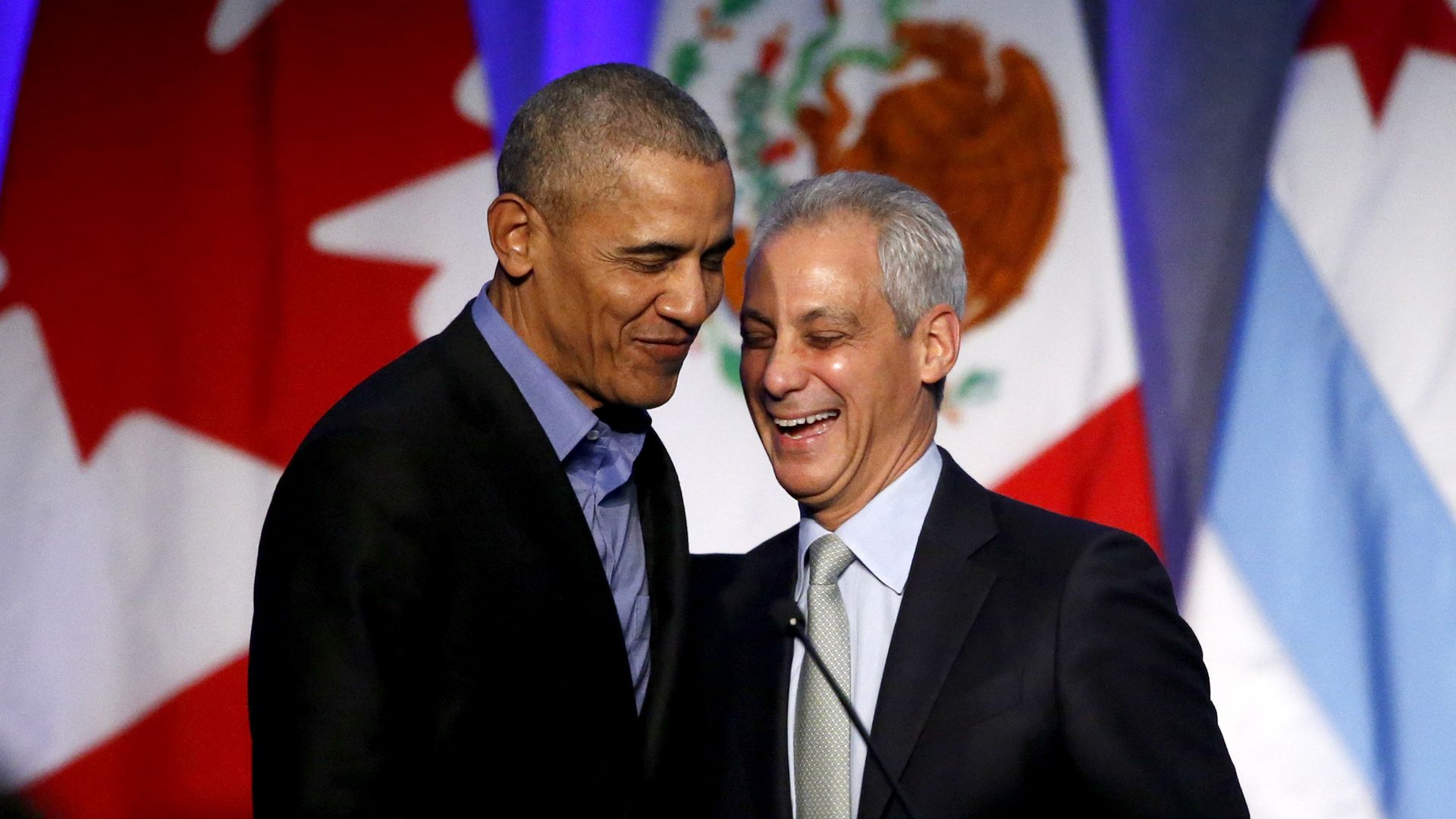
Seven years after leaving as White House chief of staff to President Barack Obama (in Oct. 2010), Chicago Mayor Rahm Emanuel introduced his former boss yesterday in the Windy City, at a summit on climate change that includes mayors from around the globe.
Obama, via the Chicago Tribune: "This is my hometown, so I hope Rahm has been as good of a host as he was a chief of staff, and as good as he has been a mayor."
Obama didn't mention Trump by name: "Obviously we're in an unusual time when the United States is now the only nation on earth that does not belong to the Paris agreement ... And that's a difficult position to defend. But the good news is that the Paris agreement was never going to solve the climate crisis on its own. It was going to be up to all of us."
A new firm helmed by energy tech and finance veterans, called Volta Energy Technologies, says it's joining the race to develop the next wave of batteries. The company announced today it's got an innovative new model for vetting and funding promising breakthroughs in battery and other storage.
Why it matters: Improvements in battery technology are key to the growing commercialization of electric vehicles, as well as power applications that can help bring large amounts of renewable power into the grid and into homes.
This makes batteries a key tool in the battle against global warming, because they can help decarbonize both transportation and electricity systems.
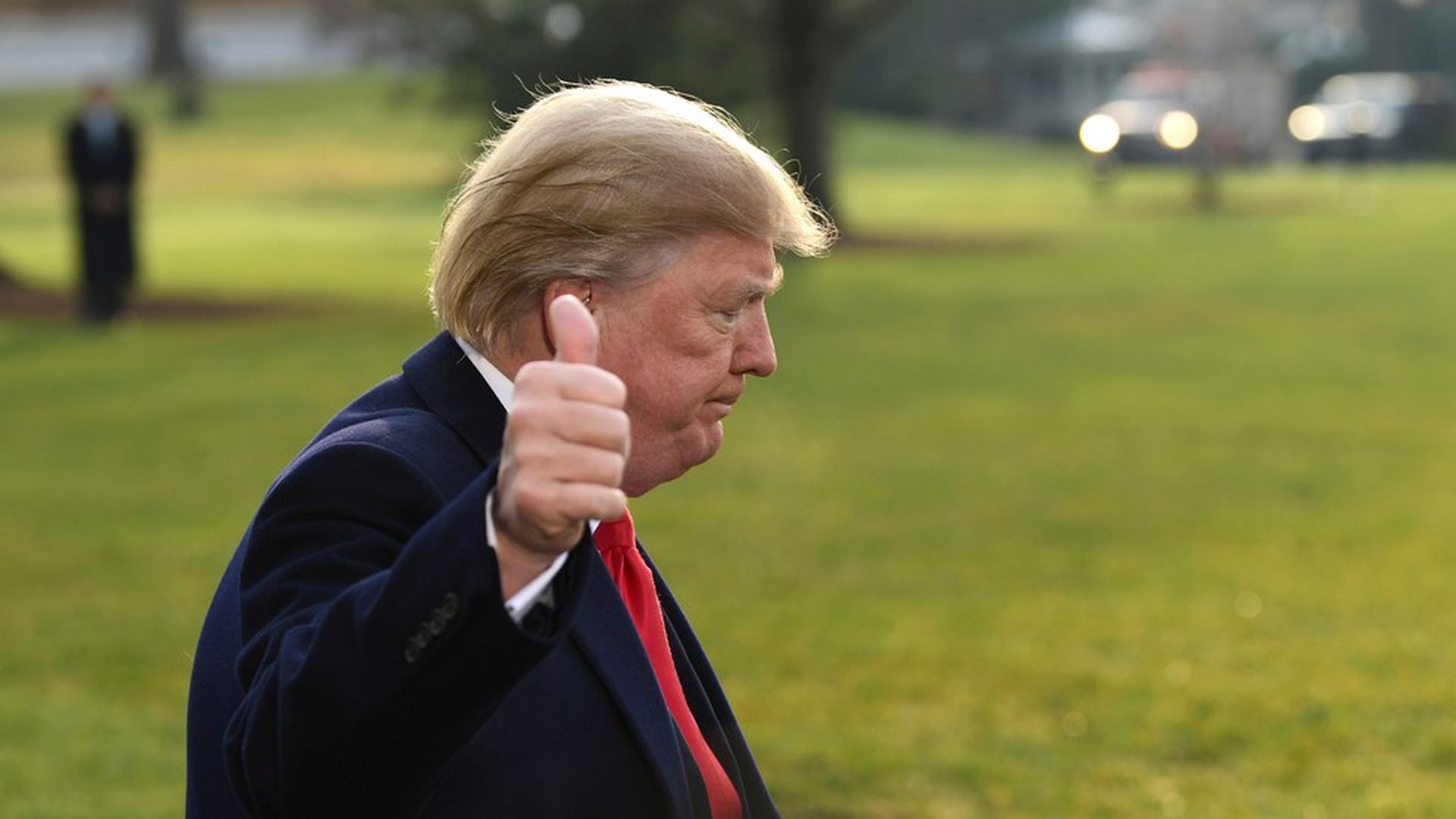
President Trump has appointed fewer people with advanced science degrees to Senate-confirmable science and environment positions than his predecessor, according to an analysis by the AP. Just over 40% of Trump's nominees held advanced science degrees compared to more than 60% under Barack Obama.
A concern: Many of Trump's nominees that do have science degrees come from industry positions — for example in oil and gas companies — and are now embedded in the regulatory agencies that oversee those industries.
Another thing: Trump has left 23 Senate-confirmable positions — 35% of all science-related positions — vacant, including the post for the White House's top science advisor. At this point in his presidency, Barack Obama had filled 18 of those same vacancies.