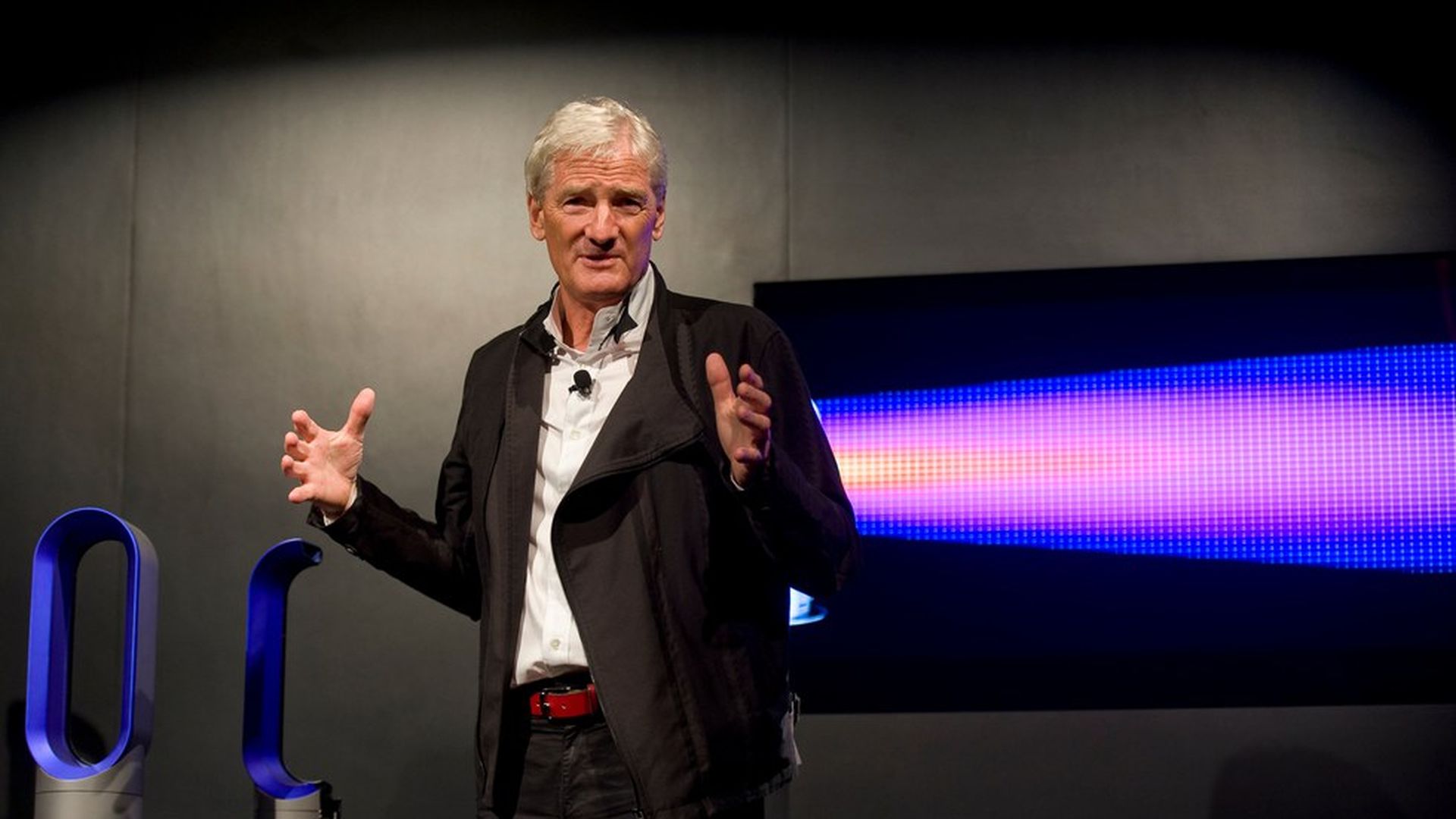
James Dyson, the billionaire inventor of the bagless vacuum cleaner, said Tuesday that his company is investing £2 billion ($2.7 billion) to develop and build a "radical and different" electric car, set to hit the streets in 2020, per BBC. Dyson said £1 billion will be spent on developing the car, and the other £1 billion on making the battery.
400 of his engineers have already been working on the secret project for the past two years at the company's headquarters in Mamesbury, Wiltshire, said Dyson. But the car doesn't exist yet, and Dyson has yet to decide where it will be manufactured. However, he has ruled out working with any existing auto companies and has said the car won't be aimed at the mass market.
It's been a busy hurricane season, with three powerful hurricanes hitting and one just missing U.S. territories. Here's when and how often Americans' searched Google each of them.
Why it matters: Irma received the most attention, according to Google, likely due to reports it'd be the most powerful hurricane ever to hit the U.S. Meanwhile, Puerto Rico has been devastated by Hurricane Maria, but interest from the U.S. is substantially less than during both Harvey and Irma.
Note: This search data does not include Puerto Rico. Puerto Ricans were highly interested in both Hurricane Irma and Hurricane Maria, with the least interest in Harvey.
Environmental rules, like any regulation, upend industries and business behavior in obscure ways. Ultimately, however, like a tax they usually leave consumers on the hook for the costs. I know because I'm one of them.
Why it matters to most of you: Nearly 90% of U.S. homes have air conditioners. If a technician encourages you to replace your A/C because of environmental rules, don't take the bait without first getting a second (and maybe a third) opinion.