U.S. airlines have begun furloughing or laying off tens of thousands of employees, including pilots, after Congress failed to pass a new bailout bill that is supported by members of both parties and the White House.
Axios Re:Cap digs into the current state of play and why it could be very tough for airlines to "unscramble the egg," with Capt. Joe DePete, president of the Air Line Pilots Association.
British movie exhibitor Cineworld, the parent company to Regal Cinemas, said on Monday that it would temporarily close all 663 of its movie theaters in the United States and the U.K.
Why it matters: Theater chains have struggled to survive the economic fallout of the coronavirus. Some analysts have argued that the pandemic could become the death knell to the theater industry.
Bristol Myers Squibb agreed to buy MyoKardia, a South San Francisco-based cardiovascular drug developer, for $13.1 billion in cash.
Why it matters: This illustrates the diversification downside of last year's $74 billion tie-up with Celgene, which made Bristol Myers heavily reliant on cancer therapies.
Private equity's top trade group is favoring Republicans in next month's federal elections, but is contributing fewer overall dollars than in past cycles.
By the numbers: The American Investment Council PAC has donated over $243,000 to House and Senate candidates and committees since the 2018 elections, of which around 65% has gone to Republicans, according to an Axios analysis of Federal Election Commission records.
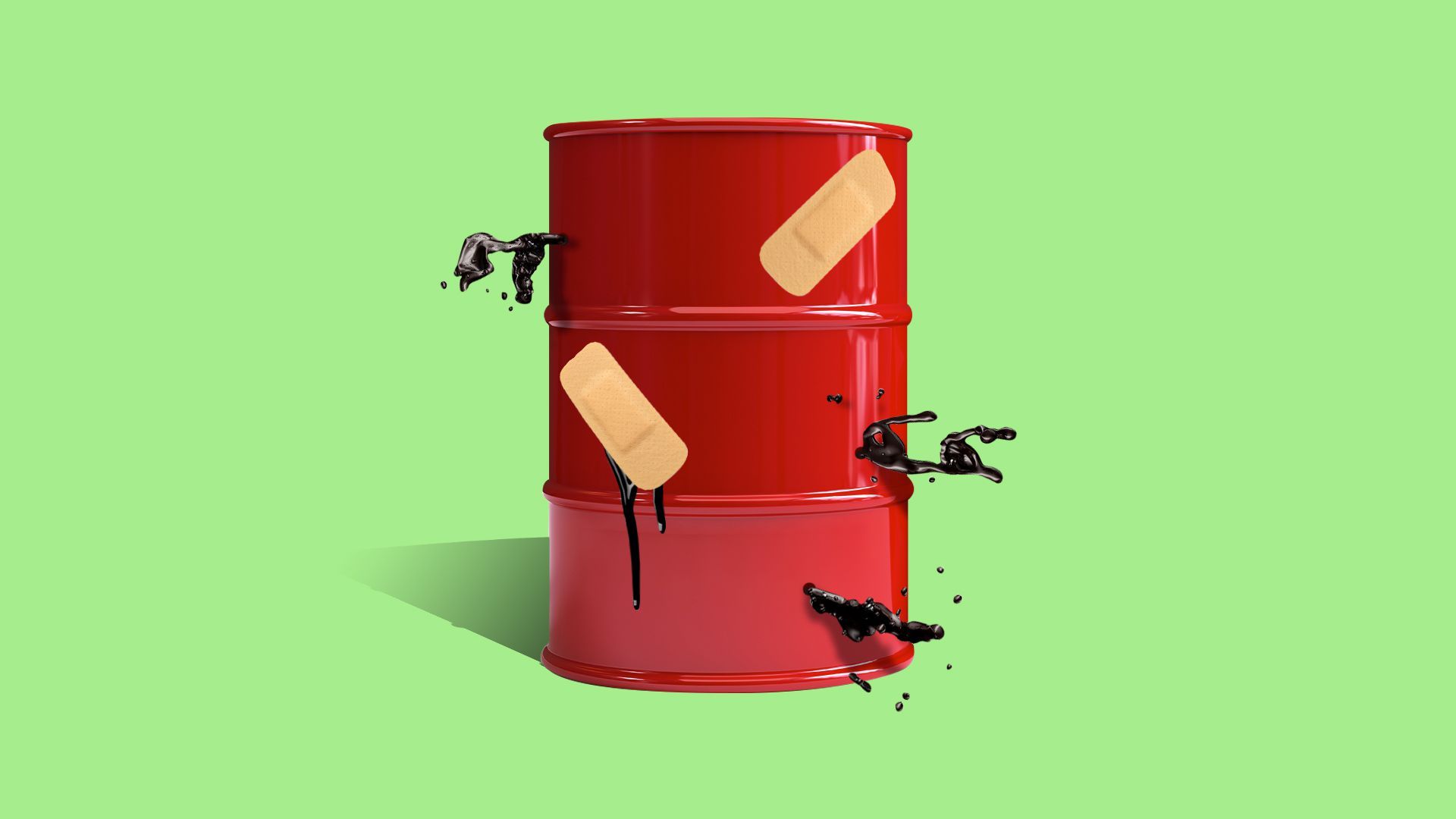
The oil, gas and chemicals industry shed 107,000 U.S. jobs in March–August as the pandemic hit prices and the wider economy, marking the fastest rate of layoffs in industry history, Deloitte analysts said.
Why it matters: Their new report released Monday warns that the sector's employment may remain depressed for a long time.
The drop in the unemployment rate last month to 7.9% from 8.4% was more the result of people dropping out of the labor force — or giving up looking for work — than it was people finding jobs.
Details: The labor force participation rate decreased by 0.3 percentage point to 61.4% in September and has fallen 2 percentage points from its February levels to the lowest since March 1976.
The number of people considered long-term unemployed has made a worrying bounce in recent months, as Friday's jobs report showed 3.8 million people had lost their jobs permanently in September.
Why it matters: That's almost twice as many as at the height of the pandemic in April.
Stocks rallied overnight in Asia and U.S. stock futures are poised to open higher as markets have shown little impact from news that President Trump was diagnosed with COVID-19 on Friday.
The state of play: Even in the immediate aftermath of Trump sharing the news on Twitter, currency and Treasury markets, which historically have been more attuned to economic and geopolitical upheaval than stocks, had little reaction.
Americans' plans to socialize outside in colder weather — when COVID-19 will still be a threat to indoor gatherings — are prompting an expensive and environmentally questionable rush on outdoor heaters.
Why it matters: Heating outdoor patios is a big new cost for businesses, and the energy sources are almost always fossil fuels that contribute to climate change.