Trump to meet Qatari prime minister about mediation efforts with Iran

Add Axios as your preferred source to
see more of our stories on Google.
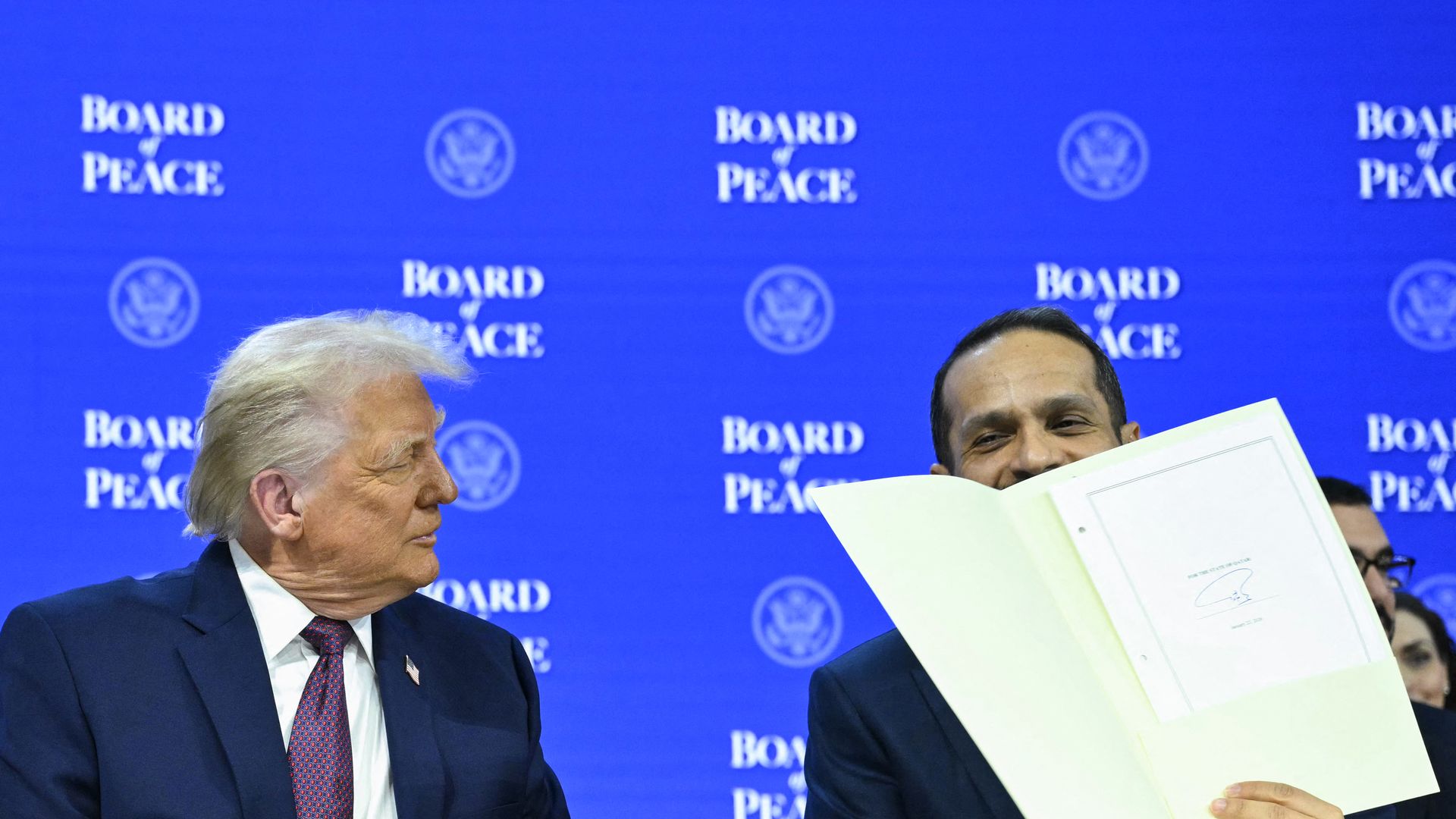
President Trump looks at Qatar's Prime Minister Sheikh Mohammed bin Abdulrahman bin Jassim al-Thani holding a founding charter at the "Board of Peace" meeting during the World Economic Forum in Davos in January. Photo: Mandel NGAN / AFP via Getty Images
President Trump will meet the prime minister of Qatar on Monday to discuss efforts to reach a new ceasefire and resume nuclear negotiations with Iran.
Why it matters: Sheikh Mohammed bin Abdulrahman Al Thani, the key mediator between Iran and the U.S. over the last several weeks, wants Trump to allow more time for diplomacy, sources say.
- Trump is still willing to let diplomatic efforts play out and see if a deal is possible. But it is unclear how much time he's willing to give.
- In an interview with CBS' 60 Minutes that recorded Friday and aired Sunday, Trump said he wasn't looking to escalate the war. "I don't think there's any reason to," he said, adding that Iran's nuclear material is "buried under thousands of tons of rock."
- If the president changes his mind and orders renewed strikes, the U.S. military is ready to act on short order.
Behind the scenes: The Qatari prime minister is expected to meet Vice President Vance separately before his meeting with Trump, according to a source with knowledge of the matter.
- Vance has spent the past two weeks personally involved in indirect talks with Iran, speaking to Al Thani almost every day.
Driving the news: The Qatari mediators — together with other regional players such as Pakistan, Saudi Arabia, Egypt and Turkey — continued discussions with the Iranians and the White House about a draft proposal calling for a series of steps over two days to build mutual confidence toward a broader deal.
- On the first day, the U.S. would lift its naval blockade and release some of Iran's frozen funds. In return, Iran would issue an official invitation to the International Atomic Energy Agency to send inspectors to bombed nuclear sites, based on an agreement reached in Cairo a year ago, regional sources said.
- On the second day, the Strait of Hormuz would reopen, after which nuclear talks would resume, focusing on Iran's stockpile of highly enriched uranium.
- But the midterm elections have slowed down the indirect negotiations, sources said.
State of play: Iranian Foreign Minister Abbas Araghchi said Sunday that Iran is still waiting for the U.S. response to the latest proposal.
- "American voters have made their choice. Time for the White House to make its own. Our 2-day proposal stands: meet the requirements, including end to war on all fronts, and you will see results. Or choose war, and see our alert and battle-hardened Warriors rain down hell," he wrote on X.
The other side: Secretary of State Marco Rubio said Sunday that the indirect talks with Iran have yielded little so far.
- "I wouldn't say we're on the verge of a breakthrough," Rubio said before traveling to Paris for a G-7 foreign ministers meeting. "The President would always prefer to solve this and every problem diplomatically. Sometimes that's not possible, unfortunately."
- He added, "Right now it hasn't been very productive, because the Iranian demands are simply not just unacceptable but, in some cases, outrageous and ridiculous and really not realistic."
