Vance leads behind-the-scenes push for new Iran deal

Add Axios as your preferred source to
see more of our stories on Google.
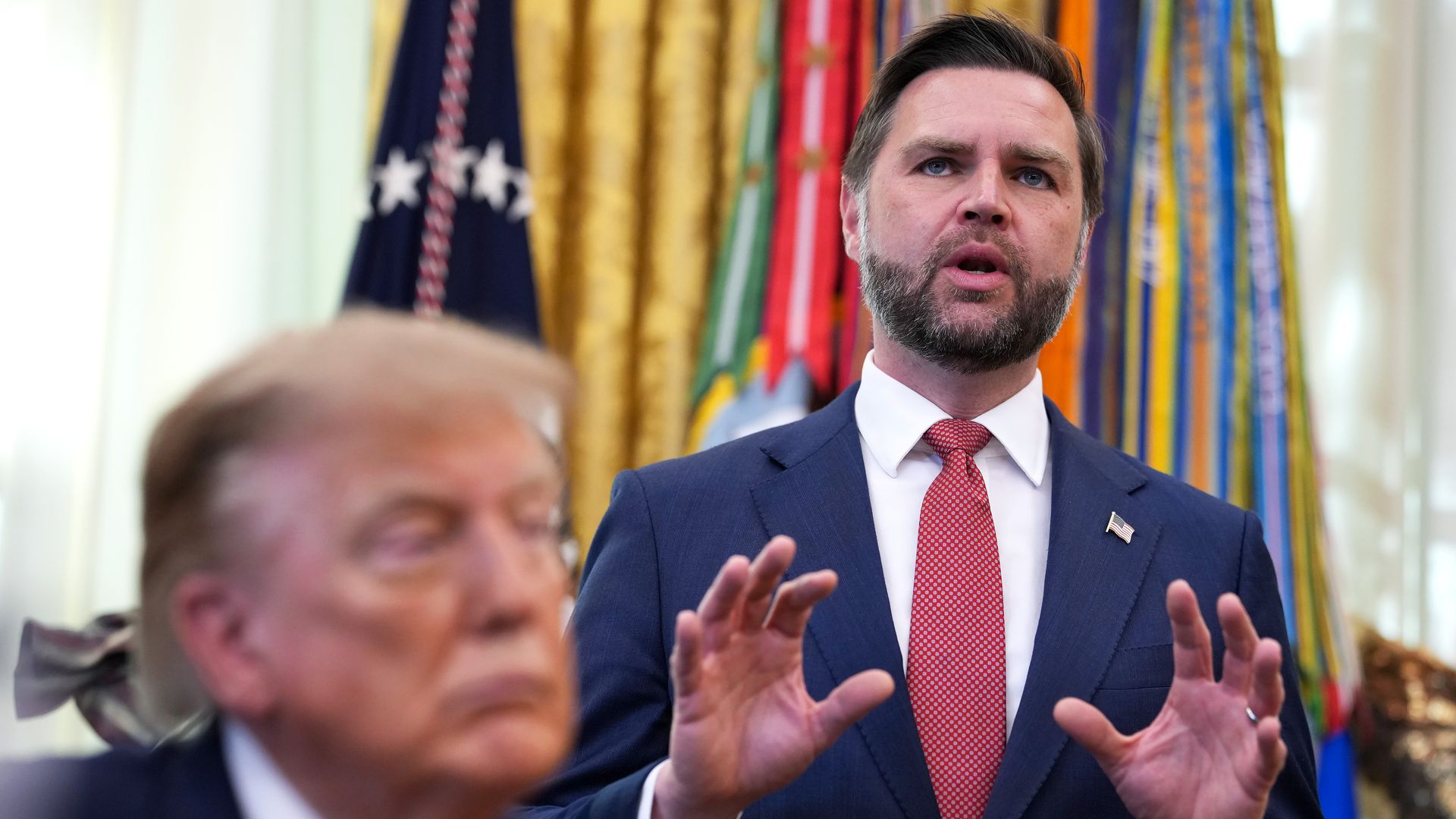
Vice President Vance speaks at an event with President Trump in the Oval Office Oct. 20. Photo: Andrew Harnik/Getty Images
Vice President Vance has spent the past two weeks personally involved in indirect talks with Iran aimed at reaching a new ceasefire and resuming nuclear negotiations, according to two sources with knowledge of the matter.
Why it matters: Vance's heavy involvement shows he's taking it upon himself to extract the U.S. from a conflict he blamed for the GOP's staggering losses in this week's election. It also elevates the latest round of indirect talks to the highest levels of the administration.
The big picture: U.S. officials and regional sources say that for now Trump is willing to let diplomatic efforts play out and wants to see if any kind of deal is possible.
- "We're talking to them," Trump told reporters on Friday, when asked what his message to Iran was.
- But if he changes his mind and orders renewed strikes, the U.S. military is ready to launch strikes on a relatively short timetable.
Behind the scenes: Vance has been speaking almost daily to Qatari Prime Minister Sheikh Mohammed bin Abdulrahman Al-Thani, Pakistani Chief of Army Staff Field Marshal Asim Munir and other mediators about the negotiations with Iran, sources with direct knowledge said.
- White House envoy Steve Witkoff and President Trump's adviser and son-in-law Jared Kushner are also involved.
- Vance and Qatari and Pakistani mediators have been discussing the possibility of a working-level technical meeting between the U.S. and Iran in the coming days, but it hasn't materialized yet, the sources said.
- The vice president's office declined to comment.
Catch up quick: Vance was the most skeptical voice in Trump's inner circle about the war before it began at the end of February, advocating instead for a diplomatic solution.
- He led the U.S. negotiating team to an April summit on Iran in Islamabad, and he was personally involved in talks that led to the U.S.-Iran memorandum of understanding (MOU) in June.
- Vance then led the U.S. delegation to a round of direct talks with Iran in Switzerland, which ended with an Iranian commitment to invite UN inspectors to visit its nuclear facilities.
- But shortly after, Iran's Islamic Revolutionary Guard Corps resumed attacks on ships, leading to the collapse of the MOU.
Driving the news: Two weeks ago, Vance sent a letter to the secretary of the Supreme National Security Council in Iran, Mohsen Rezaei, proposing to resume direct negotiations.
- Rezaei is one of the closest confidants of Iranian Supreme Leader Mojtaba Khamenei.
- Iranian officials said Vance's letter created positive momentum toward restarting negotiations.
- On Wednesday, Vance said the war was the main reason Republicans were repudiated in the election.
State of play: Sources involved in the mediation efforts say there has been progress, but it's been very slow.
- On Friday morning, Trump spoke to Emir of Qatar Sheikh Tamim al-Thani about Qatar's efforts to bridge the gaps between the U.S. and Iran on a deal.
- Sheikh Tamim stressed the need to "continue dialogue and pursuing diplomatic means to resolve differences, spare the region further escalation, and ensure freedom of maritime navigation and the security of energy supplies," per a statement from his office.
