Rubio urges Lebanon to resist Hezbollah pressure over seized explosives

Add Axios as your preferred source to
see more of our stories on Google.
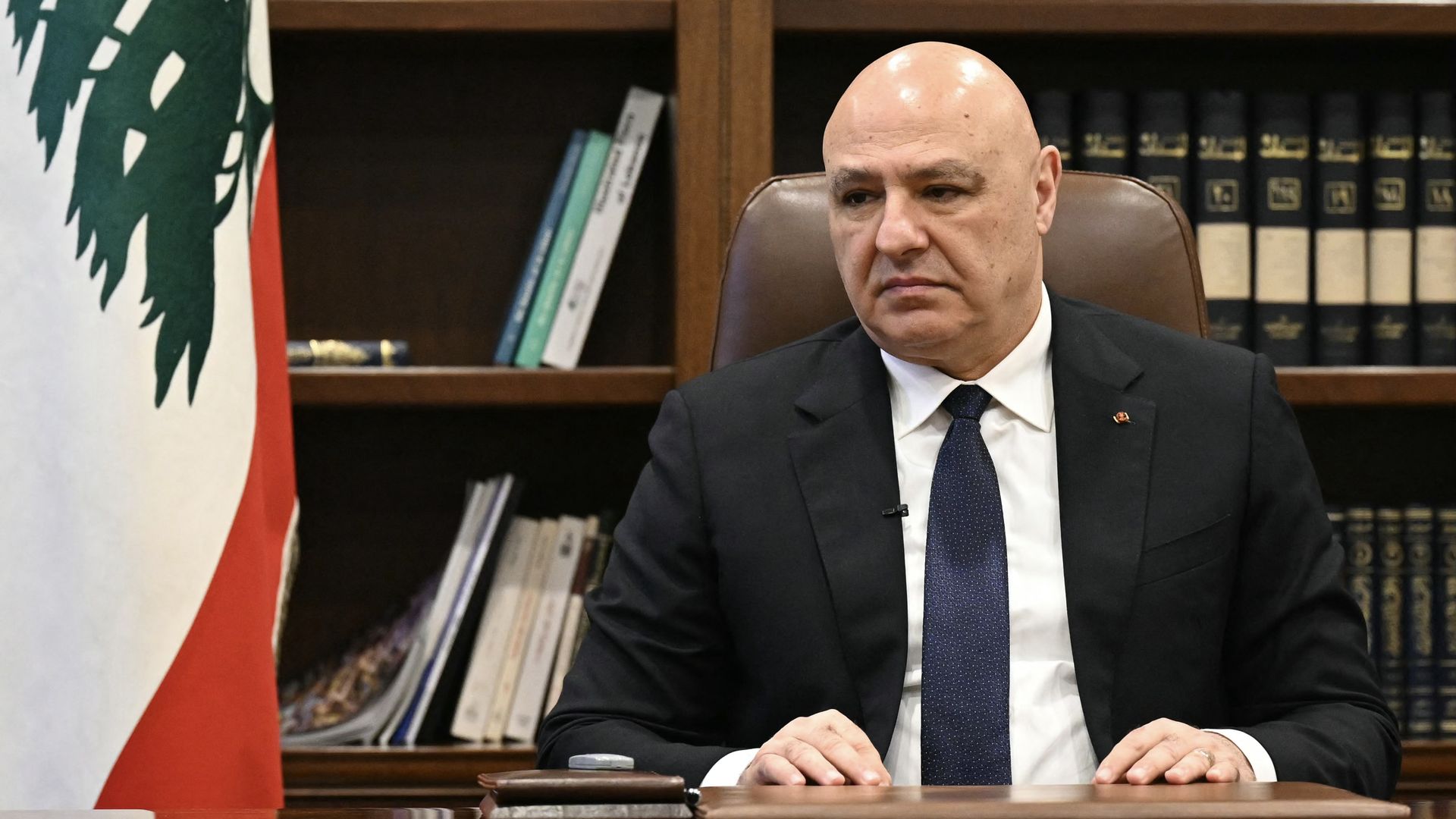
Lebanese President Joseph Aoun looks on during an interview with AFP at the Presidential Palace in Baabda on September 15, 2026. (Photo by JOSEPH EID / AFP via Getty Images)
Secretary of State Marco Rubio pressed Lebanon President Joseph Aoun not to return to Hezbollah a truck full of explosives it attempted to smuggle into Beirut several days ago, according to a State Department official and another source with knowledge of the call.
Why it matters: The issue is a test case for the Lebanese government's resolve to stand up to Hezbollah and implement its policy of keeping weapons outside the control of state security forces.
Driving the news: Lebanese security forces intercepted the truck last week at a checkpoint on the highway connecting the Bekaa Valley to Beirut.
- The truck was carrying approximately 780 kilograms of explosives, including TNT and C-4, Lebanese officials said.
- Two suspects were arrested for transporting the shipment.
After the arrest, Hezbollah acknowledged that the explosives belonged to them but claimed they were intended for use against the Israeli military in southern Lebanon.
- Hezbollah's opponents in Lebanon seized on the incident as further proof of the danger of the Shia militia's weapons and its independent military activity.
- Hezbollah and its allies in Lebanon have since pressed the government to release its two members and return the explosives to the militia.
Behind the scenes: The State Department official said Rubio urged Aoun to "hold accountable all those who ordered, financed, and directed the shipment, and underscored that returning explosives to Hezbollah should be out of the question."
- Aoun assured Rubio that the Lebanese army and security forces are fully implementing decisions to prevent armed displays, confiscate weapons and ammunition, and combat smuggling, the president's office said.
- Aoun also stressed that the judicial authorities will show no leniency toward those responsible and will enforce the laws without favoritism.
- "No one will be released unless he is innocent," Aoun told Rubio according to a Lebanese official.
The big picture: Rubio also raised Lebanon's 1955 Boycott Law, which bans any contact with Israelis, during the call, the State Department official said.
- The topic stems from a complaint filed in a Lebanese court against Nada Hamadeh Moawad, Lebanon's ambassador to the United States, when she called her Israeli counterpart Yechiel Leiter after his son was wounded in a West Bank terror attack.
- Rubio told Aoun this Lebanese law "is routinely used for politicized prosecutions that deter steps towards peace with Israel."
State of play: Israel has continued its strikes in southern Lebanon and claims it is targeting Hezbollah targets.
- Aoun asked Rubio to press Israel to stop these attacks and allow farmers to access their fields without being targeted, his office said.
- After his call with Aoun, Rubio spoke with Israeli Prime Minister Benjamin Netanyahu, though the State Department would not comment on the conversation.
What to watch: Negotiations between Israel and Lebanon have slowed down ahead of the Israeli elections.
- The implementation of the U.S.-brokered agreement over the IDF withdrawal from pilot zones in southern Lebanon is also moving slowly.
- U.S., Lebanese and Israeli military officers are expected to meet at CENTCOM headquarters next week to discuss the implementation.
