The staggering cost of winning a Senate seat in 2026

Add Axios as your preferred source to
see more of our stories on Google.
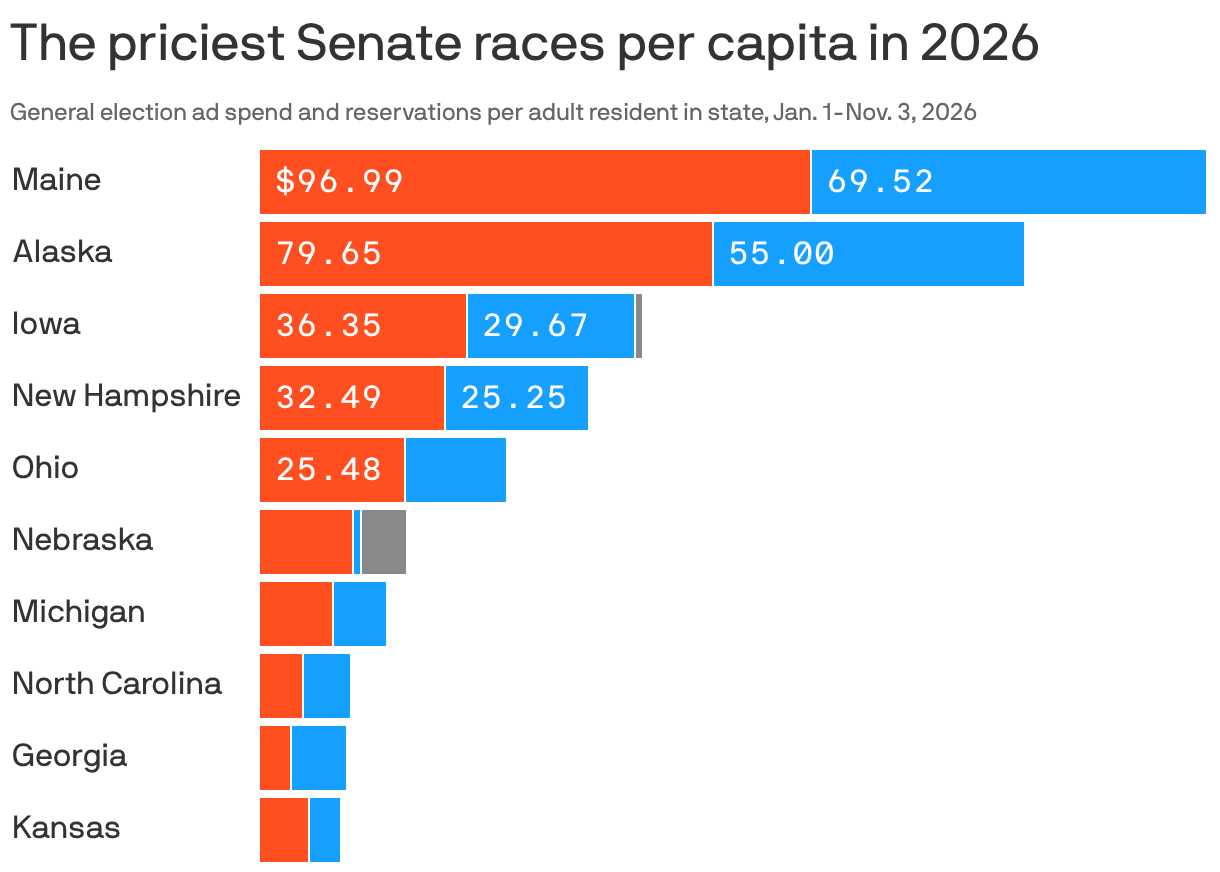
Every voting-age Mainer could get a $167 voucher for home heating oil with what Democrats and Republicans are spending on ads in the Senate race, according to an analysis of AdImpact data.
Why it matters: Every senator gets one vote, but Senate seats aren't created equal — and they don't cost the same.
Zoom in: Like two years ago, the less-populated states have a dramatically higher dollar-per-voter ratio in 2026.
- Maine is in first place, followed by Alaska, which is scheduled to be hit with $76 million in ads — enough to suck up most of the state's inventory.
Between the lines: Ohio is only in fifth place on the dollar-per-voter metric, but it's on track to host the most expensive Senate race in the country — for the second cycle in a row.
- Sherrod Brown's comeback bid is proving more expensive than his 2024 race, when he was ousted by now-Sen. Bernie Moreno (R-Ohio).
- And in New Hampshire, where Democratic Senate nominee Chris Pappas has been warning that his race is actually quite close, both parties are spending heavily to reach the state's voters.
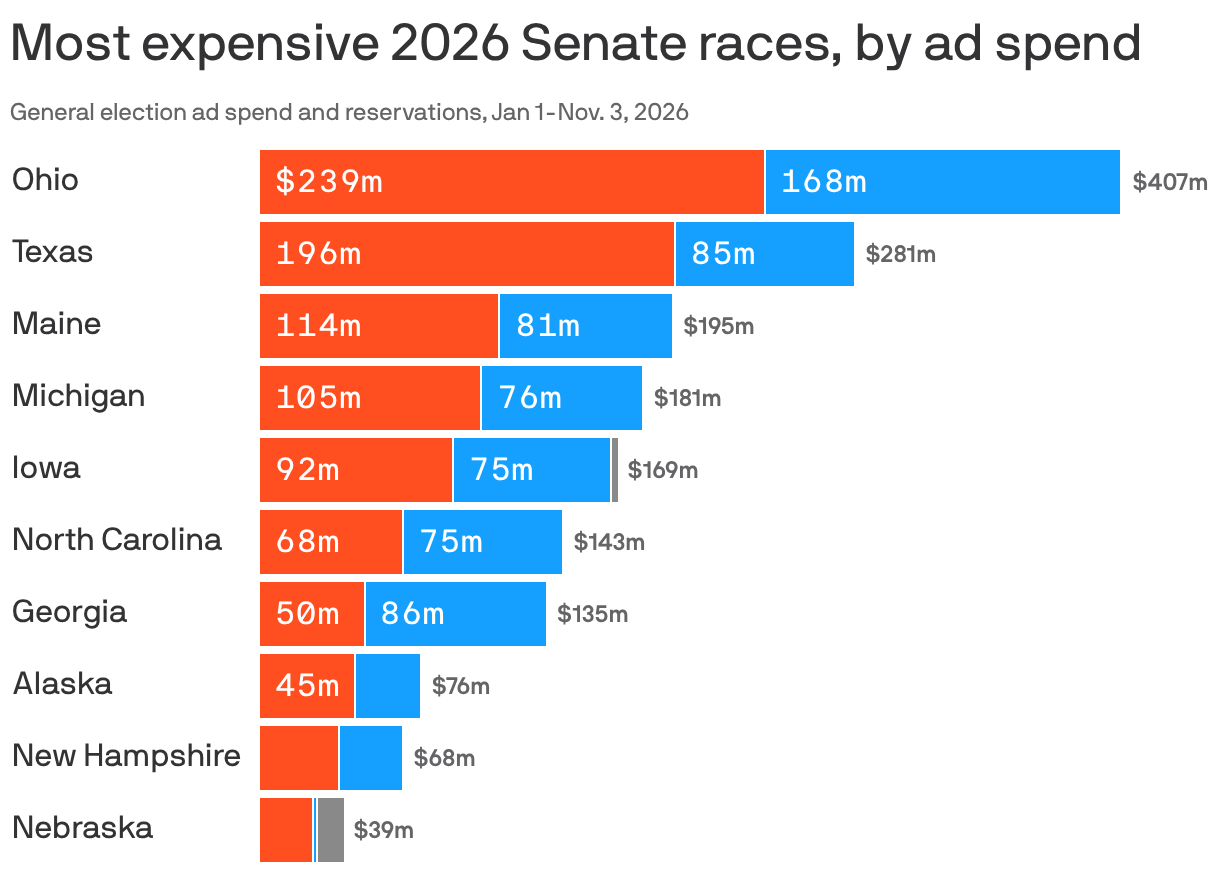
The big picture: Both chambers are likely to come down to a handful of races.
- All year, Republicans warned that Texas would get really expensive if Attorney General Ken Paxton won the primary. They were right.
- Outside GOP groups spent a mind-blowing $131 million in just 17 days trying to rescue Paxton. And tens of millions more could be on the way.
- But in North Carolina, where Sen. Tim Scott (R-S.C.), chair of the National Republican Senatorial Committee (NRSC), predicted the race could cost $1 billion, the contest looks like it will come in under $200 million.
- Republican super PACs are abandoning the Senate race there as they reallocate money to redder states.
The bottom line: Republicans have a spending advantage, especially when it comes to how many eyeballs they're actually reaching in Texas and Ohio.
- But neither side has really figured out how to play moneyball and find a way to reach voters with a dramatically smaller budget.
