Markets especially attuned to outlook for Fed

Add Axios as your preferred source to
see more of our stories on Google.
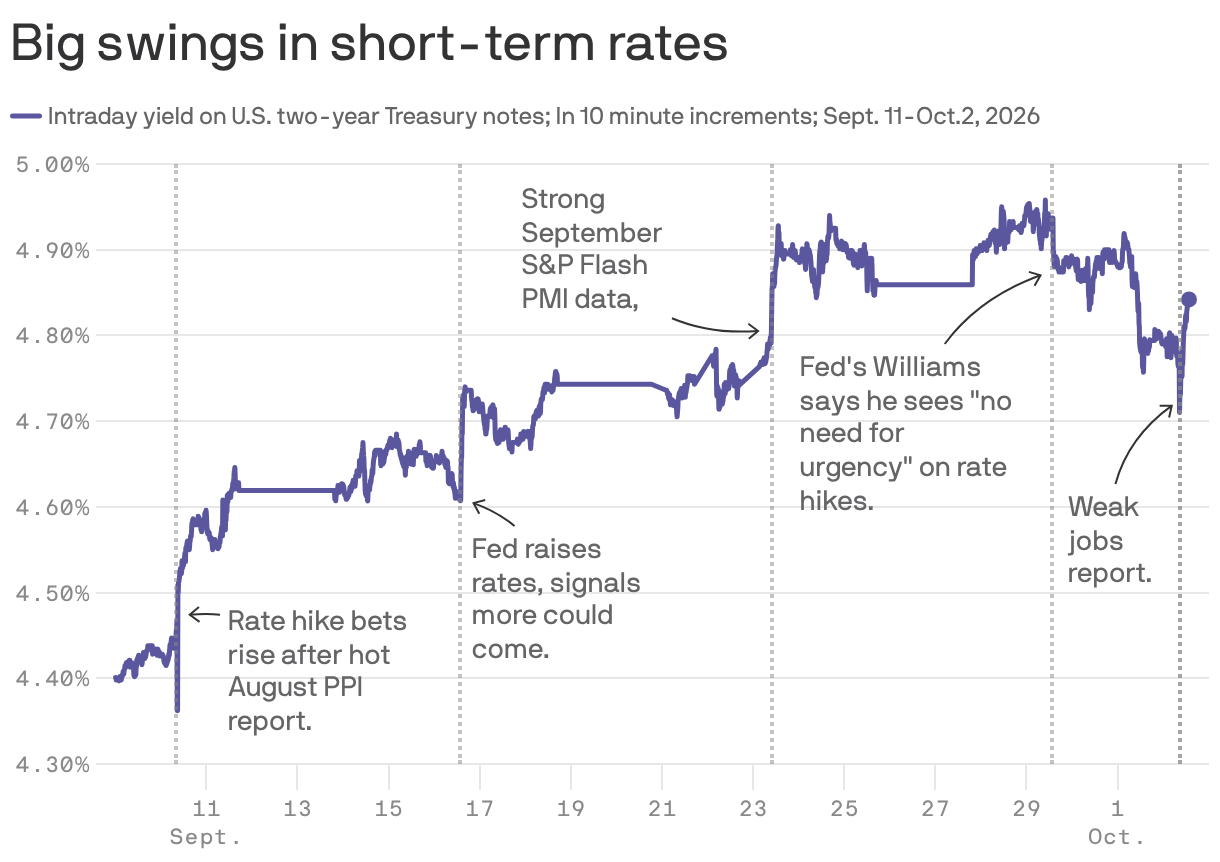
The yield on the 10-year note has gotten a lot of ink lately, but the yields on shorter-term government bonds have also been swinging.
Why it matters: Shorter-term U.S. government debt is heavily influenced by market expectations for what the Federal Reserve will do next on monetary policy.
The latest: And those yields — for instance on the two-year note, shown above — have been volatile, reflecting an uncertain economic backdrop.
- Things were looking quite strong, until a weak jobs report landed on Friday.
- On top of that, the market is still trying to figure out how the Fed will behave as the economic outlook turns foggy.
What they're saying: "The Fed knows they're going to have to tighten policy. They just don't know how quickly and how far," Gennadiy Goldberg, head of U.S. rates strategy at TD Securities, tells Axios.
- "They'll probably need to do more," Goldberg says. "But at the same time, I think they're pouring some cold water on the narrative that they're looking to kill the economy in the process. They're not."
Bottom line: That uncertainty at the Fed is being mirrored by the markets, which is part of the reason why bonds have been so volatile.
