Saudi Arabia nuclear deal hinges on Israel pact, Trump says

Add Axios as your preferred source to
see more of our stories on Google.
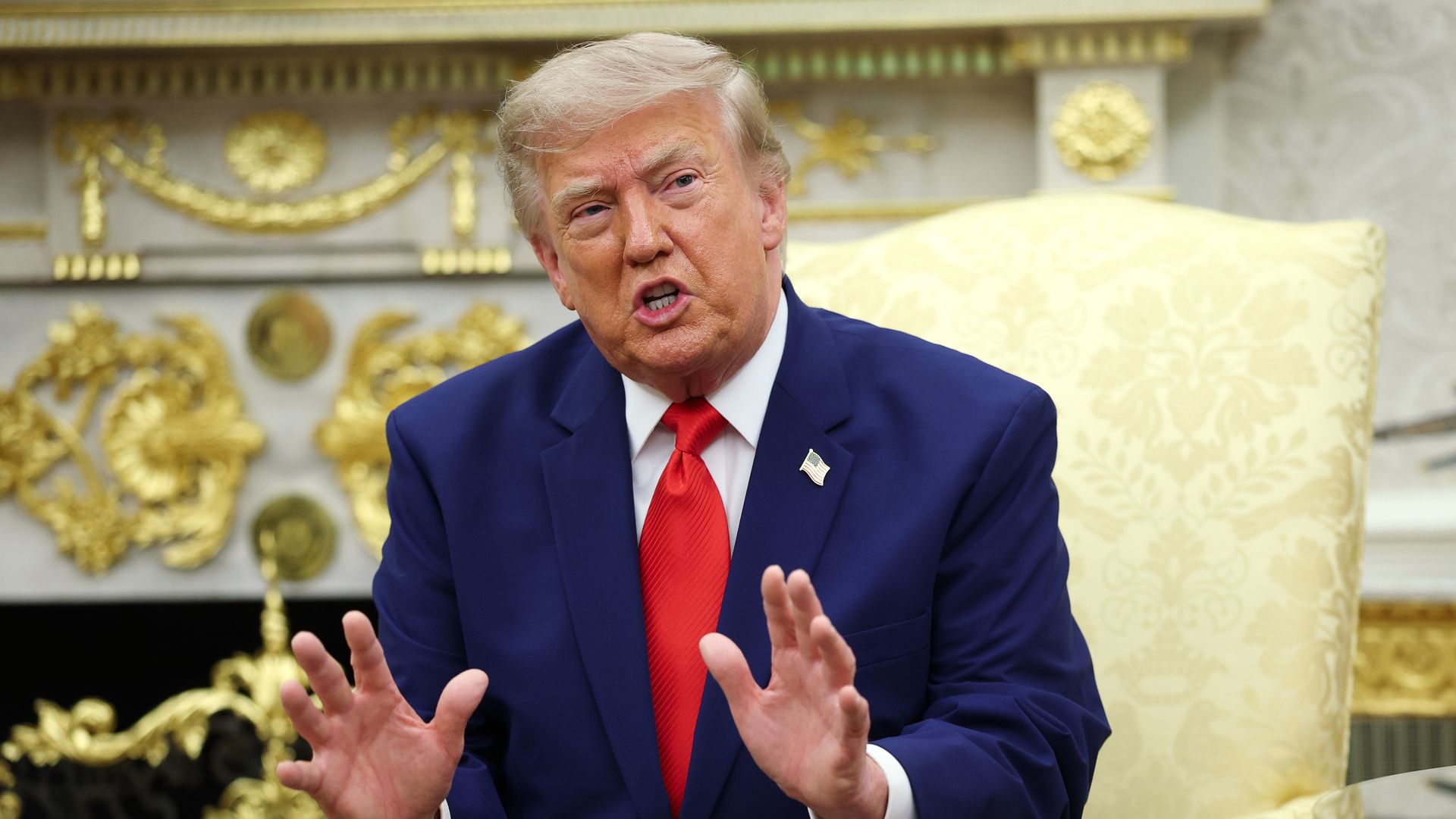
President Trump speaks in the Oval Office at the White House. Photo: Kevin Dietsch/Getty Images
President Trump claimed Thursday the new nuclear deal the U.S. signed with Saudi Arabia will not include uranium enrichment and requires the kingdom normalize its relations with Israel.
Why it matters: Trump is responding to two of the bigger criticisms of the deal: that it could open the door to nuclear enrichment and that Washington gave up leverage to push a peace deal with Israel.
What they are saying: "The Civil Nuclear Deal (There will be no enrichment of material!) being made between the United States Department of Energy and Saudi Arabia, which pertains only to non-military use such as the ones that Iran and UAE (and others) already have, will be approved, but is totally subject to Saudi Arabia joining the very respected and successful Abraham Accords," Trump wrote on Truth Social.
- White House press secretary Karoline Leavitt told reporters that Trump made it clear to leaders of Gulf countries that he wants them to sign on to the Abraham Accords and normalize relations with Israel.
- "Yes, this deal with Saudi Arabia, this energy deal, is contingent on this condition as far as the president is concerned. We will continue to talk with our Saudi counterparts to get the deal finalized and hopefully see them joining the Abraham Accords very soon," Leavitt said.
- Leavitt said Trump has raised this issue with Saudi Crown Prince Mohammed bin Salman in the past.
- She claimed the agreement is still being finalized and suggested Trump's condition could still be added to the deal.
Driving the news: U.S. Energy Secretary Chris Wright and Saudi Energy Minister Prince Abdulaziz bin Salman signed the deal Wednesday in Washington after more than a year of negotiations.
- The agreement stipulates that American companies will help Saudi Arabia develop its civilian nuclear program.
Yes, but: The Wall Street Journal reported that the agreement also includes a joint U.S.–Saudi study on possible future uranium enrichment in the country.
- The agreement doesn't require Saudi Arabia sign a separate International Atomic Energy Agency protocol allowing snap inspections by UN inspectors.
- The Energy Department said the agreement includes a bilateral U.S.–Saudi "safeguards agreement" that will prevent Saudi Arabia from using its nuclear program for anything other than peaceful purposes.
- "Rest assured, these agreements uphold the highest standards of nuclear safety and nonproliferation," Secretary Wright said.
The IAEA said in a statement that it was notified of a plan to ask the agency to carry out "verification measures" tied to the bilateral agreement.
- "We look forward to receiving the request for such verification and to working with the U.S. and Saudi Arabia in ensuring the implementation of those measures," the IAEA said.
- The UN nuclear watchdog added that Saudi Arabia should sign a safeguards agreement with the IAEA.
The big picture: The nuclear negotiations began under the Biden administration as part of a broader deal that included a U.S.–Saudi defense treaty and required Saudi Arabia sign a peace deal with Israel.
- The current agreement was signed separately from any Saudi–Israeli peace deal, and there is no indication its text formally links the two.
- Critics argue that Trump lost some of the leverage he had to push the Saudis towards normalization with Israel.
- The Saudis themselves say they will not normalize relations with Israel without the Israeli government agreeing to an "irreversible and time-bound path" for a Palestinian state.
The other side: Israeli Prime Minister Benjamin Netanyahu issued a statement an hour after Trump's post claiming the joint war, Israel and the U.S. launched against Iran has created the possibility to expand peace in the Middle East.
- "As President Trump has said, Saudi Arabia's joining of the Abraham Accords would be an historic leap forward for peace in the Middle East. Peace through strength," Netanyahu said.
Editor's note: This story has been updated with White House press secretary Leavitt's comments, Prime Minister Netanyahu's statement and the IAEA's statement.
