Israel strikes Beirut after Hezbollah attack, risking Iran response

Add Axios as your preferred source to
see more of our stories on Google.
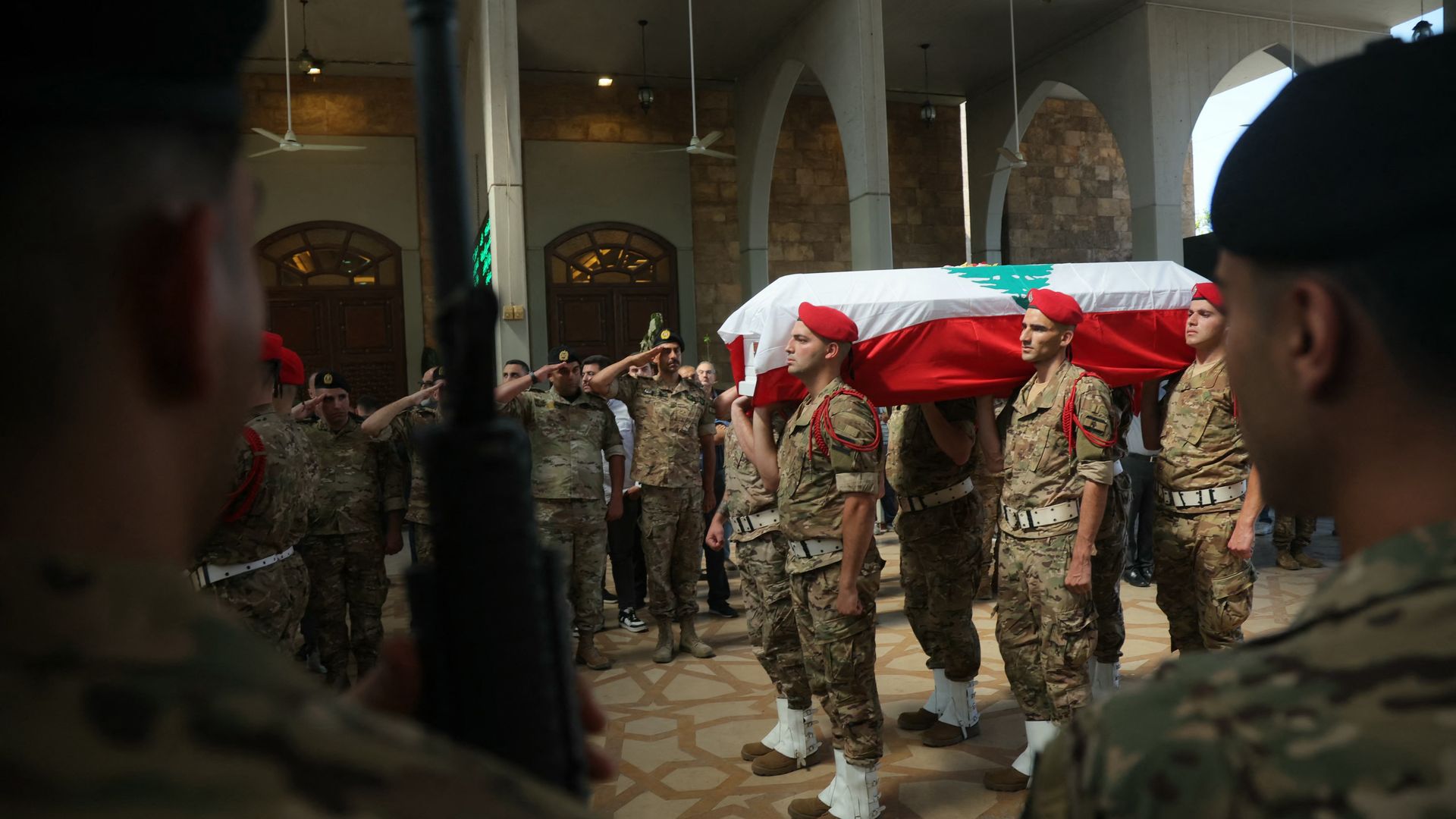
Lebanese army soldiers carry the coffin of Brig. Gen. Wissam Sabra during his funeral in Beirut on June 7, after he was killed in an Israeli strike on a military vehicle in southern Lebanon a day earlier. Photo: Ibrahim Amro/AFP via Getty Images
Israel struck Beirut's southern suburbs Sunday in retaliation to a Hezbollah missile attack on northern Israel, Israeli officials said.
Why it matters: Iran threatened last week to launch a missile attack against Israel if it attacks Beirut, while the U.S. has backed Israel's right to self-defence. Such a move could unravel U.S.–Iran negotiations and reignite the war.
- A U.S. defense official tells Axios that U.S. forces in the Middle East "are prepared for defense" in case Iran implements its threats and launches new attacks.
- Israel notified the Trump administration before the strike, a U.S. official and two other sources with knowledge tell Axios.
- "The United States supports Israel's right to self-defense and stands with the legitimate Government of Lebanon as it works to deliver a better future for its citizens," a second U.S. official tells Axios. Hezbollah "must stop firing immediately and allow these agreements to take effect."
Driving the news: Israeli Prime Minister Benjamin Netanyahu said the strike answered Hezbollah missiles fired at northern Israel earlier Sunday, which the Israeli military says it intercepted.
- Israeli officials said the Beirut strike targeted a Hezbollah command center in Dahieh — a Shia district known as a Hezbollah stronghold.
- At least two people were killed and a dozen wounded, according to Lebanon's state news agency.
Threat level: Senior Iranian lawmakers publicly threatened retaliation.
- Ebrahim Rezaei, a member of the Iranian parliament's national security committee, wrote on X that Iran "will give a decisive and painful response to the Zionist regime's attack on Dahieh."
- He told followers to "watch the skies" over Israel tonight.
- Iranian speaker of parliament and chief negotiator Mohammad Bagher Ghalibaf echoed that.
- Ghalibaf wrote on X: "They neither adhere to the ceasefire nor believe in dialogue, and with the naval blockade and violation of agreements on Lebanon, they showed that they only understand the language of force. The naval blockade against the Iranian nation and today's U.S. green light to the Zionist regime turn American and regime bases and assets in the region into legitimate targets. Our armed forces are ready as always."
Behind the scenes: The Israelis told the Trump administration that Hezbollah's continued attacks on northern Israel violate a ceasefire, giving Israel the right to hit Beirut, the sources told Axios.
- The Israelis made clear they will continue hitting the Beirut every time Hezbollah launches attacks against northern Israel.
- The White House and the State Department didn't immediately respond to a request for comment.
Catch up quick: On Monday, President Trump put the brakes on Israel's plan to launch massive strikes on Beirut in response to Hezbollah's drone and missile strikes.
- Trump lashed out at Netanyahu in an expletive-laden call.
- After the call, Trump announced a partial ceasefire that included an Israeli commitment not to attack Beirut in return for Hezbollah stopping attacks on Israeli border towns.
- On Wednesday, Israel and Lebanon agreed to a full ceasefire, contingent on Hezbollah halting attacks and withdrawing its operatives from the area south of the Litani River in Lebanon.
- Hezbollah rejected the terms Thursday. Without Hezbollah's agreement, the ceasefire stayed "on paper."
What they're saying: A U.S. official said Hezbollah has a choice: It "can continue fighting a pointless war, or it can finally allow the return of the displaced and the reconstruction of Lebanon."
- "The terms on the table are fair, have the consent of both sovereign governments, and provide a clear path to end the fighting," the official said. Hezbollah "is exclusively to blame for any continuation of hostilities."
- The official said the U.S. sees the process as a way to strengthen Lebanon's sovereignty while improving Israel's security.
Editor's note: This story was updated to add Iranian officials' comments and updated comment from two U.S. sources.
