Lebanese official told U.S. that Hezbollah ready for full ceasefire with Israel

Add Axios as your preferred source to
see more of our stories on Google.
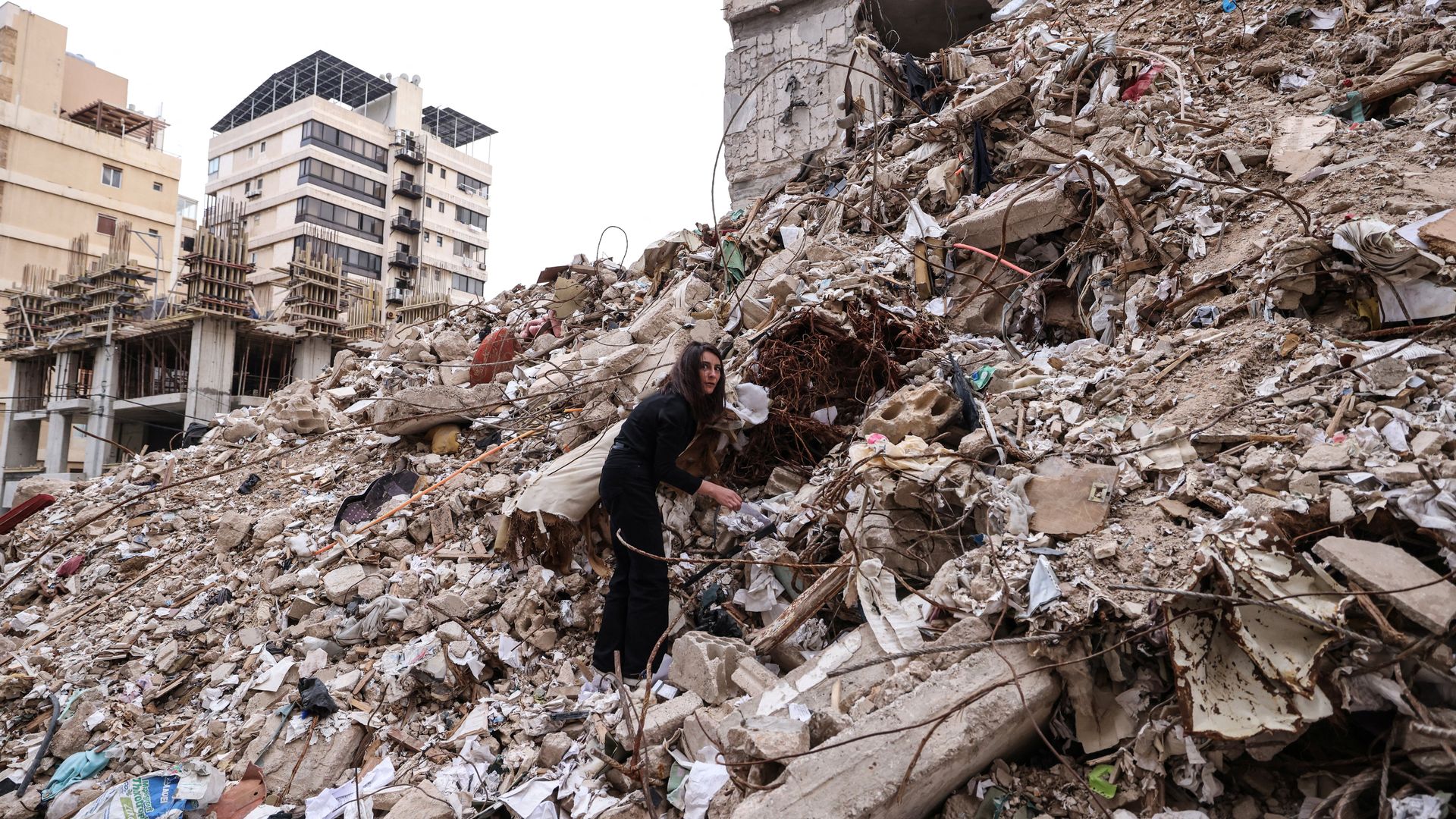
A woman searches through rubble after an Israeli strike in Beirut. Photo: Anwar Amro/AFP via Getty
The speaker of the Lebanese Parliament, Nabih Berri, told the Trump administration on Sunday that Hezbollah is ready for a full and immediate ceasefire with Israel and pledged to guarantee its implementation, Berri's top adviser Ali Hamdan told Axios.
Why it matters: The fighting in Lebanon is escalating and threatening to derail the chances of a deal to end the war in Iran, particularly with Israeli Prime Minister Benjamin Netanyahu now threatening to strike Beirut.
- Iran's semi-official Tasnim News Agency reported on Monday that Iran's negotiating team was suspending its exchange of messages with the U.S., through the mediators, in protest of Israel's actions in Lebanon.
Zoom in: Berri is one of the most powerful Shiite politicians in Lebanon and has close links to Hezbollah, though U.S. and Israeli officials question whether he can actually guarantee Hezbollah's compliance.
- If Hezbollah is indeed ready for a full ceasefire, such a truce would leave the Israeli occupation of southern Lebanon in place for now while potentially disconnecting the Lebanese arena from the war with Iran.
- According to a source with knowledge, though, U.S. officials told Berri they don't think Netanyahu would agree.
- An Israeli official confirmed Hezbollah expressed readiness for a full ceasefire without demanding an immediate Israeli withdrawal.
What he's saying: "I called the U.S. ambassador to Beirut, Michel Issa, on Sunday and told him on behalf of Speaker Berri that Hezbollah will be ready to totally commit to a comprehensive ceasefire and we are ready to guarantee it," Hamdan told Axios.
- Hamdan confirmed that the Trump administration proposed a partial ceasefire over the weekend that would require Hezbollah to stop striking northern Israel in return for Israel committing not to strike Beirut, as Axios reported.
- But he pushed back on a U.S. official's characterization of Berri's response as "evasive and disappointing."
Friction point: "The proposal we received was no Hezbollah attacks on northern Israel and that in return Israel will not bomb Beirut and then gradually the ceasefire will expand to other areas," Hamdan said. "Speaker Berri's reply was, "Why a partial ceasefire? Let's have a full ceasefire."
- Berri proposed a ceasefire on the ground, in the air and at sea under which Israel would also commit to stop demolishing houses in southern Lebanon.
- Hamdan claimed Berri has a channel of communication with Hezbollah that allows him to exchange messages with the group's leader, Naim Qassem, who is in hiding.
- "We are sure Hezbollah will commit to a total ceasefire. We think it will be more productive. We know time is running out," Hamdan said.
- The U.S. official said "our comments still stand," referring to the characterization of Berri's response to the partial ceasefire proposal as "disappointing."
State of play: The U.S. has urged Israel against striking Beirut for several weeks as part of a broader de-escalation push, but a U.S. official hinted on Sunday that position could soften. "The U.S. does not expect Israel to absorb ongoing attacks on its civilians by a terrorist organization," the official told Axios.
- On Monday, Netanyahu issued a joint statement with Defense Minister Israel Katz threatening to bomb Hezbollah targets in the Dahieh district of Beirut "following repeated violations of the ceasefire" by the Shiite militia.
- They said the district housed Hezbollah's "terrorist headquarters," which could no longer "remain off-limits." The Israel Defense Forces later issued a statement in Arabic urging "all residents of the Dahieh district in Beirut to relocate for their safety."
- "Should Hezbollah continue to fire toward our cities and communities, the IDF will respond by striking terrorist targets in Dahieh," the statement said.
What to watch: Iranian Foreign Minister Abbas Araghchi issued his own warning on X that Israel's actions in Lebanon were a violation of the U.S.-Iran ceasefire, and the U.S. and Israel would bear "the consequences of any violation."
- Shortly after Araghchi's statement, Tasnim quoted Iranian officials stressing no talks with the U.S. will take place until Israel stops its attacks in Lebanon.
- The Tasnim report also said Iran and its "Axis of Resistance" are prepared to retaliate in the Strait of Hormuz "and activate other fronts," including the Bab el-Mandeb Strait in the Red Sea.
