What Ebola is — and why it's not a pandemic

Add Axios as your preferred source to
see more of our stories on Google.
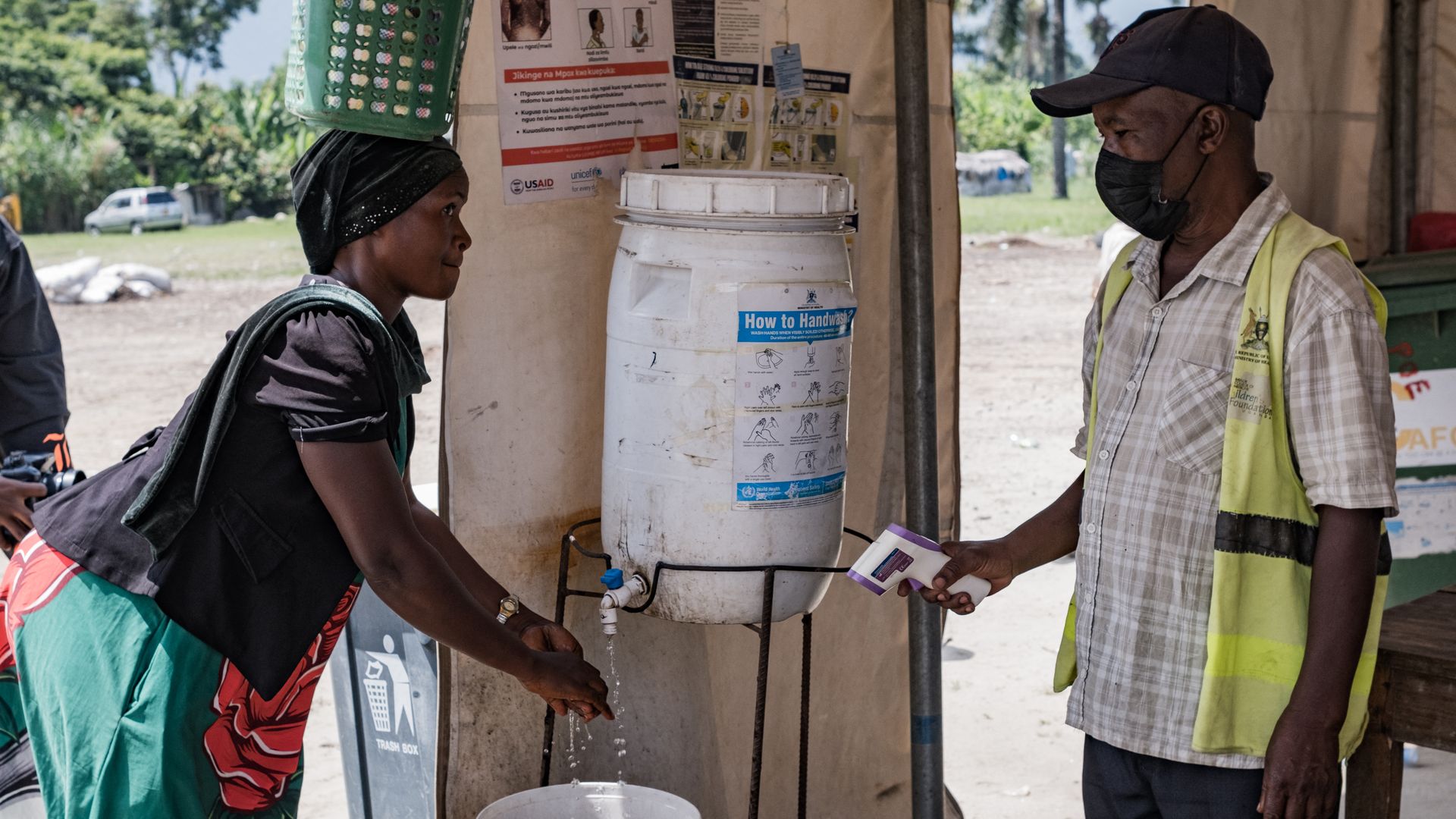
A traveler washes her hands at the Busunga border crossing between Uganda and the Democratic Republic of Congo in Bundibugyo, on May 18. Photo: Badru Katumba/AFP via Getty Images
An Ebola outbreak in parts of Central and East Africa is fueling concern about another global health crisis.
Why it matters: WHO this week declared Ebola a public health emergency of international concern, but experts say the chances of a global pandemic remain slim.
- Ebola spreads through close physical contact rather than airborne transmission, making widespread international spread less likely than with respiratory viruses like COVID.
Why is this virus so concerning?
WHO does not yet know the full scope of the Bundibugyo ebolavirus outbreak that's been linked to dozens of deaths or how widely it has spread.
- It has no approved vaccine or targeted treatment, is often fatal, and has spread from the Democratic Republic of the Congo into neighboring Uganda.
What are the symptoms?
People with Ebola may experience fever, aches, pains and fatigue early in the illness, according to the CDC. As symptoms worsen, patients may experience diarrhea, vomiting and unexplained bleeding.
- Hackensack Meridian Health chief physician officer Daniel Varga tells Axios these later symptoms occur "at the peak" of when patients are infectious.
- Ebola can have an incubation period of up to 21 days, "so somebody can be asymptomatic to minimally symptomatic for a long period of time," says Varga, who worked on the frontlines of a cluster of three Ebola cases in 2014 in Dallas.
How is this threat different from COVID?
A pandemic typically affects a large number of people and is spread over several countries or continents, per the CDC.
- "Ebola is a serious and often deadly disease, but it is fundamentally different from viruses that cause global pandemics such as influenza or COVID-19," infectious disease expert Krutika Kuppalli tells Axios.
What we know about Bundibugyo
Varga says the outbreak is "changing by the day" in DRC, where WHO officials said Tuesday there were more than 500 suspected cases including 130 suspected deaths. Yet only 30 cases had been confirmed in DRC.
- The regions where Bundibugyo has spread face threats including delayed detection, limited healthcare infrastructure, healthcare worker infections and population displacement, says Kuppalli, an associate professor at UT Southwestern Medical Center.
- However, there's no evidence that the virus spreads more easily than other Ebola species.
What is the threat to Americans?
The 2013–2016 West Africa outbreak that saw patients treated in the U.S. showed that imported Ebola cases can occur anywhere via international travel, Kuppalli says.
- The CDC announced travel restrictions Monday for Congo, Uganda and South Sudan to prevent Bundibugyo from reaching the U.S.
- The Trump administration in a Tuesday statement announcing support for outbreak response efforts said U.S. officials were "working with interagency partners to evacuate, for medical treatment and/or quarantine and procedures, any affected American citizens."
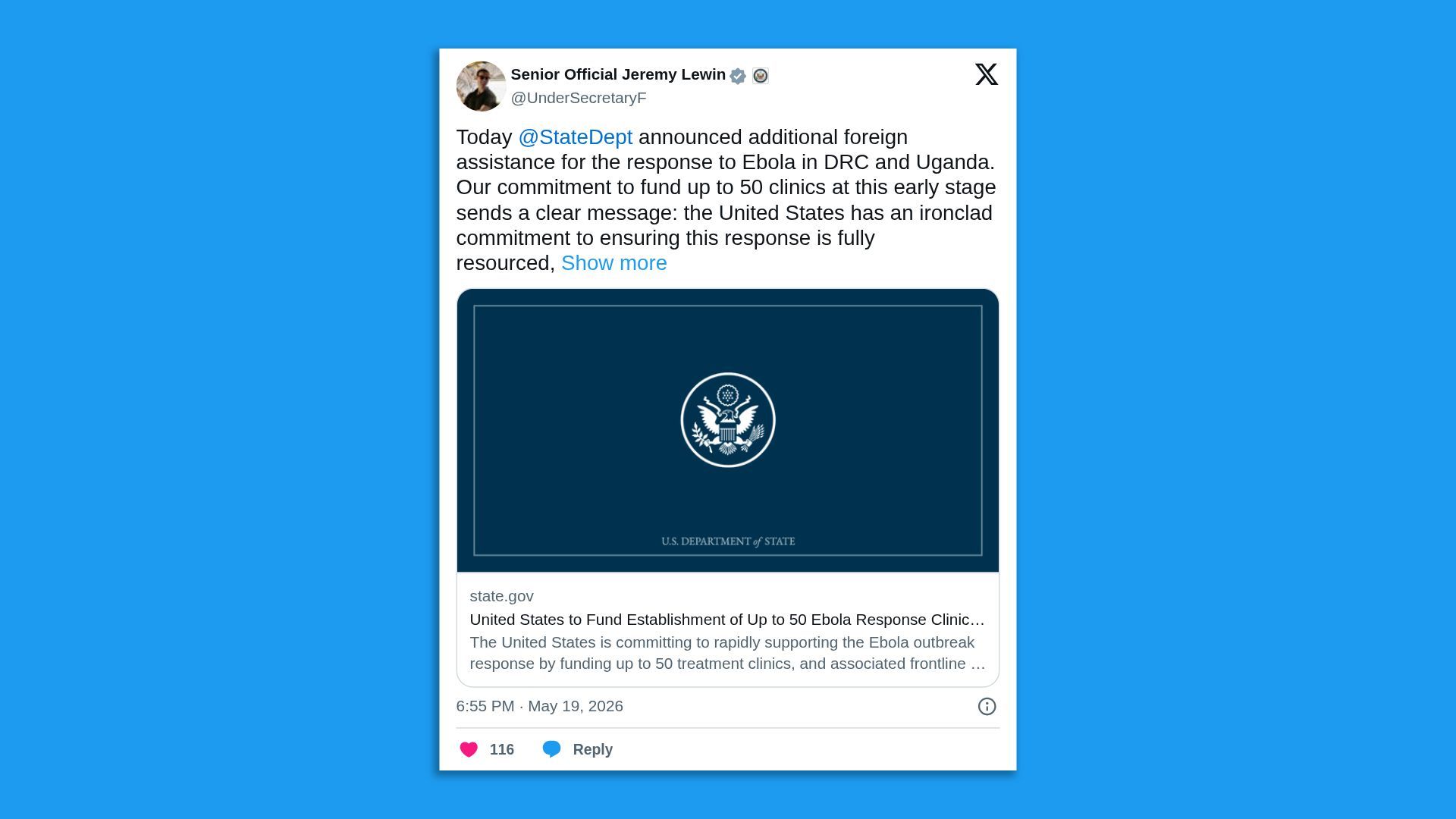
Yes, but: Experts say countries including the U.S. are significantly more prepared for Ebola outbreaks than they were a decade ago.
- Health officials have learned from previous outbreaks about rapid diagnostics, infection prevention, control and community engagement, Kuppalli says.
- Controlling Ebola outbreaks "depends on supporting affected countries quickly and effectively at the source of the outbreak," but she says sustained transmission risks in the U.S. remain "very low" despite the possibility of travel-associated cases.
U.S. health officials need to be vigilant about asking questions when patients present nonspecific viral symptoms, Varga says.
- It's important to over-communicate, "drill on the process that you're going to use to identify potentially infected individuals, and then have your preparations in place," Varga says.
The bottom line: Ebola remains a serious public health threat, but experts say the risk of sustained spread in the U.S. is low.
- But Varga notes: "You've got to be prepared."
