Trade court strikes down Trump 10% universal tariffs

Add Axios as your preferred source to
see more of our stories on Google.
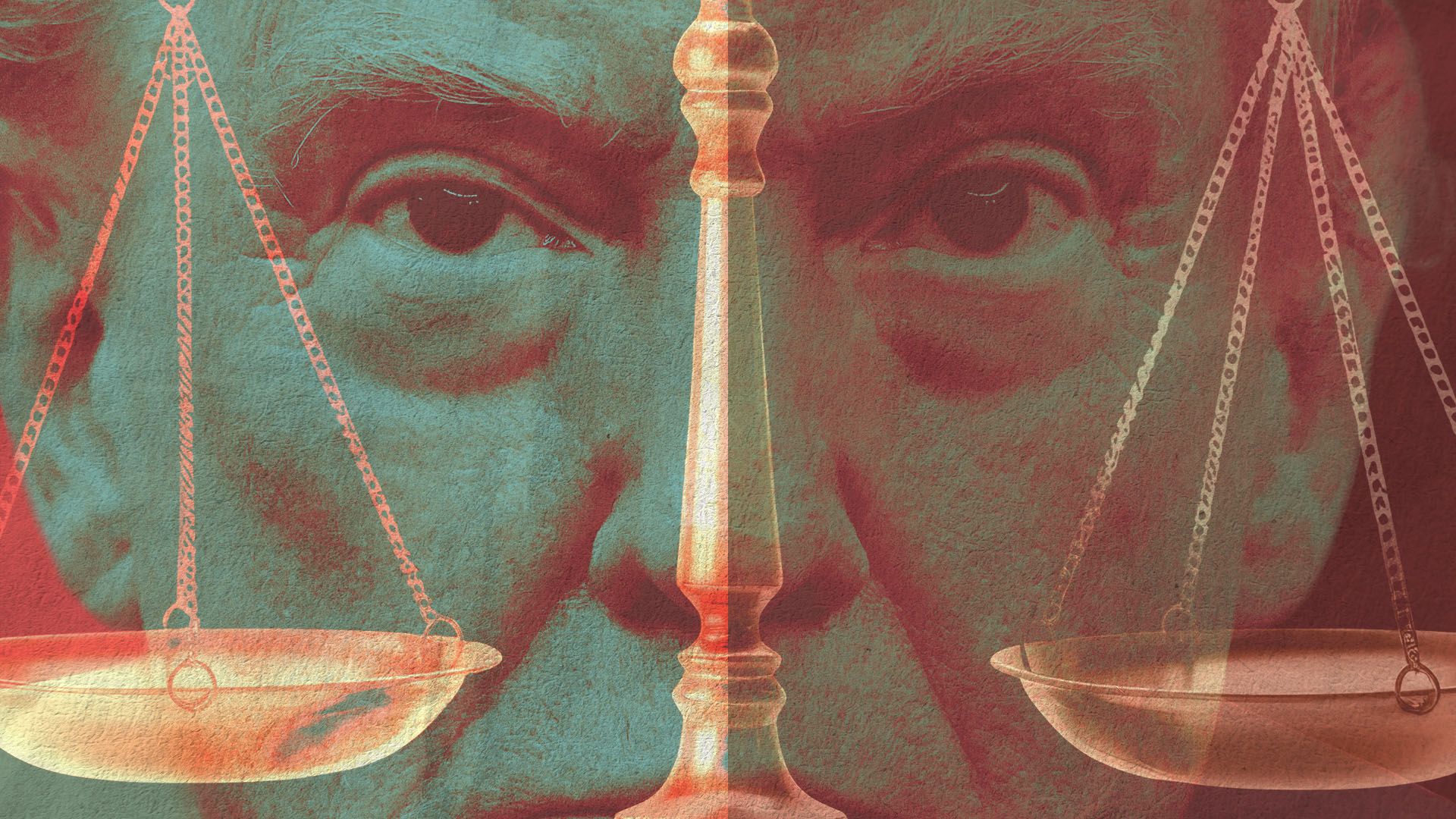
Photo illustration: Sarah Grillo/Axios. Photo: Chip Somodevilla/Getty Images
The Court of International Trade on Thursday ruled that President Trump's newest round of tariffs were illegal — but the duties will keep collecting for most importers while the administration appeals.
Why it matters: It is yet another legal setback for the White House's trade policy — this time ruling against the suite of tariffs that officials imposed to replace those struck down by the Supreme Court.
State of play: Trump turned to Section 122 — a never-before-used provision of the Trade Act of 1974 — the same day the Supreme Court struck down the bulk of his tariffs in February, imposing a 10% across-the-board surcharge set to expire July 24.
- The trade statute allows the president to impose a temporary tariff of as much as 15% for up to 150 days to address "large and serious" balance-of-payments deficits.
- The small businesses that brought the suit, a spice company and a toy retailer, are represented by the Liberty Justice Center, the same group that helped argue the last successful tariff challenge before the Supreme Court.
- The Court of International Trade tossed the claims of 23 of the 24 state attorneys general, ruling their harms from the tariffs were too indirect to establish standing.
Zoom in: Unlike its order following the Supreme Court ruling, in which the Court of International Trade initially issued a nationwide injunction covering all importers, this one is narrower in scope.
- The court ruled the tariffs illegal and entered a permanent injunction, though only for the plaintiffs in the case (and the administration is widely expected to seek a stay from the Federal Circuit before it takes effect).
What they're saying: In a 2-1 ruling, the trade court said that if the president can decide what counts as a "balance-of-payments deficit," he can always find one — essentially allowing the law to be triggered at any moment.
- "[I]f the President has the ability to select among the sub-accounts to identify a balance-of-payments deficit, unless every sub-account is balanced, the President would always be able to identify a balance-of-payments deficit," the court said in its ruling.
- "Such an expansive reading of the statute" would give Trump unlimited tariff power that belongs to Congress, the court said.
Flashback: Much of last month's hearing dealt with how to define such a crisis — and whether the nation is in one now.
- The government argued that the current account deficit — the broadest measure of what the U.S. pays out to the rest of the world versus what it takes in, of which the trade deficit is a large part — is the modern stand-in for what Congress meant.
- Plaintiffs said the type of monetary crisis the law was designed to address hasn't existed since the U.S. left the gold standard in the 1970s.
What to watch: "This decision will surely be appealed by the administration, and there is already a 'plan C' in place: the section 301 investigations that are already underway," Tim Brightbill, co-chair of the law firm Wiley Rein's international trade practice, tells Axios.
- "President Trump has lawfully used the tariff authorities granted to him by Congress to address our balance of payments crisis," White House spokesperson Kush Desai said. "The Trump administration is reviewing legal options and maintains confidence in ultimately prevailing."
The bottom line: Tariffs are at the center of Trump's economic agenda. The courts keep telling Trump that the tools he uses to impose them are illegal.
- But these duties are set to expire in July anyway — and the administration has signaled that replacement tariffs will likely be enacted before then — so the administration may not need to win in court to keep high tariffs in place.
Editor's note: This story has been updated with a response from the White House.
