Fed holds rates steady amid the most dissents in decades


Add Axios as your preferred source to
see more of our stories on Google.
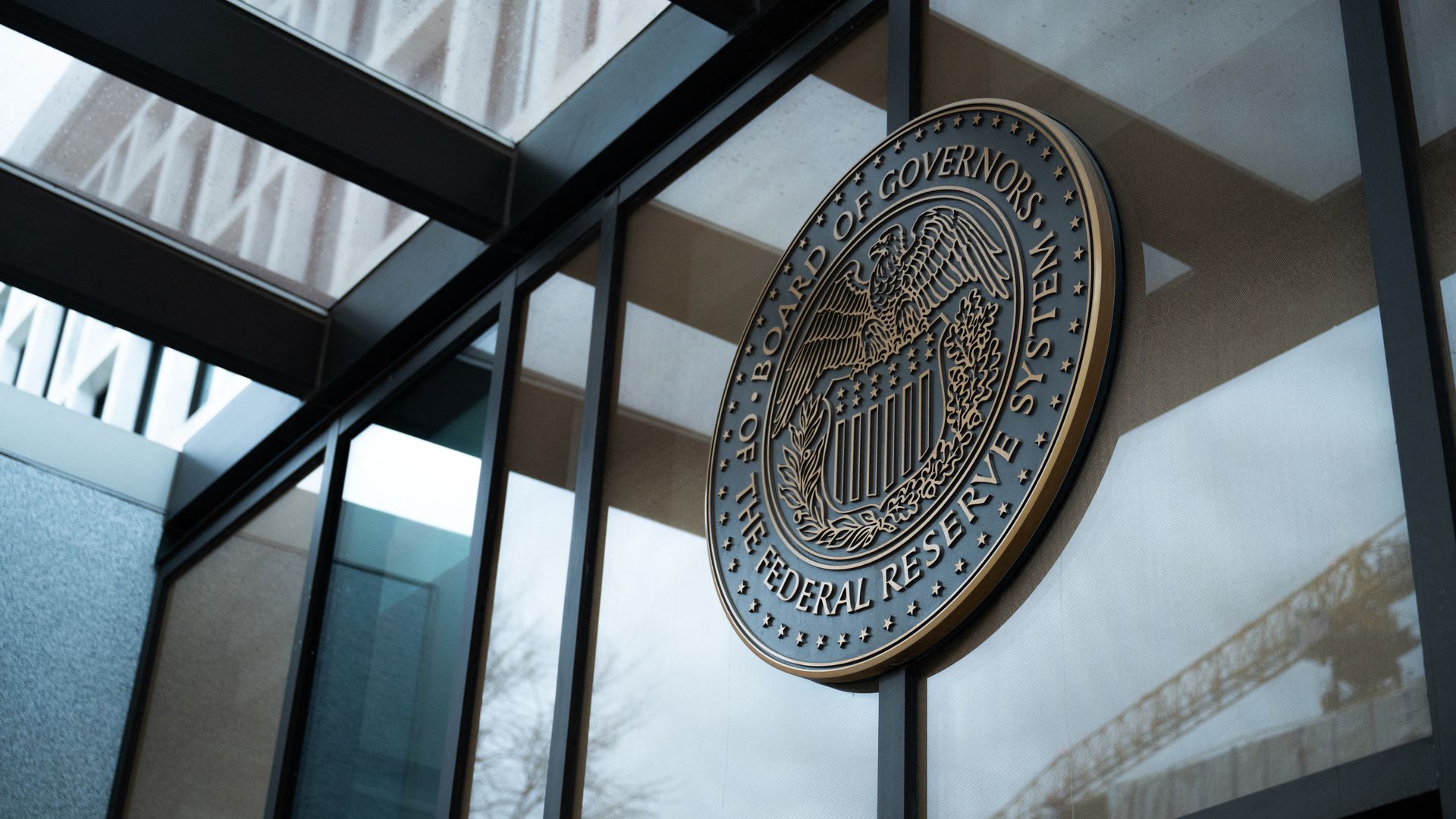
The Federal Reserve's building in Washington, D.C. Photo: Annabelle GORDON / AFP via Getty Images
The Federal Reserve left interest rates steady Wednesday in what was almost certainly Jerome Powell's final meeting as its leader, but there were the most internal dissents at a Fed meeting in 34 years.
The big picture: The surprising dissents show that Kevin Warsh, whose confirmation to lead the Fed is pending in the Senate, will face significant internal resistance to delivering the interest rate cuts that President Trump desires.
Driving the news: The central bank's policy committee left its target interest rate in a range between 3.5% and 3.75% for the third straight meeting to start 2026 and made only small changes to its policy statement.
- Three reserve bank presidents — Beth Hammack (Cleveland), Neel Kashkari (Minneapolis) and Lorie Logan (Dallas) — dissented not against the rate decision, but because they "did not support inclusion of an easing bias in the statement at this time."
- Governor Stephen Miran also dissented, but in the other direction, favoring an interest rate cut.
- The four total dissents were the most there have been at a Fed policy meeting since October 1992.
State of play: There has been simmering resistance among Fed officials, especially at the reserve banks, to signaling that further interest rate cuts are anticipated, given five consecutive years of above-target inflation.
- Now, it has burst out into the open, in Powell's final meeting at the helm.
Between the lines: The clause in the policy statement the three dissenting reserve bank presidents object to is language, repeated from recent statements, that in considering "the extent and timing of additional adjustments" to rates, the Fed will carefully assess data, the outlook and balance of risks.
- ·The phrase "additional adjustments" implies a continuation of the rate cuts the Fed enacted late last year.
- The hawkish officials don't want to rule out that the possibility that the next move might be a rate hike, in light of elevated inflation and solid growth.
What they're saying: "I didn't think we needed to do it this meeting. It really was just a question of, 'why do we need to do that now ... we have so much to learn,'" Powell told reporters at a press conference, referring to uncertainty as a result of the Iran war.
- "There doesn't need to be any rush to make that decision now, because you know what happens in the next 30, 60 days — even by the next meeting — could really change the picture around that language," Powell added.
The intrigue: Powell's term as chair concludes May 15, and Warsh's nomination to be his successor advanced through the Senate Banking Committee Wednesday morning. Warsh appears on track to be confirmed by the full Senate well before the next Fed meeting in mid-June.
- In response to a question from Axios, Powell said that he had not seen his would-be successor since the start of 2026. He said that he expected the transition process will be standard.
- Earlier in the press conference, Powell said that he would remain on the Board of Governors "for a period of time to be determined," citing concerns about legal attacks on the institution. (Go deeper).
The bottom line: Powell has largely kept an often-fractious committee together through intense policy debates over the last eight years. But Warsh is set to inherit some deep divides.
Editor's note: This story has been updated with details from Fed chair Jerome Powell's press conference.
