Fed minutes show willingness to consider interest rate increases

Add Axios as your preferred source to
see more of our stories on Google.
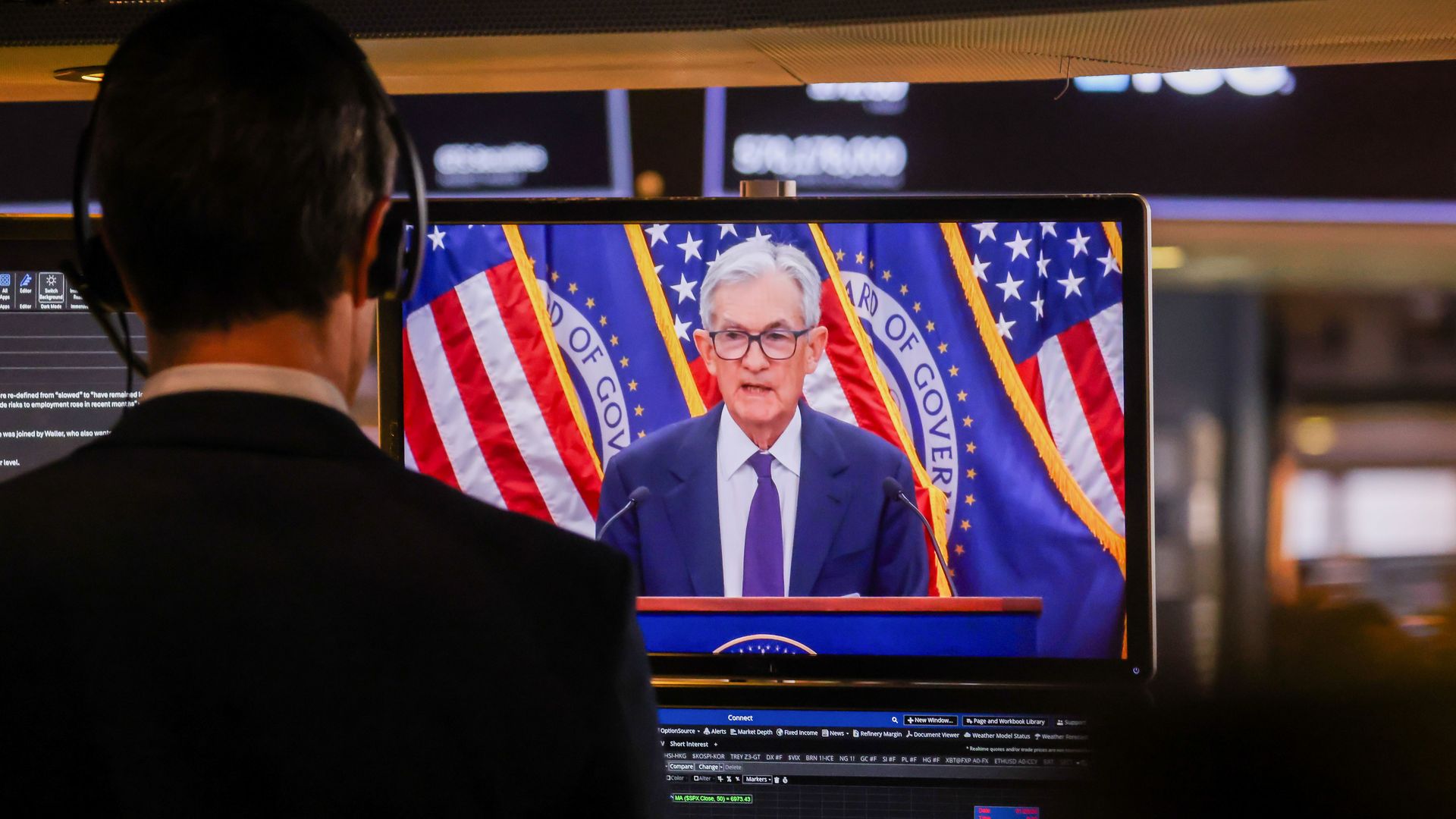
A livestream of Federal Reserve chair Jerome Powell's press conference shown on the floor of the New York Stock Exchange earlier this year. Photo: Michael Nagle/Bloomberg via Getty Images
Some Federal Reserve officials wanted to keep interest rate increases on the table, given the stubborn inflation that was set to be amplified by the Iran war, according to minutes from the central bank's March 17-18 policy meeting, released Wednesday.
Why it matters: Even as many officials see rate cuts down the line, the prospect of increasing rates highlights the uncertainty about the path of borrowing costs this year.
What they're saying: "Many participants judged that, in time, it would likely become appropriate to lower the target range for the federal funds rate if inflation were to decline in line with their expectations," the minutes show.
- But even a couple of those officials said they pushed out their projections for rate cuts "further into the future in light of recent readings on inflation," the minutes show.
- "Some" officials cited a "strong case" for the Fed to describe future interest rate decisions as "two-sided" — acknowledging the possibility for both rate cuts and rate hikes, according to the minutes.
Zoom in: The minutes show that Fed officials "also expected that higher oil prices would increase inflation in the near term and delay the anticipated decline in inflation toward" the Fed's 2% target.
- The "vast majority of officials" noted that bringing inflation down could "be slower than previously expected" and said that the risk of inflation running persistently above that 2% level had increased.
Flashback: Projections last month showed that 12 out of 19 Fed officials anticipated at least one rate cut this year, although that masked disagreement brewing beneath the surface.
- Seven expect just one cut — the same number who see rates holding steady through 2026, a signal that Fed chair Jerome Powell's would-be successor, Kevin Warsh, will inherit a deeply divided committee.
Zoom in: The Federal Reserve left interest rates on hold for the second consecutive meeting last month, following several cuts at the end of 2025.
- In the Fed's closely watched policy statement, officials noted that "the implications of developments in the Middle East for the U.S. economy are uncertain."
- They also said that the unemployment rate had been "little changed," a swap from a previous characterization of joblessness showing "signs of stabilization."
- Officials maintained that the inflation rate remained "somewhat elevated," though projections showed the Fed anticipated the energy shock would push inflation higher than previously believed this year.
Between the lines: Energy prices fell sharply on Wednesday in the aftermath of a two-week negotiated ceasefire. Prices remain above pre-war levels, however.
- In recent weeks, traders have ramped up bets that the energy surge would ignite inflation in such a way that the Fed would have to put rate cuts on ice — or, at worst, pivot to rate increases. The ceasefire has since tempered those wagers.
The intrigue: In an interview earlier this month, Powell said the central bank hadn't yet arrived at the moment when it will need to decide whether to "look through" the energy price surge from the Iran war.
- "We will eventually, maybe, face the question of what to do here. We're not really facing it yet because we don't know what the economic effects will be," Powell said, before adding that rates were at an appropriate place for the Fed to "wait and see."
