Iran deploys more mines in the Strait of Hormuz, sources say


Add Axios as your preferred source to
see more of our stories on Google.
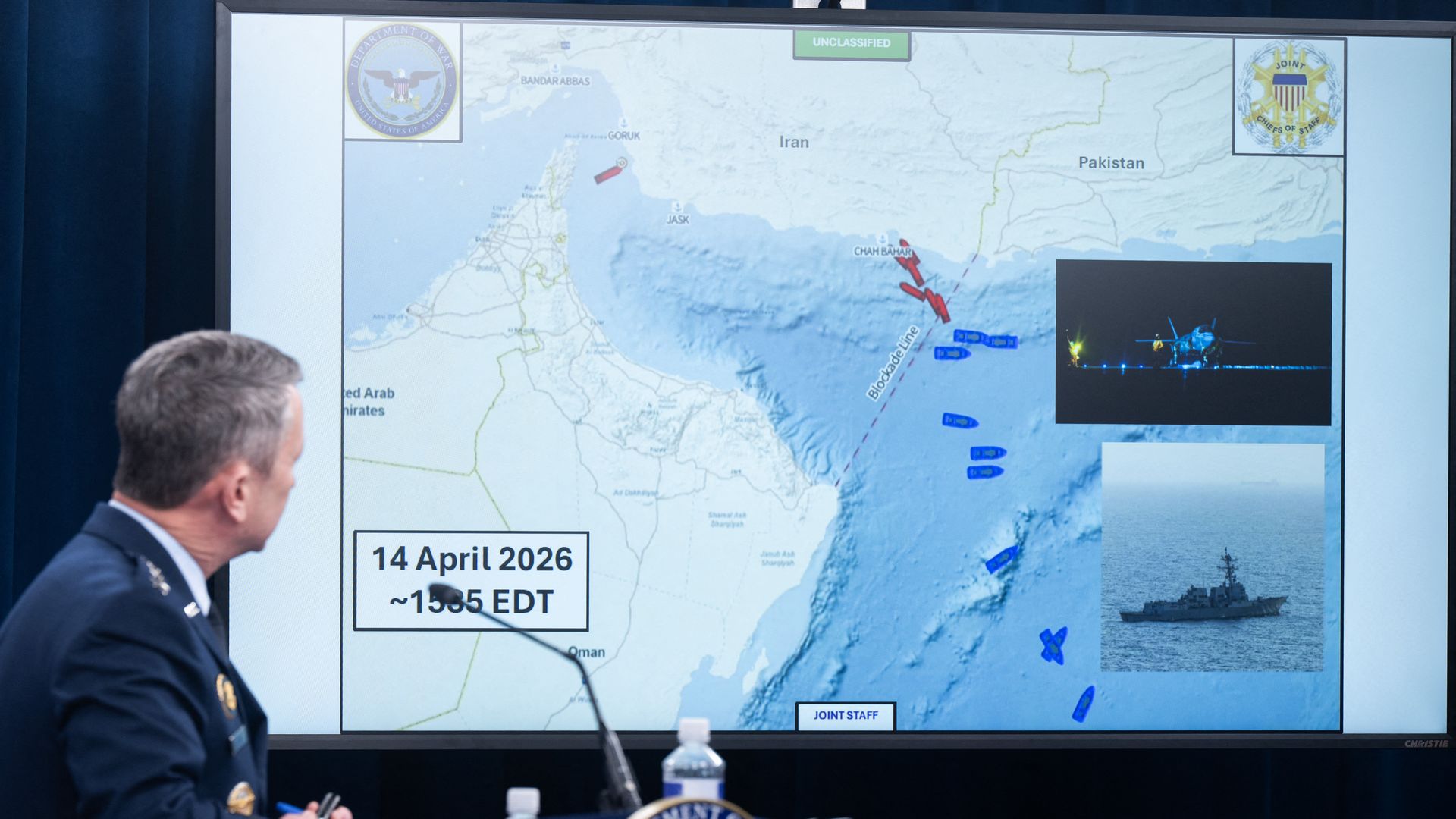
Chairman of the Joint Chiefs of Staff General Dan Caine speaks as a map of the Strait of Hormuz is displayed during a press briefing at the Pentagon on April 16. Photo: Saul Loeb / AFP via Getty Images
Iran's Islamic Revolutionary Guard Corps (IRGC) navy laid more mines in the Strait of Hormuz this week, according to a U.S. official and a source with knowledge of the issue.
Why it matters: The military standoff in the world's most important oil chokepoint is escalating, with Iran laying mines and attacking commercial ships on one side and the U.S. tightening its naval blockade on the other.
- After being briefed on the new developments, President Trump ordered the U.S. Navy on Truth Social on Thursday to "shoot and kill" any Iranian boats laying mines with "no hesitation."
The big picture: New mines in the strait could deepen what the International Energy Agency has already called the largest oil supply disruption in the history of the global market — bigger than the 1970s oil shocks.
- Roughly 20% of the world's seaborne oil passes through the strait in peacetime. Traffic has collapsed to single digits on most days, down from more than 100 ships daily.
- This is the second time Iran has mined the strait since the war began. It remains unclear whether all the mines from the first round have been found and cleared.
Behind the scenes: The U.S. military detected the Iranian mine-laying operation and has been tracking it closely, the sources said.
- The U.S. official said the U.S. knows how many new mines Iran has deployed but declined to provide the number.
- Before this apparent uptick, experts estimated that fewer than 100 mines had been deployed by Iran.
- The White House declined to comment on intelligence matters.
At the war's start, U.S. officials estimated they had destroyed more than 90% of Iran's large mine-laying vessels and mine-storage warehouses, but believed the armed forces still had in stashes along the coast.
- The mines can be relatively easy to lay for Iranians piloting small fishing-boat-sized Gashti vessels, which can each carry two to four mines and drop them in the strait.
- Iran still has scores of those vessels, which can be equipped with rocket launchers and mounted machine guns to interdict large tankers.
State of play: The aircraft carrier USS George H.W. Bush and its strike group arrived Thursday in the U.S. Central Command (CENTCOM) area of responsibility.
- It will be the third U.S. aircraft carrier in the region — tightening the naval blockade on Iran and giving Trump more military options if he decides to resume the war, sources said.
- CENTCOM said Thursday it has redirected 33 vessels since the blockade began.
What to watch: U.S. officials say the Navy is operating underwater drones in the Strait of Hormuz for mine-clearing operations
- Trump's Thursday announcement also indicated that two mine countermeasure vessels, the USS Chief and the USS Pioneer, may also be operating in the Strait.
- The effort could also involve special mine-hunting helicopters and surveillance aircraft, although experts caution that the strait is a narrow and perilous waterway due to the threat of Iranian attacks.
- Trump said he ordered that operation "to continue, but at a tripled up level!"
Editor's note: This story has been updated with new details.
