U.S. awaits Iran's response on peace summit as Israel watches warily

Add Axios as your preferred source to
see more of our stories on Google.
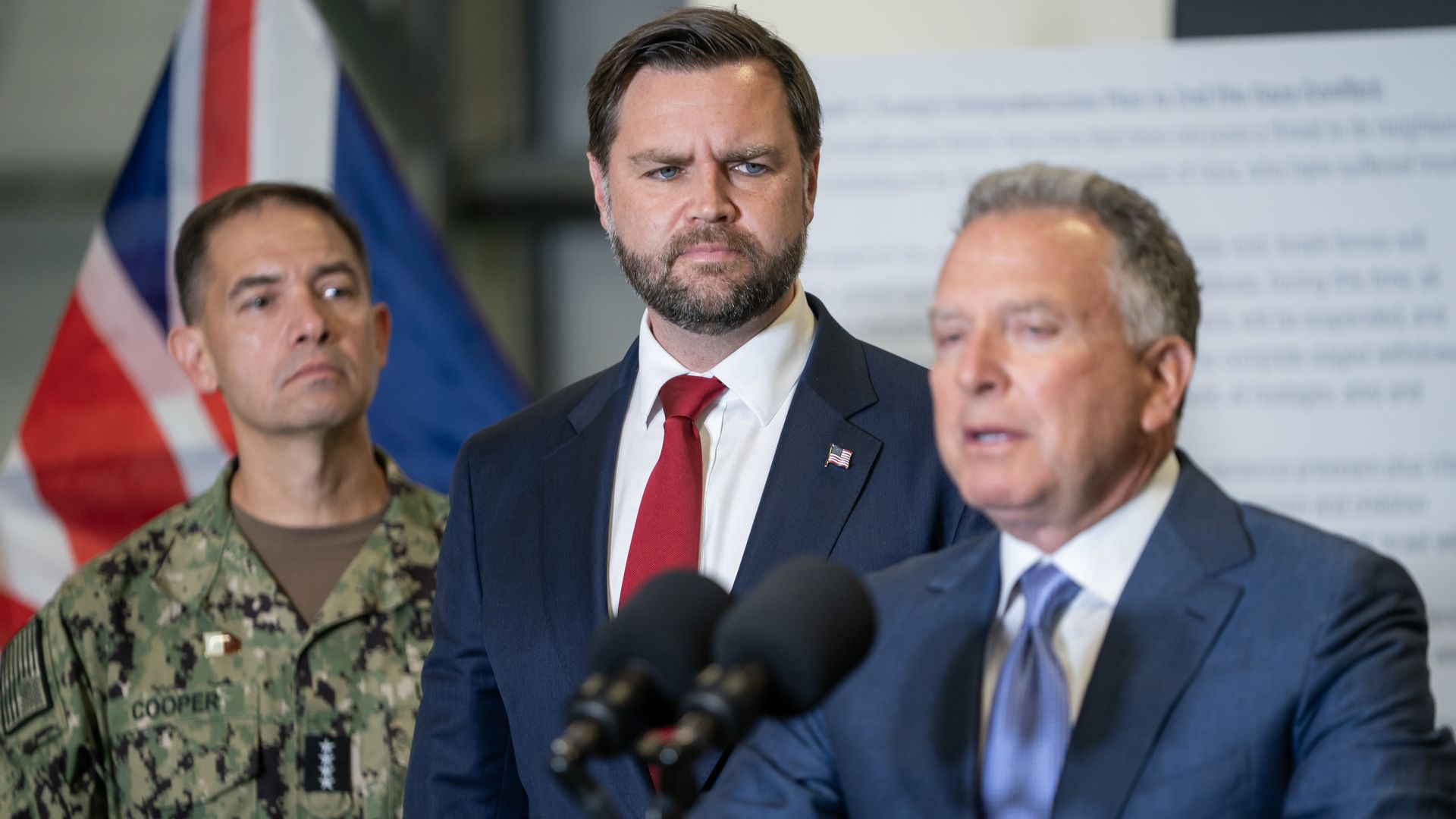
Steve Witkoff speaks alongside Vice President Vance and CENTCOM Commander Adm. Brad Cooper in Israel last October. Photo: Nathan Howard/Pool/Getty
The U.S. and a group of regional mediators are discussing the possibility of holding high-level peace talks with Iran as soon as Thursday, but they're still waiting for a response from Tehran, two sources with knowledge of the discussions tell Axios.
Why it matters: President Trump is interested in winding down the war, but Iran's chokehold on the Gulf of Hormuz complicates any potential exit strategy. The U.S. has shared with Israel its 15-point plan to end the war and claimed Iran had agreed to many of the key points. There's been no tangible evidence of any such agreement.
- Israeli Prime Minister Benjamin Netanyahu is concerned Trump might strike a deal that falls well short of Israel's objectives, includes significant concessions and limits Israel's ability to conduct strikes against Iran, two Israeli sources say.
- A third source said Israeli leaders were skeptical Iran had actually offered the concessions the U.S. claimed.
- Trump told reporters in the Oval Office on Tuesday that while many of Iran's leaders are gone, the U.S. "is talking to the right people, and they want to make a deal badly."
At the moment, Iranian officials are denying Trump's claim of behind-the-scenes negotiations, though they've confirmed the U.S. has sent messages and proposals.
- Pakistan, which has been passing messages between Tehran and Washington together with Egypt and Turkey, has said it "stands ready and honored" to host peace talks if both countries agree. Trump shared the Pakistani message on Truth Social, in a sign of his interest in making such a summit happen.
- If the plans for a summit firm up, Vice President Vance is likely to be involved. "But it's not clear if there is anything to be involved in. Everyone is trying to figure out if it's real," one source with knowledge said.
Between the lines: U.S. officials say the Iranian government is in chaos and is having trouble communicating within itself. The uncertain condition of the new supreme leader, Mojtaba Khamenei, adds to confusion about who is empowered to make decisions.
- Some Iranian officials, meanwhile, claim Trump is just trying to calm the markets and buy time for his military plans with false claims of diplomatic progress.
- The U.S. is also readying options for potential escalation. A U.S. official told Axios the command element of the U.S. Army's 82nd Airborne division had been directed to deploy to the Middle East with an infantry brigade consisting of several thousand soldiers, as Fox News first reported.
- That would give the U.S. more scope for potential ground operations.
Zoom in: The U.S. gave Iran a 15-point proposal for a possible deal to end the war. It includes many of the same demands the U.S. made during the last round of nuclear talks in Geneva, U.S. and Israeli sources said.
- U.S. envoy Steve Witkoff has told Trump that the Iranians agreed on several key points, including on giving up their stockpile of highly enriched uranium, a U.S. source told Axios. That would be a major concession, but it's unclear if anyone with authority in Tehran has actually offered it.
- "Steve and Jared tried to establish a credible channel for negotiations with Iran, but it is too early to say what's gonna happen and if they have a real, viable channel," the source said.
Breaking it down: The U.S. also gave its 15-point plan to Israel. While the document aligns with Israel's positions, Israel is highly skeptical Iran will agree to Trump's full demands, an Israeli official said.
- "There is concern that Trump will decide to cut a deal and stop the war even if only some of his demands are met and postpone the rest for later without a clear solution," a second Israeli source said.
- The U.S. told the Israelis that Iran had agreed to give up its 450kg stockpile of 60%-enriched uranium, accept enhanced UN inspections and monitoring of its nuclear sites, limit the range of its ballistic missiles, and cut back on support for proxies, the source said.
- The document calls for zero uranium enrichment in Iran, an Israeli source said. The U.S. side said Iran had agreed to suspend enrichment, but it's unclear for how long.
- It's also unclear who purportedly made those commitments on behalf of Iran. The regime has previously rejected many of those U.S. demands, and Israeli intelligence believes there's still a big gap between the U.S. and Iranian positions.
The intrigue: Even at the top levels of the Trump administration, very few people know what is actually going on in terms of the outreach to Iran.
- One source said Witkoff and Kushner were speaking directly to Trump, with few others in the know.
- The Israelis gathered intelligence in recent days that suggested "something was brewing" between the U.S. and Iran, but nothing more specific than that, the two Israeli officials said.
- Vance updated Netanyahu in more detail on Monday around the same time Trump started talking publicly about outreach to Iran.
State of play: An Israeli source and a second source familiar with the diplomacy said the U.S. is waiting on a decision from the Iranians — possibly Khamenei himself — on whether to hold talks this week.
- It's unclear if the sides would be represented by Vance and Mohammad Bagher Ghalibaf, the Iranian parliamentary speaker who is seen by the White House as its highest-level potential intermediary, or by lower-level officials.
- One of the mediating countries proposed a temporary ceasefire to allow for detailed negotiations, but the Trump administration prefers negotiating under fire for now to maintain its leverage, according to two Israeli officials.
- U.S. and Israeli officials are planning for another two to three weeks of war regardless of whether talks talk place.
- White House Press Secretary Karoline Leavitt said in a statement: "As President Trump and his negotiators explore this newfound possibility of diplomacy, Operation Epic Fury continues unabated to achieve the military objectives laid out by the Commander in Chief and the Pentagon."
What's next: A White House official described the situation as "fluid": Trump wants to see if a deal can be struck, but "if not, we will go back to bombing them."
- Trump suspended planned strikes on Iranian power plants, but only until Friday.
- The U.S. is building up options for military escalation, including potential boots on the ground, while also testing the diplomatic waters.
