U.S. negotiating with senior Iranian official: Trump

Add Axios as your preferred source to
see more of our stories on Google.
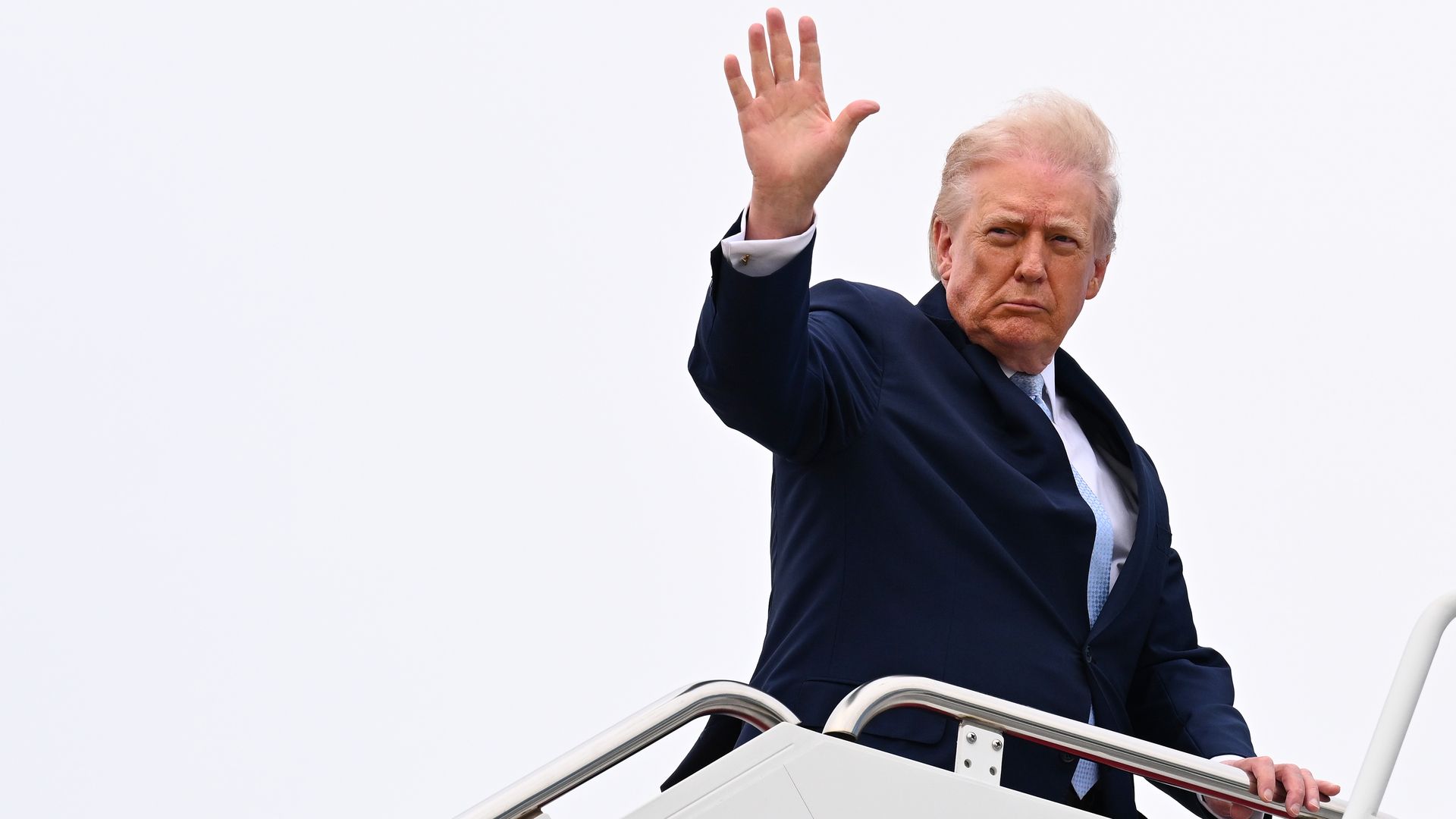
President Trump waves while boarding Air Force One at Joint Base Andrews in Maryland on March 20, ahead of a trip to Florida. Photo: Roberto Schmidt/Getty Images
President Trump told reporters his envoys had been negotiating with a senior Iranian official and claimed the parties agreed on many points.
Why it matters: Regional leaders and global markets were bracing for major escalation on Monday, but Trump walked back his threat to strike Iran's power plants, citing productive negotiations.
- Iran denied any such talks had taken place and claimed Trump was just trying to calm the energy markets.
- An Israeli official told Axios that U.S. envoys Steve Witkoff and Jared Kushner had been in touch with the speaker of the Iranian parliament, Mohammad Bagher Ghalibaf.
- Trump did not name the Iranian interlocutor, saying he did not want to get him killed, but claimed the U.S. and Iran were aligned on many of the key issues. "We are dealing with a man that I believe is the most respected, not the supreme leader, we have not heard from him," Trump said.
Reality check: Despite Trump's claims of growing consensus, a source with knowledge of the discussions said there did not appear to have been any direct talks yet between Ghalibaf and Trump's team.
- Ghalibaf himself denied that any "negotiations" had taken place and called the U.S. claims an effort to manipulate markets and "escape the quagmire in which the U.S. and Israel are trapped."
- The source said Egypt, Pakistan and Turkey passed messages between the U.S. and Iran on Sunday and were attempting to set up a call on Monday between Ghalibaf and Trump's team.
- If it happens, that call could determine whether an in-person meeting takes place, according to the source.
State of play: "On Sunday, there was readiness from the two sides to start talking. The Iranians were forthcoming, and the Americans wanted to move as well because of the markets and the oil prices," the source said.
- Trump said the talks would continue over the phone on Monday, with a possible in-person meeting later on. Iran has not confirmed that.
- The Israeli official said the mediating countries were trying to convene a meeting in Islamabad — with Ghalibaf and other officials representing Tehran, and Witkoff, Kushner and possibly Vice President Vance representing the U.S. — possibly later this week.
- The official also said Israel had been aware of indirect communications between the U.S. and Tehran but was surprised by Trump's comments on Monday. "We did not know things were moving that fast."
- The source familiar with the discussions said Ghalibaf's involvement in the negotiations is important due to his seniority and credibility within the regime.
Zoom in: Ghalibaf is a former general in the Islamic Revolutionary Guard Corps., a former mayor of Tehran and a close associate of the new supreme leader, Mojtaba Khamenei.
- Ghalibaf played a key role in managing Iran's war effort during the 12-day war in June and is currently seen as the most senior civilian official in Iran's decision-making circle.
- It was Ghalibaf who responded to Trump's threat to bomb power plants with a similar threat to strike energy facilities in the region.
The latest: Vance spoke by phone on Monday morning with Israeli Prime Minister Benjamin Netanyahu about the efforts to open negotiations with Iran, according to a source familiar with the details.
- The source said Vance and Netanyahu discussed the components of a possible agreement to end the war.
- Netanyahu said in a short video that he had also spoken with Trump. "The President believes there is a chance to leverage the military achievements of the war to get all the objectives of the war through an agreement. Such an agreement will safeguard our interests," Netanyahu said.
Catch up quick: Trump gave Iran an ultimatum to reopen the Strait of Hormuz within 48 hours or face massive attacks.
- Iran threatened to strike power plants across Israel and the Gulf if Trump followed through, and markets wobbled as dramatic escalation appeared imminent.
- After Trump reversed course, U.S. stock futures surged and oil prices fell.
- The Hormuz crisis has become a key issue driving a global energy crisis and preventing Trump from ending the war.
What he's saying: In an all caps post on Truth Social on Monday morning, Trump wrote that the U.S. and Iran have had "very good and productive conversation" over the last two days that focused on ending hostilities in the region.
- "BASED ON THE TENOR AND TONE OF THESE IN DEPTH, DETAILED, AND CONSTRUCTIVE CONVERSATIONS, WHICH WILL CONTINUE THROUGHOUT THE WEEK, I HAVE INSTRUCTED THE DEPARTMENT OF WAR TO POSTPONE ANY AND ALL MILITARY STRIKES AGAINST IRANIAN POWER PLANTS AND ENERGY INFRASTRUCTURE FOR A FIVE DAY PERIOD, SUBJECT TO THE SUCCESS OF THE ONGOING MEETINGS AND DISCUSSIONS," Trump wrote.
Breaking it down: Trump later made several claims — none of which have been confirmed by Tehran — about points of agreement.
According to Trump:
- Iran committed not to pursue nuclear weapons or to enrich uranium, and to hand over its existing stockpiles.
- Iran agreed to be "low-key on the missiles."
- Iran also agreed to reopen the strait of Hormuz.
"If they carry through with that it will end the conflict. They want to make a deal. We want to make a deal too. If this happens it is a great start for Iran to build itself back," Trump said.
- He said the U.S. had notified Israel on Monday about the talks with Iran. "Israel will be very happy with what we have. Peace for Israel. Long-term peace. Guaranteed peace."
The other side: Iran's Foreign Ministry said there had been no talks between Iran and the U.S., while acknowledging some countries in the region were working to reduce tensions.
- Trump said the Iranian denial was the result of miscommunication within the Iranian leadership.
- Foreign Minister Abbas Araghchi had previously been the Trump administration's primary interlocutor, though some in Washington questioned whether he was empowered to deliver a deal.
Between the lines: U.S. officials say it's difficult to assess who is calling the shots in Tehran after so many senior figures were killed by Israel, and with Supreme Leader Mojtaba Khamenei remaining in the shadows.
- Trump stressed that he thinks the people the U.S. is talking to inside Iran are representative of the regime.
Behind the scenes: A U.S. source said Turkey, Egypt and Pakistan have been passing messages between the U.S. and Iran over the past two days.
- The foreign ministers of the three countries held separate talks with Witkoff and Araghchi, the U.S. source said.
- "The mediation is ongoing and making progress. The discussion is about ending the war and resolving all outstanding issues. We hope to have answers soon," a source familiar with the details said.
- Egyptian Foreign Minister Badr Abdelatty had a call on Sunday with Witkoff, Araghchi and his counterparts from Pakistan, Turkey and Qatar, the Egyptian Foreign Ministry said, adding that Abdelatty stressed the importance of "containing the broader effects of the conflict and preventing it from expanding."
Flashback: Axios reported on Saturday that Trump's team was making plans to try to launch peace talks with Iran.
Go deeper: Who are the key figures in Iran's leadership as U.S. seeks negotiations
This is a developing story and has been updated throughout.
