The gamification of war

Add Axios as your preferred source to
see more of our stories on Google.
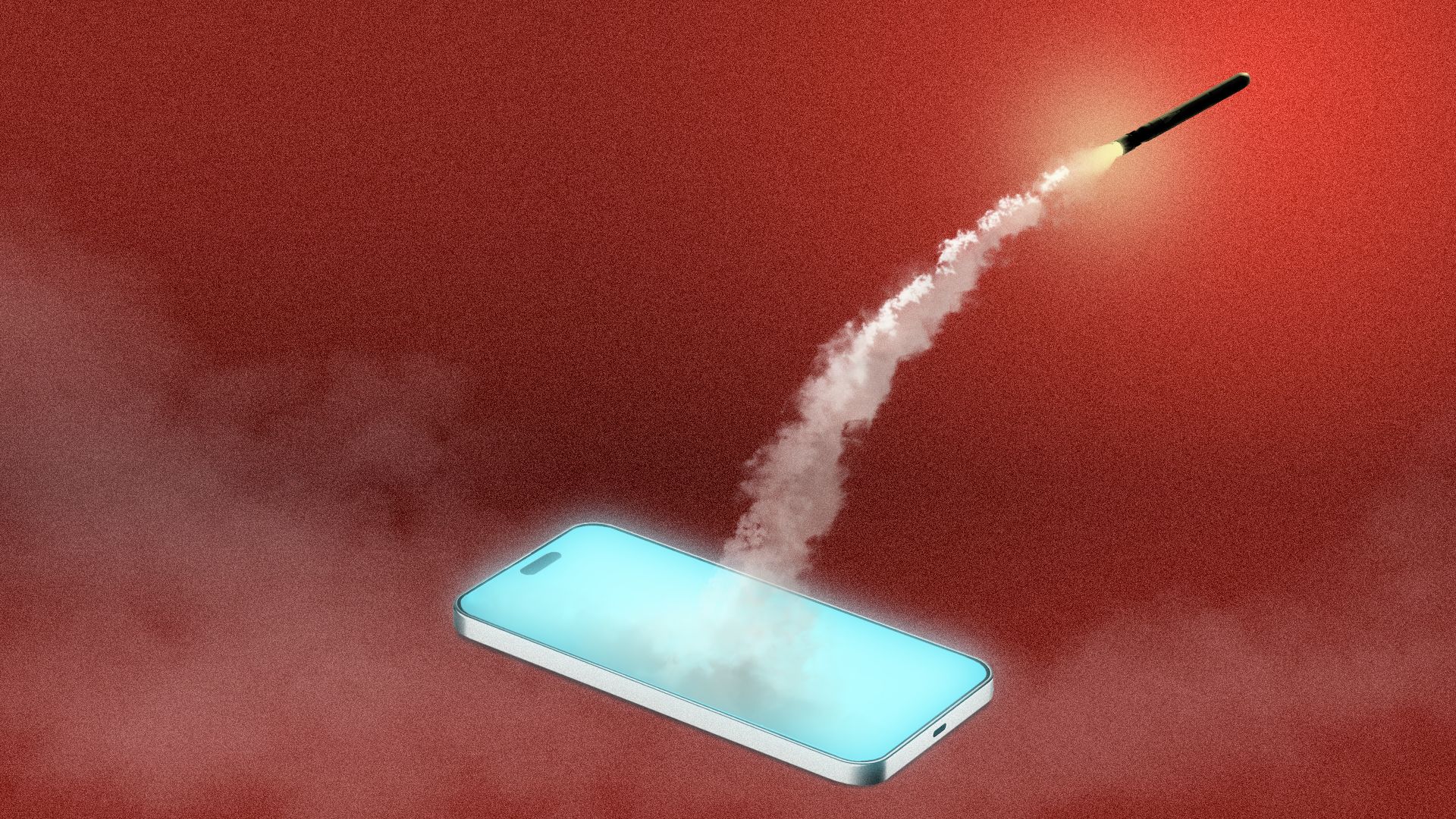
Photo illustration: Brendan Lynch/Axios. Photo: U.S. Navy via Getty Images
The U.S. government is treating strikes on Iran like a video game, inviting the country to watch as memes and montages subsume the human cost of war.
Why it matters: The Trump administration didn't invent the gamification of war, nor did it invent wartime propaganda — a tool of statecraft as old as armed conflict itself.
- But packaging live combat as social media content — scoring real kills in real time, and broadcasting it to an audience of millions — is a first in the history of American warfare.
Zoom in: Two weeks into Operation Epic Fury, much of the White House's online messaging has been gleefully trollish — a stream of videos splicing real missile strikes with footage from Call of Duty, Wii Sports and Hollywood blockbusters.
- One video wove clips from "Top Gun," "Iron Man" and "Braveheart" between images of Iranian targets being destroyed, ending with the "Mortal Kombat" audio: "Flawless victory."
- Another opened with a Grand Theft Auto meme — "Ah sh*t, here we go again" — before cutting to live strike footage from Iran.
When CNN aired a segment on the jarring content, White House communications director Steven Cheung thanked the network for covering "all of our banger videos."
- Cheung later posted a Grand Theft Auto cheat code for unlocking weapons, and greeted critics with a mocking reference to livestream culture: "W's in the chat, boys!"
What they're saying: "The legacy media wants us to apologize for highlighting the United States Military's incredible success, but the White House will continue showcasing the many examples of Iran's ballistic missiles, production facilities, and dreams of owning a nuclear weapon being destroyed in real time," White House spokesperson Anna Kelly told Axios.
- "No one is mocking our soldiers — we are highlighting the lethality and successes of our military."
Zoom out: The videos have worked exactly as the White House intended — projecting strength, generating shock value and reinforcing President Trump's image as a leader who hits hard and answers to no one.
- But they've also drawn searing criticism: Chicago Cardinal Blase Cupich condemned the gamification of war as "a profound moral failure" that "strips away the humanity of real people."
- The White House videos are the most visible expression of a broader phenomenon — a country that has built an entire ecosystem around the consumption of war as content.
Take prediction markets: Modern conflicts have become live gambling exchanges, with more than $1 billion wagered on Iran strikes and regime change since the bombing began.
- Kalshi ran a $54 million market on whether Iran's supreme leader would leave office — then invoked a little-known "death carveout" when he was killed, sparking a class-action lawsuit.
- Polymarket briefly hosted a market on the timing of a nuclear detonation, attracting nearly $1 million in bets before quietly pulling it down.
Between the lines: The memes and profiteering obscure a staggering human toll. "War is hell and always will be," as Defense Secretary Pete Hegseth acknowledged.
- At least 13 U.S. service members have been killed. Hundreds more have been injured, including dozens who have suffered brain trauma, shrapnel wounds and burns, according to CBS News.
- A preliminary Pentagon investigation determined that the U.S. military mistakenly struck an Iranian girls' school with a Tomahawk missile, reportedly killing 168 children.
- Israeli strikes on oil depots in Tehran left the city of 9 million shrouded in toxic black smoke, with residents reporting oily rain, burning lungs and skies dark enough to block the sun.
The bottom line: For millions of Americans, the Iran war lives in the same feed as memes, AI slop and sports highlights — forging a false intimacy with armed conflict that no previous generation has experienced.
