Urns over caskets: Cremations now way more popular than burials

Add Axios as your preferred source to
see more of our stories on Google.
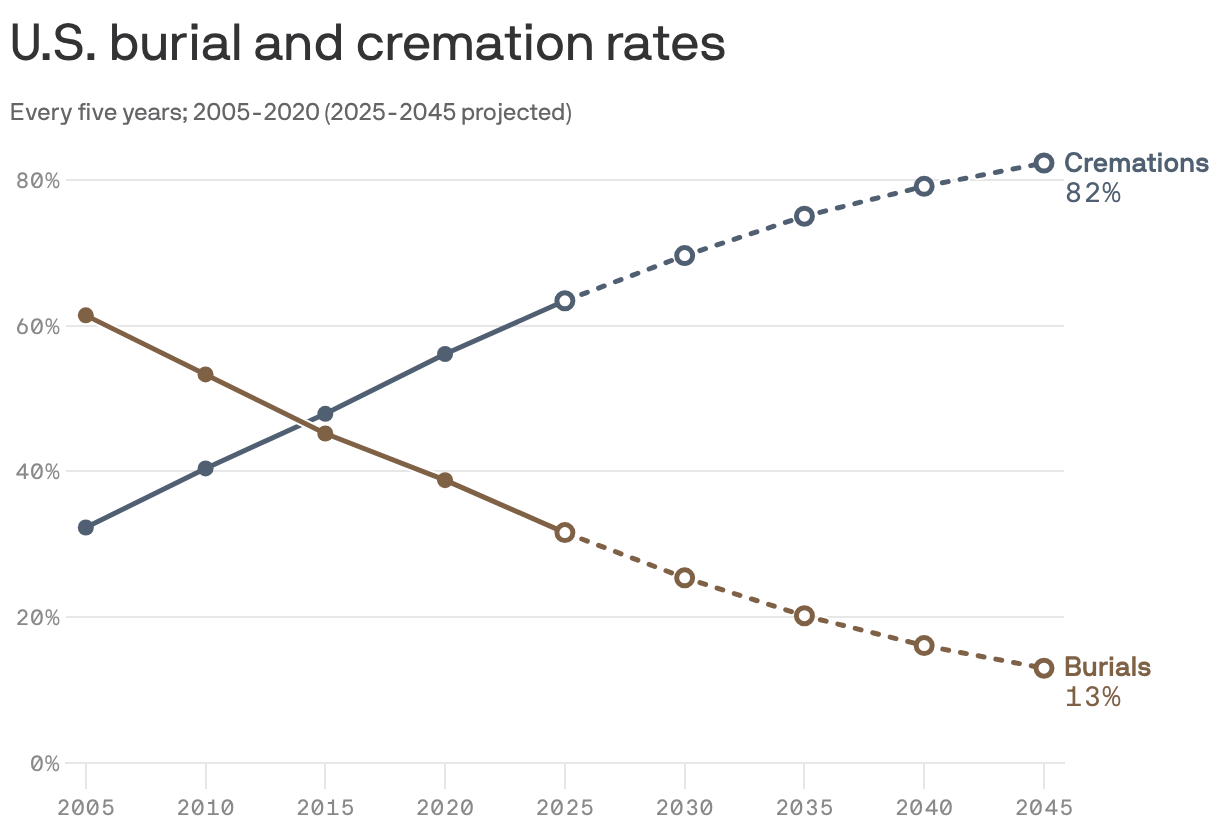
Cremations are now twice as common as burials in the U.S., reversing a norm from two decades ago, according to the National Funeral Directors Association.
Why it matters: Shifting attitudes around religion, cost and the environment are reshaping how Americans handle death.
By the numbers: Cremation surpassed burial nationwide in 2015 — and the gap has only widened since, with the NFDA projecting cremation will continue gaining share.
- Burials also cost significantly more: In 2023, the median price of a casketed burial with viewing and ceremony was $8,300, compared with $2,750 for a direct cremation, according to NFDA data.
What they're saying: Americans' environmental mindset "is carrying all the way over into death now," NFDA spokesperson Jack Mitchell, a sixth-generation funeral director based in Baltimore, tells Axios.
- Instead of opting for a traditional burial — which requires more land use, upkeep, embalming processes and items like caskets — people are going greener.
State of play: Interest is growing for end-of-life options beyond burial and cremation, Mitchell tells Axios.
- Alkaline hydrolysis, which is like flame cremation, but done with water. Also called aquamation, it's gained traction, but "just the notion of somebody being liquefied instead of burned, even though it's more environmentally friendly, [comes with an] ick factor," Mitchell tells Axios.
- Organic reduction, aka human composting, which uses straw, wood chips and other natural materials to convert human remains into soil. It can feel poetic, especially if "mother loved her flower garden," Mitchell says. You could "literally use her to keep her flower garden beautiful for a long time."
- Green burial, which "is really the greenest option of all," but only limited cemeteries offer it, Mitchell says. There's a grave dug, but no embalming or burial wall. The deceased is in a natural, often biodegradable casket and placed directly into the ground.
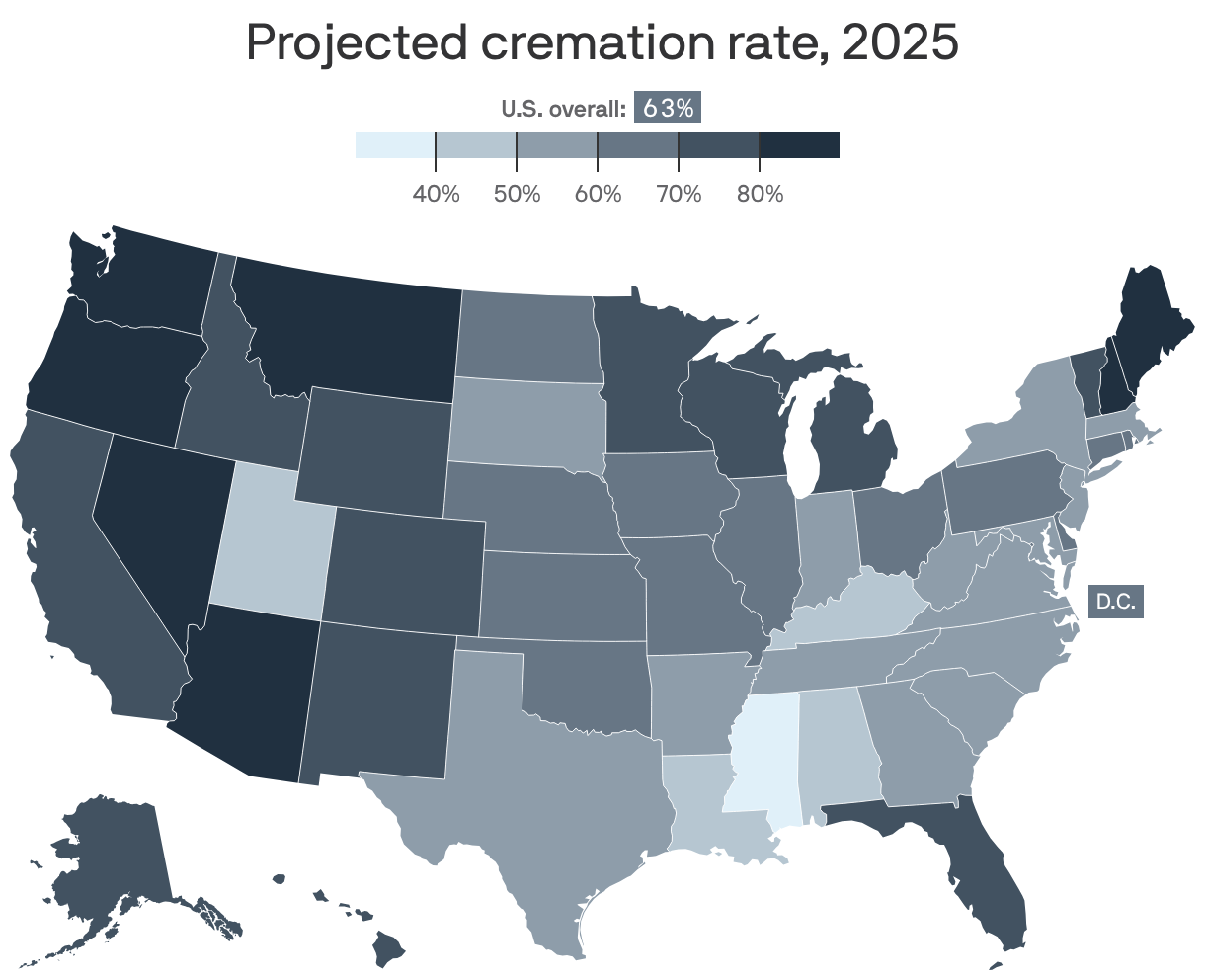
The fine print: NFDA's "burial" and "cremation" numbers rely on how information is recorded on death certificates by state, which depend on state law.
- "Cremation" can include alkaline hydrolysis depending on the state law.
Between the lines: Funeral rules and preferences vary across the country.
- Cremation rates ranged from 44.3% (Alabama) to 85.3% (Nevada) in 2025.
- And organic reduction and alkaline hydrolysis are only legal in certain states. Green burials are regulated by state, cemetery and public health rules.
The intrigue: As traditional, religious services decline, remembrance is shifting toward life celebrations and living funerals, sometimes held in spaces called "life event" venues, instead of "funeral homes," Mitchell says.
What we're watching: How funeral ceremonies continue to evolve as more people get comfortable talking about death before they're near it.
