Trump turns to Big Tech for AI government workforce


Add Axios as your preferred source to
see more of our stories on Google.
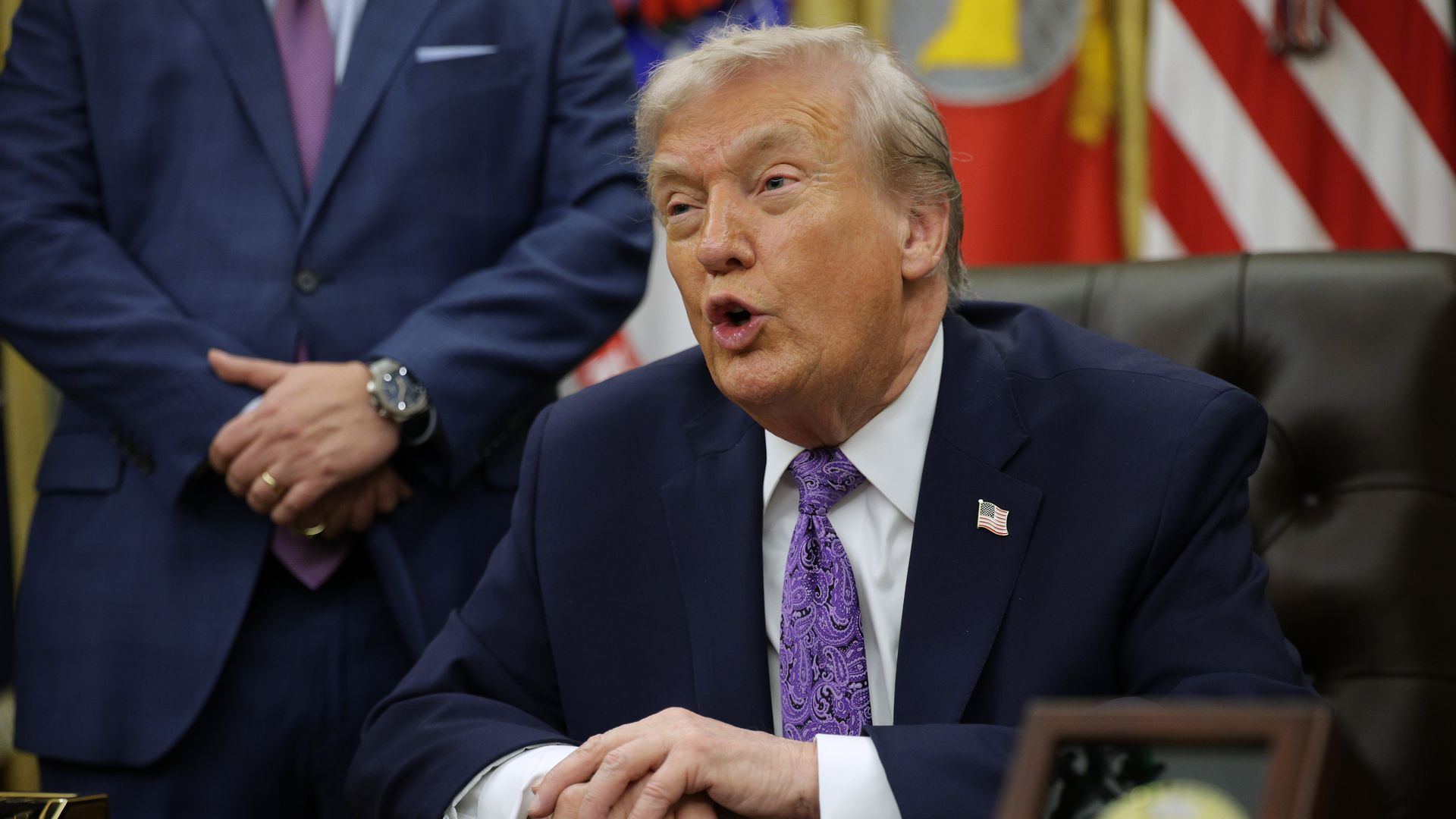
President Trump speaks in the Oval Office on Dec. 11. Photo: Alex Wong/Getty Images
The White House on Monday unveiled a new AI-focused "Tech Force," looking to tap employees from the nation's biggest tech firms in the latest sign of the industry's embrace of President Trump.
Why it matters: The White House appears to be trying to pick up the pieces after Elon Musk's DOGE swept through the federal government and wiped out significant existing tech expertise.
- The administration listed a who's who of Big Tech as partners for the program, including Adobe, Amazon Web Services, IBM, Meta, Microsoft, Nvidia, Oracle, Palantir and Musk's xAI.
How it works: Big tech firms will be able to lend their workers to do two-year stints to help modernize the federal government — and retain any equity or stock options — and then return to their employer, Office of Personnel Management director Scott Kupor said in a call with reporters on Monday.
- The program is also available to people outside these big firms.
- The administration wants to recruit 1,000 employees, and salaries would be between $135,000-$195,000 a year.
- To avoid conflicts of interest, employees will have to take a leave of absence from the companies and adhere to government ethics rules. It's not clear if some would have to leave their employers entirely.
For security clearances, Kupor said that employees would have to go through the normal processes as any other employee, but added that he has secured commitments from agencies that they will do this as "efficiently" as possible.
- Kupor pointed to the Defense Department as one agency he believes is ripe for this program, and said virtually all agencies were participating.
What they're saying: "Tech Force will primarily recruit early-career technologists from traditional recruiting channels, along with experienced engineering managers from private sector partners," the program's website states.
- Kupor said the aim was to get more early career workers into the federal workforce.
Between the lines: Attracting talent to the federal workforce has long been difficult.
- One longstanding selling point was the stability of a civil service job, but the Trump administration sandblasted that security this year as it fired, forced out and cracked down on the workforce.
- "Our goal here is not to ask people to commit to, you know, a 40-year career in federal government," Kupor said, adding that he thinks there should be "fluidity" between the public and private sector.
Catch up quick: A few years after the troubled rollout of the Affordable Care Act website, the Obama White House created the U.S. Digital Service in an effort to modernize technology throughout the government.
- The agency, which was widely respected and advanced in Trump 1.0, was increasingly looking to AI to help the federal government develop its tech operations.
- It was renamed U.S. DOGE Service in January, shortly after Trump 2.0 began. In February, a third of its staff were fired and more employees resigned in protest.
- DOGE is "totally unrelated" to this tech force, Kupor said, which will focus on government modernization.
- The White House this year also dismantled 18F, an internal tech consultancy group, closed a tech-focused office inside the Social Security Administration, and has seen significant cuts to the Cybersecurity and Infrastructure Security Agency inside the Department of Homeland Security.
"They are standing up a new program that seems to overlap a great deal with what USDS did before this administration shut it down," says Max Stier, CEO of Partnership for Public Service, a nonprofit that supports the federal workforce.
The bottom line: Work to modernize the federal government was well underway before this new program.
- The Trump administration is now banking on Big Tech allies to provide training to the government workforce and internally promote short-term government experience.
Editor's note: This story has been updated with comment from Max Stier and additional information about cuts to government agencies this year.
